

Company School of Painting/ Patna Kalam/ Kampani Kalam - Painting Tradition
Dive deep into Company School of Painting from Bihar, the very school in Indian painting history to take the common people and their daily occupations as primary subject matter
Introduction
The Company School of Painting, also known as Patna Kalam, Patna Qalaam, or Kampani Kalam, is a style of figurative painting that developed in Patna, Bihar, during the 18th and 19th centuries as a direct product of the encounter between Mughal miniature painting traditions and European artistic conventions under the influence and patronage of the British East India Company. It is documented as a distinct painting school by art historian Mildred Archer, among others, and is notable for being the first school in Indian painting history to take the common people and their daily occupations as primary subject matter, rather than court life, religious narrative, or aristocratic portraiture.
The Patna Kalam tradition declined in the latter half of the 19th century with the introduction of lithographic printing, photography, and the gradual end of Company-era patronage. The last notable artist of the tradition, Ishwari Prasad Verma, died in approximately 1950. The tradition is considered vulnerable due to the very small number of practitioners who have continued or revived elements of the style and the loss of the economic and social context that originally sustained it.
Etymology
The term Kampani Kalam or Kampani Qalaam uses the Hindi-Urdu transliteration of company (from the English East India Company) and kalam or qalaam, the Arabic-derived word for pen, writing instrument, or drawing. The designation Patna Kalam or Patna Qalaam refers to the city of Patna as the geographic center of the tradition. Both designations are used in academic literature, with Company School being the preferred English academic term in the scholarship of Mildred Archer and subsequent art historians.
Origin
The origins of the Patna Kalam tradition are traced to the migration of Mughal court painters from Delhi and Murshidabad into Patna during the 18th century. The immediate cause was the political and religious pressure on non-Muslim artists at the Mughal court under Aurangzeb (reigned 1658 to 1707), whose restrictions on figurative art resulted in the dispersal of court painters. These artists initially settled in Murshidabad under the patronage of the Nawabs of Bengal. Following the Battle of Plassey in 1757 and subsequent political disruptions under Mir Jafar's son and successor, a further migration occurred, with artists settling in Patna, then a significant commercial city under British East India Company influence.
In Patna, these Mughal-trained artists found a new patronage base in East India Company officials, European travelers, and Indian merchant elites who desired documentary and decorative paintings of Indian subjects. The encounter with European artistic conventions, particularly the emphasis on realistic depiction, shading, and spatial recession, led to the development of the hybrid style that characterizes the Patna Kalam.
Location
The Patna Kalam was produced exclusively in Patna, Bihar. The artist communities were concentrated in specific localities of the city including Macchharhatta, Lodi Katra Chowk, and Deewan Mohalla. These localities, within the old city area of Patna, constituted the residential and working areas of the painters and their families. Contemporary revivalist practitioners, if any, are also located in Patna.
Community
The artists of the Patna Kalam were hereditary painters whose family lineages traced to Mughal court painting traditions. They were primarily Hindu, as the original dispersal from the Mughal court was specifically a consequence of Aurangzeb's restrictions on Hindu artists. The key documented family names include Sewak Ram, Hulas Lal (who was employed as a draughtsman by the East India Company and whose work is documented in the Company's official records), Shiva Lal, Shiva Dayal, Mahadeo Lal, and Ishwari Prasad Verma. The community was never large, and the absence of new patronage after the Company period meant that families gradually shifted occupations or relocated.
Relevance
The Patna Kalam has medium cultural relevance as a historical painting tradition of documented art-historical significance rather than as a living craft in widespread production. Major institutional collections of Patna Kalam paintings exist at the Patna Museum, the Khuda Baksh Oriental Library in Patna, the National Museum in New Delhi, the Victoria and Albert Museum in London, and the Indian Museum in Kolkata. Mildred Archer's scholarship, particularly her studies published in the 1970s and 1980s through the Victoria and Albert Museum, established the Patna Kalam as a subject of serious art-historical inquiry and documented the tradition's history, key artists, and extant examples.
History
Background
The earliest detailed academic reference to the Patna School of Painting is P.C. Manuk's article The Patna School of Painting, published in the Bihar Research Journal, Volume XXIX, in 1943. This article identified the tradition as a distinct school and provided the first systematic account of its historical development and key artists. Mildred Archer subsequently conducted more extensive research, drawing on East India Company archives, painter family accounts, and examination of paintings in British and Indian institutional collections. Archer's work established the connection between specific named artists and paintings in institutional collections, and her analysis of the stylistic characteristics of the tradition remains the foundational scholarly account.
Culture and Societies
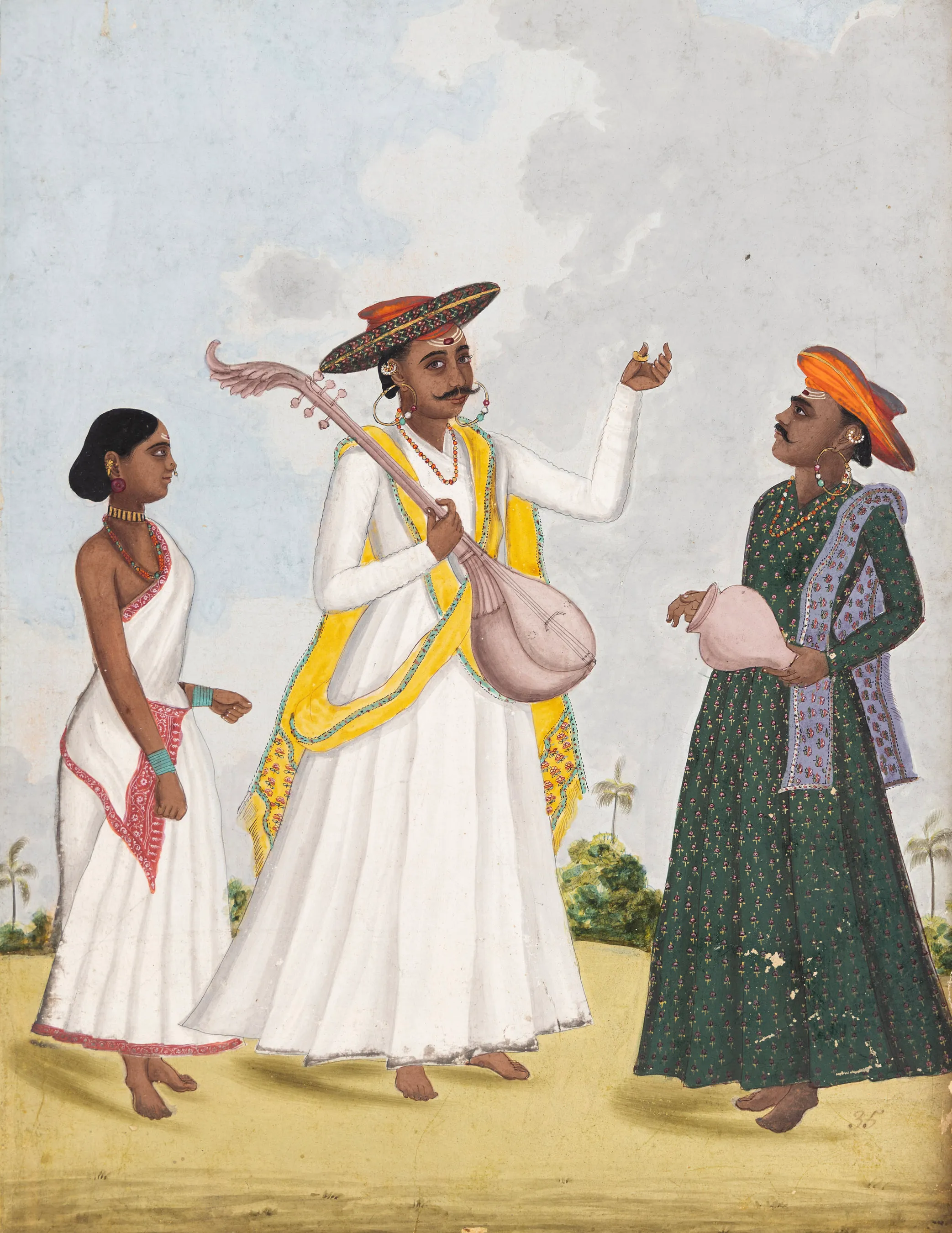
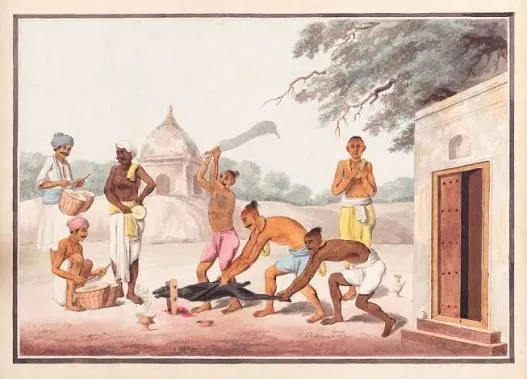
The Patna Kalam tradition is culturally significant as a document of social history as much as of art history. The subjects painted by Patna Kalam artists are primarily scenes from the daily life of ordinary people in early modern Bihar: bazaar vendors, craftspeople, musicians, dancers, religious processions, agricultural scenes, and domestic ceremonies. Sets of paintings documenting the occupations of different professional groups (firkas or sets) were a characteristic commercial product of the tradition, produced for European patrons interested in visual documentation of Indian social life. These sets constitute valuable historical documents of the occupational categories and material culture of early 19th-century Patna.
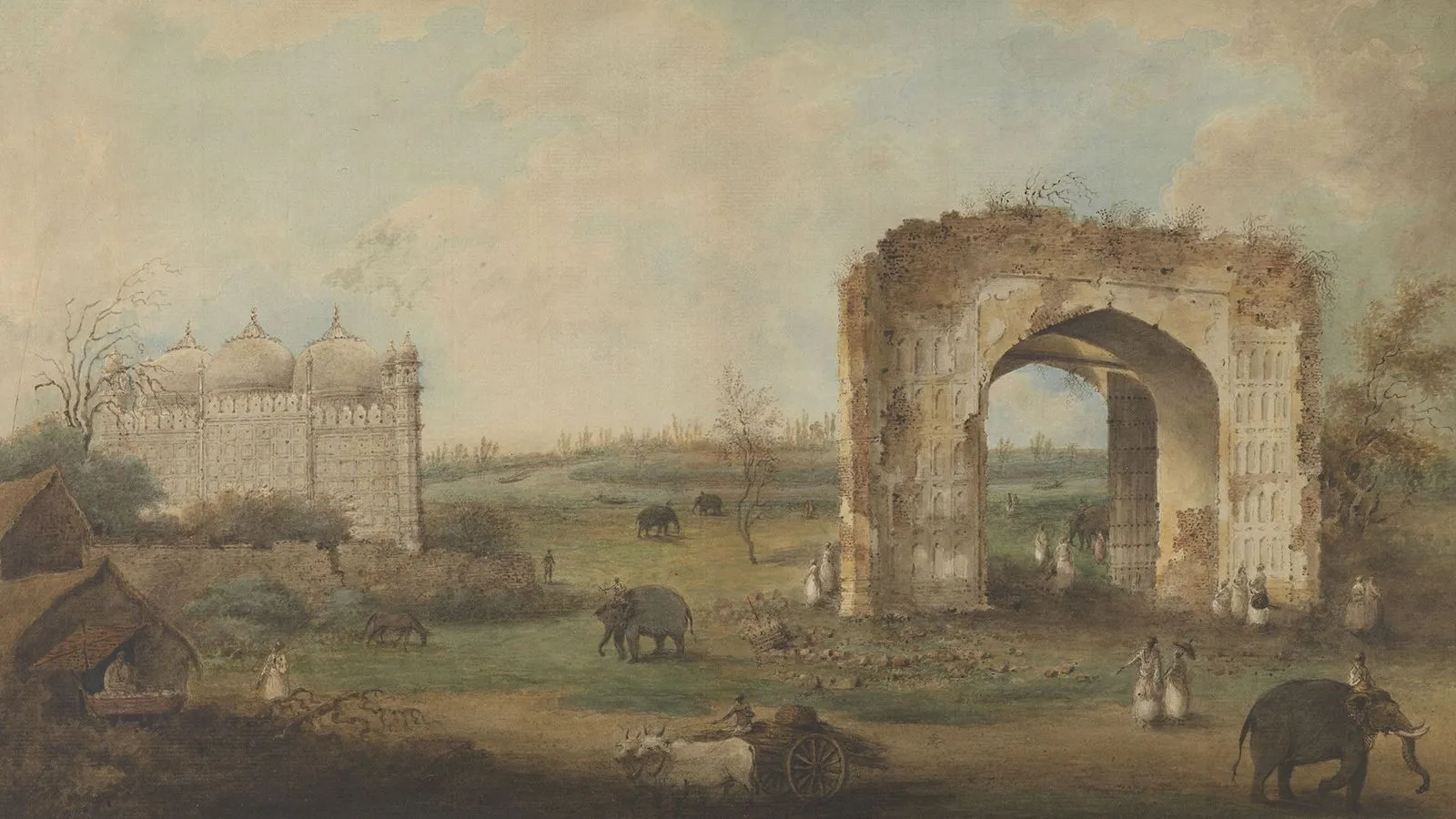
A secondary category of Patna Kalam subjects includes portraits of local rulers, merchant families, and notable individuals, and scenes from Mughal and Rajput court life that reflect the artists' continued connection to the Mughal pictorial tradition even as they adapted to new patronage demands. The combination of Mughal compositional conventions with European shading and a more representational approach to space and material texture distinguishes the Patna Kalam from both its Mughal forebears and from contemporary European watercolor traditions.
Religious Significance
The Patna Kalam tradition has no documented primary religious function. Mildred Archer specifically noted the tradition's distinction in being the first Indian school to focus on secular subjects, particularly the daily life of common people, rather than on religious narrative or royal portraiture. A small proportion of surviving Patna Kalam paintings depict religious subjects including Hindu festival scenes, deity representations, and scenes from the epics, but these constitute a minority of the documented output and appear to have been produced for specific patron requests rather than as a primary subject category of the tradition.
Understanding the Art
Style
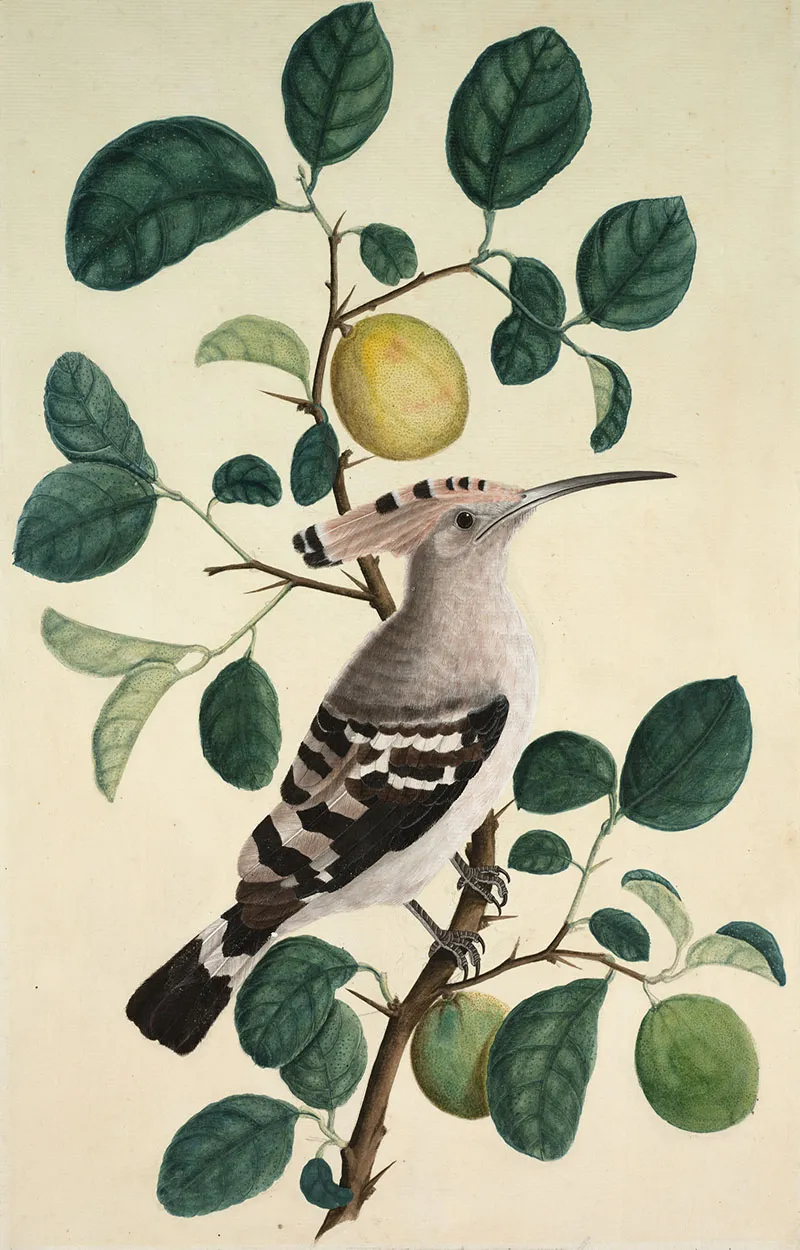
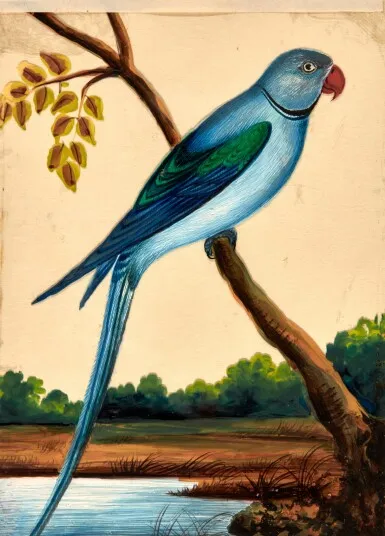
The Patna Kalam style represents a documented fusion of Mughal miniature painting conventions with European naturalistic representation techniques. From the Mughal tradition, the Patna Kalam artists retained the flat application of mineral pigment to prepared paper surfaces, the detailed rendering of textile patterns and jewelry, and the convention of depicting figures against a plain background without environmental context (landscape or architectural setting). From the European tradition, they adopted the use of shading to suggest volume and three-dimensionality, a somewhat more naturalistic representation of facial features and bodily proportions, and occasionally a limited use of spatial depth.
The characteristic Patna Kalam technique is called Kajli Seahi, a method of direct brush drawing without preliminary pencil sketch on wasli paper (a surface made from multiple layers of paper pasted together and polished). The control required for this technique, which does not permit correction, is considerable, and the quality of the best Patna Kalam work reflects a high level of technical proficiency.
Central Motifs and Their Significance
The primary subject categories documented in institutional collections of Patna Kalam paintings are: occupational sets depicting vendors, craftspeople, and service providers; musicians and dancers; religious processions and festivals (Diwali, Holi, Durga Puja, Mohurram); wedding ceremonies; portraits of local nobility and their courts; and scenes of British and Indian interaction in the early colonial context. Each occupational figure is typically depicted alone against a plain background, named in either Persian script or English, in a format clearly designed for European consumers seeking documentary images of Indian social types.
Process
The Patna Kalam process involves preparation of the wasli paper surface through pasting, pressing, and polishing. Mineral pigments ground to fine powder are mixed with binding media (gum arabic or animal glue). The artist works in direct brush technique without preliminary sketch, applying color from light to dark. The Kajli Seahi technique requires the artist to visualize the complete composition before beginning, as no correction is possible once the pigment is applied. Smaller works on ivory and mica were also produced by some Patna Kalam artists, suggesting adaptation to European demand for miniature portraits on luxury materials.
Mediums Used
The primary surfaces used in Patna Kalam painting are wasli paper (multi-layered laminated paper), mica (transparent mineral sheets, producing a distinctive luminous quality), ivory (for miniature portraits), and silk and tant cloth. Pigments are mineral-based, including ultramarine, vermilion, saffron-based yellow, lamp black, white lead, and various earth pigments, mixed with gum or glue binding media.
New Outlook
The Patna Kalam tradition has attracted renewed interest from the Bihar government and cultural organizations seeking to revive or document significant state cultural traditions. The Patna Museum maintains a collection and has conducted documentation programs. Academic interest in the tradition has been sustained through the ongoing influence of Mildred Archer's scholarship, which has been published and reprinted by the Victoria and Albert Museum. Several contemporary artists in Patna have engaged with the Patna Kalam style in self-conscious revival efforts, though none have claimed lineage from the original practitioner families.
Learn Company School of Painting





Bibliography
Sources
Archer, Mildred. Patna Painting. Royal India and Pakistan Society, 1947.
Archer, Mildred. Company Paintings: Indian Paintings of the British Period. Victoria and Albert Museum, 1992.
Manuk, P. C. "The Patna School of Painting." Bihar Research Journal, vol. XXIX, 1943.
Losty, J. P., and Malini Roy. Mughal India: Art, Culture and Empire. British Library, 2012.
Indian Paintings from the Patna School. Sotheby's, exhibition catalogue, various dates.
Image Sources
"Company Painting." IMP-ART, https://imp-art.org/articles/company-painting/. Accessed 10 July 2026.
"A Trip Down Memory Lane: The British Raj as the Met Presents Company School Paintings." Architectural Digest India, https://www.architecturaldigest.in/content/trip-memory-lane-british-raj-met-presents-company-school-paintings/. Accessed 10 July 2026.
"Company School Indian Birds: Eight Paintings on Paper." Sotheby's, https://www.sothebys.com/en/buy/auction/2022/the-library-of-henry-rogers-broughton-2nd-baron-fairhaven-part-ii-2/company-school-indian-birds-eight-paintings-on. Accessed 10 July 2026.
"Hybrid Visions: The Phenomenon of Company Painting in India." DAG, https://dagworld.com/hybrid-visions-the-phenomenon-of-company-painting-in-india.html. Accessed 10 July 2026.
"Company Paintings." DAG, https://dagworld.com/company-paintings-show.html. Accessed 10 July 2026.