

Chittara Art: Karnataka's Sacred Ritual Folk Painting
Let's explore the Chittara art form!
Introduction and Origin
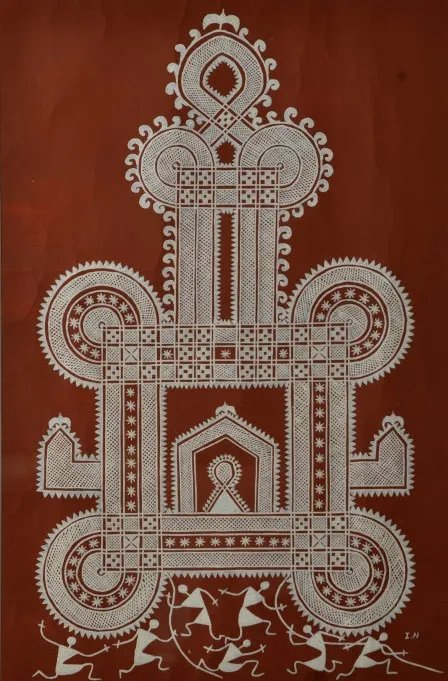
Chittara art is one of Karnataka's most distinctive and least-known folk painting traditions. Created by the women of the Deewaru community in the Malnad region of the Western Ghats, these intricate geometric paintings adorn the walls and floors of homes during weddings, harvest festivals, and other life-cycle rituals. Rooted in the Kannada word Chittara, which is related to the Sanskrit chittra meaning 'to draw', this art form carries the spiritual life of an entire matriarchal community within its symmetrical lines.
What Is Chittara Art?
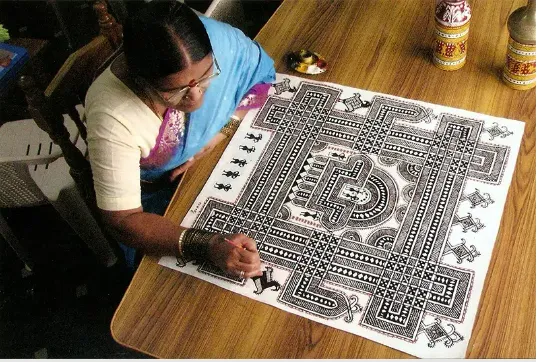
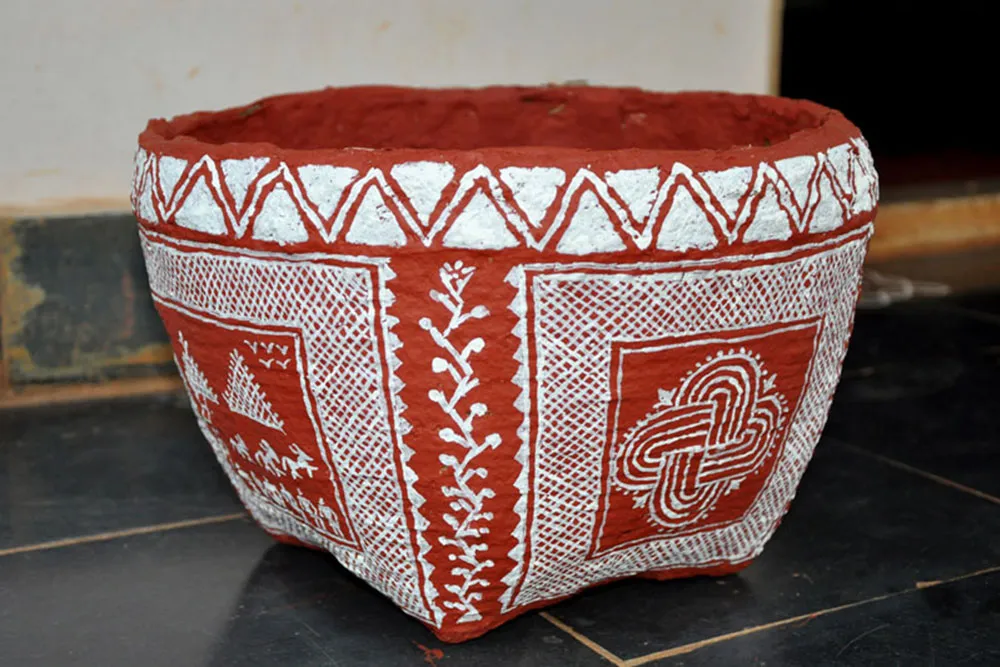
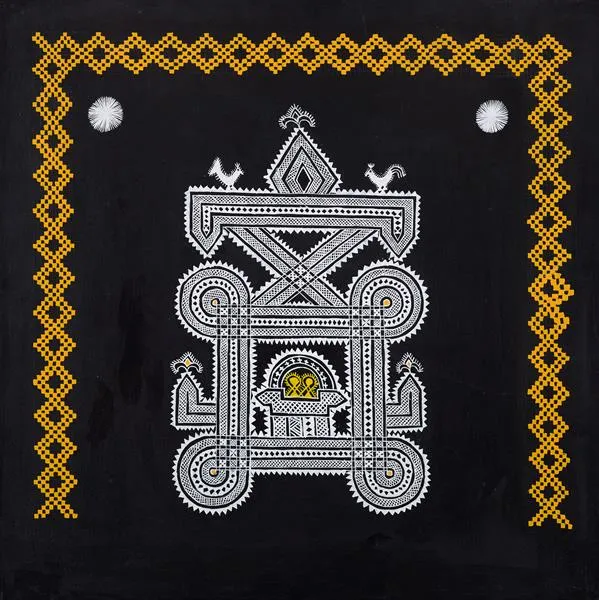
Chittara art is a traditional folk painting practised by the women of the Deewaru community in the Malnad region of Karnataka, specifically in the villages of Hasunvanthe, Honnemaradu, and Majina Kaanu in the Shimoga district. Painted on the outer walls and floors of homes, these works use natural pigments made from rice paste, red mud, ground minerals, and plant-based materials. The compositions feature geometric shapes, long parallel lines, cross-hatchings, and symmetrical structures, and measure roughly 2 to 3 feet in size. They are created freehand, using ropes and threads for measurement rather than rulers. Chittara paintings are made for occasions of socio-cultural importance, including weddings, the harvest festival of Bhoomi Hunnime, and other auspicious life-cycle events. The tradition is a living example of Indian folk art in which ritual, community, and visual creativity are inseparable.
History and Origin
Chittara is an indigenous art form of Karnataka, rooted in the cultural life of the Deewaru tribe. The Deewaru are an agricultural community that grows cash crops and weaves baskets, and their women have historically used painting as a way to mark the rhythm of communal life. Because the Deewaru community is large and geographically spread across the Western Ghats, several distinct types of Chittara paintings have developed over time. These include Theru Chittara, which depicts temple chariot processions; Cheeku Bagilu Chinmaani, which represents the energy of the mind; Hadhinaaru Moole Arathi and Mumdige Chittara, which are mural paintings; and Chittara Chaavadi, which holds a range of community themes. The Deewaru are nature worshippers for whom water holds deep spiritual significance, and this relationship with the natural world has always been central to the imagery and purpose of their paintings.
Key Features and Famous Artists
Key Features and Visual Style
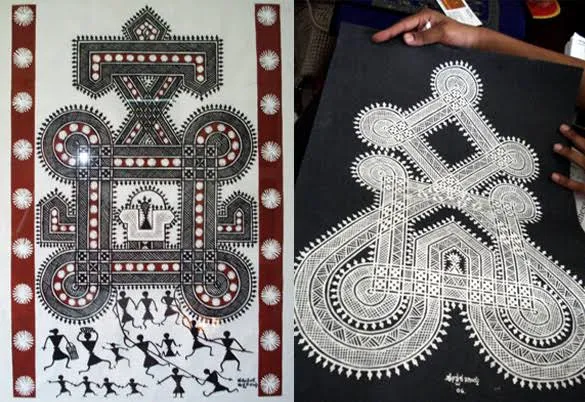
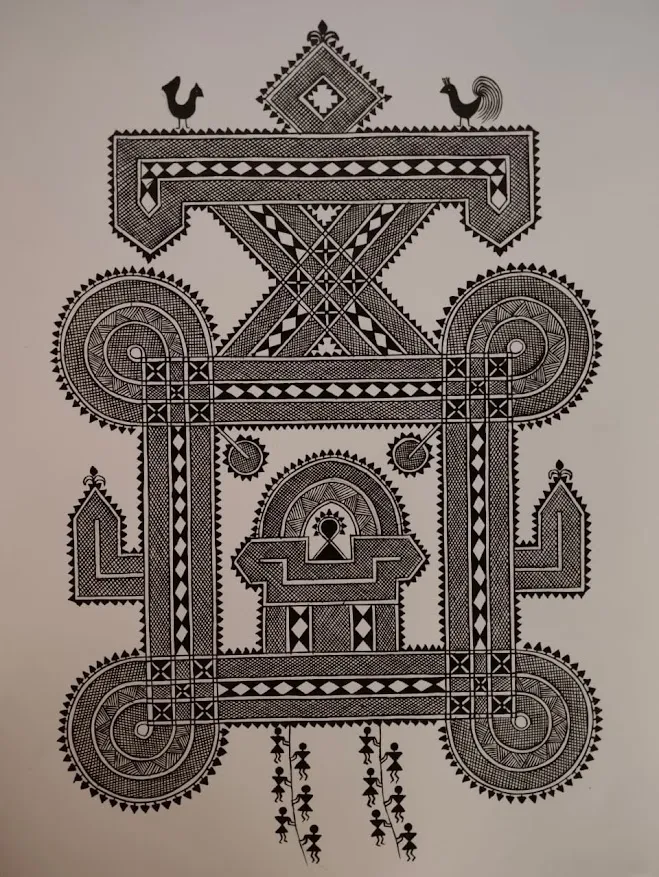
Chittara paintings are immediately recognisable by their tight geometric precision and their limited but deliberate palette. Unlike many Indian folk traditions that use figurative imagery, Chittara is largely abstract, with its expressiveness coming through pattern, repetition, and structure.
Colours: four primary colours are used - red, white, black, and yellow - derived from natural sources including ground red stone, threshed rice paste mixed with white clay, burnt and pounded rice for black, and seeds of the gurige tree, which grows in the Shimoga and Sagar districts of Karnataka.
Motifs: the central themes are daily life, ceremonies, deities, socio-economic activities, and the surrounding flora and fauna, rendered through geometric shapes and symmetrical structures rather than representational drawing.
Technique: paintings are created freehand at 2 to 3 feet in size, with ropes and threads used for measuring instead of rulers; long lines, cross-hatchings, and symmetrical patterns are the defining structural elements.
Ground preparation: the wall surface is first coated with a mixture of cow dung and red mud, then left to dry for one to two days before white or black pigments are applied as a base.
Tools: finer details and patterns are painted using a thin jute brush called a pundi; larger areas use brushes made from bundles of grass or jute.
Surface and objects: traditionally applied to wall and floor surfaces, and also painted onto paddy husk pots called kalashas; today the art is also applied to paper-mache, terracotta vases, and other artefacts.
Famous Artists of Chittara Art
Chittara has been practised almost entirely within the Deewaru community, and documentation of individual artists has been limited given its collective, community-based nature. The art is passed down through women within Deewaru households, making the community itself the primary custodian. Among the artists who have brought this tradition to wider attention, A.G. Nellagi of Shimoga district is one of the most recognised practitioners, known for efforts to preserve and document the tradition. She has represented Chittara at national and state-level craft events and is listed among Rooftop's featured artists. Other Deewaru women artists from the villages of Hasunvanthe and Honnemaradu have been showcased through government craft boards and cultural festivals in Karnataka, though their individual names remain less documented in the public record. Efforts by organisations working with Karnataka folk art have helped some of these women access broader platforms.
How to Learn Chittara Art
If you want to learn Chittara art, the best place to start is with a teacher who understands both the technique and the cultural context behind the paintings. Rooftop offers online courses in Indian folk art taught by practising traditional artists from across India. While a dedicated Chittara course continues to evolve on the platform, exploring related Karnataka and South Indian traditions through Rooftop's art experiences is a meaningful first step for anyone drawn to this tradition.
Where to See and Buy Chittara Art
The best place to see Chittara art in its living context is the Malnad region of Karnataka, particularly in the villages of Hasunvanthe, Honnemaradu, and Majina Kaanu in Shimoga district, where Deewaru women continue to create these paintings during festivals. The Crafts Museum in New Delhi and Karnataka's state craft exhibitions periodically display Chittara works alongside other traditional Indian arts. For those who wish to own a piece, Rooftop's shop carries original works by traditional artists, connecting buyers directly with the creators of authentic traditional Indian art.
Learn Chittara
Frequently Asked Questions
What is Chittara art and where does it come from?
Chittara art is a traditional folk painting practised by women of the Deewaru community in the Malnad region of Karnataka, India. The word Chittara comes from the Kannada language and is related to the Sanskrit word chittra, meaning 'to draw'. These paintings are created on the walls and floors of homes to mark weddings, harvest rituals, and other auspicious occasions in the community calendar.
Which community practises Chittara painting in Karnataka?
Chittara painting is practised exclusively by the women of the Deewaru community, a matriarchal agricultural tribe from the Malnad region of Karnataka. The Deewaru are nature worshippers who grow cash crops and weave baskets, and painting is both a communal ritual activity and a form of cultural expression passed from mother to daughter within Deewaru households.
What are the different types of Chittara paintings?
Because the Deewaru community is spread across a large area of the Western Ghats, several types of Chittara have emerged. Theru Chittara depicts temple chariot processions, Cheeku Bagilu Chinmaani represents the energy of the mind, Mumdige Chittara and Hadhinaaru Moole Arathi are mural paintings, and Chittara Chaavadi holds varied community themes. Each type is tied to specific rituals or occasions within Deewaru life.
What materials and colours are used in Chittara painting?
Chittara painters use natural pigments sourced from their immediate environment. White is made from rice paste mixed with white clay, red from ground stones and red mud deposits, black from burnt and pounded rice, and yellow from seeds of the gurige tree found in the Shimoga and Sagar districts of Karnataka. Fine details are applied with a jute brush called a pundi, while larger areas are painted using grass or jute brushes.
What is the significance of Bhoomi Hunnime in Chittara tradition?
Bhoomi Hunnime is the harvest festival of the Deewaru community and one of the most important occasions for creating Chittara paintings. The Deewaru are nature worshippers who hold water and the earth in great spiritual regard, and this festival is their way of offering appreciation to the earth for its harvest. During Bhoomi Hunnime, women of the community come together to decorate the outer walls and floors of their homes with Chittara paintings, making the art inseparable from seasonal and spiritual life.
Can I learn Chittara art online in India?
Learning Chittara art online is possible through platforms focused on Indian folk traditions. Rooftop offers courses taught by master folk artists and is one of India's leading platforms for Chittara painting India and related Karnataka traditions. Even if you are new to folk art, starting with related regional traditions and building toward Chittara is a rewarding path.
Chittara is proof that some of India's most intellectually rich art forms are also among its least visible. The geometric precision and natural palette of these paintings carry the spiritual worldview of the Deewaru community across generations. Explore Chittara art and Karnataka folk art on Rooftop, and discover a tradition that turns walls and floors into living records of community life.
Bibliography
Sources
- Gupta, C.S. (2008) Indian Folk and Tribal Paintings. New Delhi: Roli Books.
Image Sources
"Chittara Art." Wikimedia Commons, https://commons.wikimedia.org/wiki/File:Chittara_art.png. Accessed 16 July 2026.
"Chittara – Discovering a Folk Art Form of Karnataka." Caleidoscope, https://caleidoscope.in/art-culture/chittara-folk-art-of-karnataka. Accessed 16 July 2026.
"Handpainted Chittara Art." Uthhane, https://uthhanecom.gergstore.com/Product/productDescription?id=57383&name=Handpainted+Chittara+Art. Accessed 16 July 2026.
"Lot 4: Chittara Artwork." Saffronart, https://www.saffronart.com/auctions/postcatalog.aspx?eid=4548&pageindex=4. Accessed 16 July 2026.
"The Chittara Art." Differences Unite, 10 June 2020, https://differencesunite.wordpress.com/2020/06/10/chittaraart/. Accessed 16 July 2026.