
Chhau (Purulia) - The Folk Dance Tradition of West Bengal
Delve into Chhau (Purulia), a semi classical West Bengal dance form that syncs martial arts, tribal folk traditions, and mythological storytelling...
Introduction
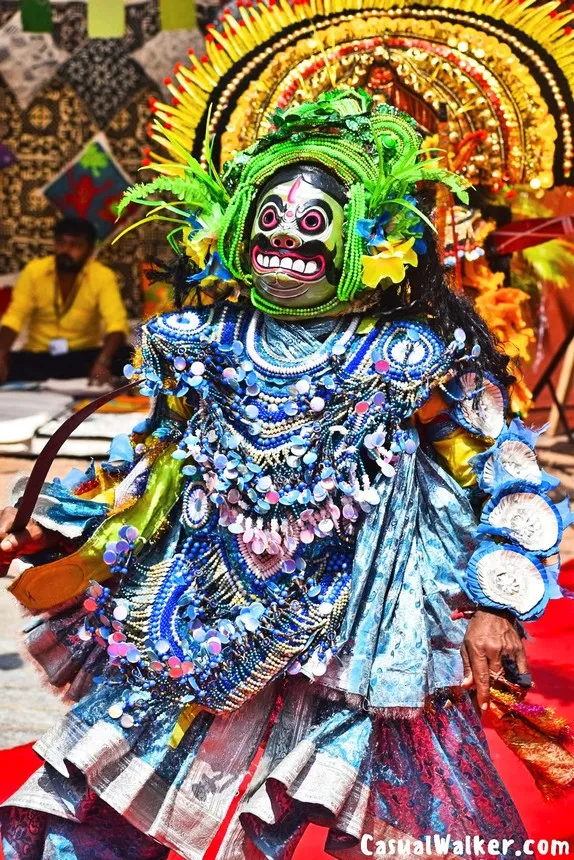
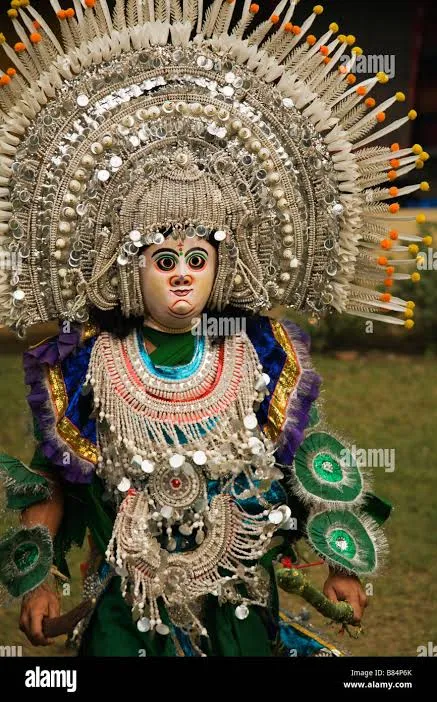
Chhau is a semi-classical Indian dance form combining martial arts, tribal folk traditions, and mythological storytelling, performed in three geographically distinct styles: the Purulia Chhau of West Bengal, the Seraikella Chhau of Jharkhand, and the Mayurbhanj Chhau of Odisha. The Purulia style is distinguished by its use of large, elaborate papier-mache and clay masks depicting gods, demons, and animals, its martial energy, and its connection to the tribal communities of the Purulia district. The dance was inscribed on the UNESCO Representative List of the Intangible Cultural Heritage of Humanity in 2010. The distinctive masks of Purulia Chhau received a Geographical Indication tag in 2018.
Etymology
The Etymology of the term Chhau is disputed among scholars. Proposed derivations include the Sanskrit chhaya, meaning shadow or image, aligned with the form's use of masks that create visual illusions; chhauni, meaning military camp, linked to the martial training origin of the form; and chadma, meaning disguise, consistent with the masked character of the dance. No single derivation has achieved scholarly consensus.
Origin
Eastern India; the form is considered to have originated approximately eight hundred years ago in Mayurbhanj in Odisha, from which it spread to the Purulia district of West Bengal and Seraikella in Jharkhand Location: Purulia district, West Bengal; also Seraikella-Kharsawan district, Jharkhand; Mayurbhanj district, Odisha
Community
Traditionally performed by tribal and scheduled caste communities in the Adivasi-dominated areas of Purulia; transmitted through the guru-shishya tradition within families of traditional artists
Relevance
Thriving; Purulia Chhau was inscribed on the UNESCO Representative List of the Intangible Cultural Heritage of Humanity in 2010; more than nine hundred government-recognised dance groups operate in Purulia district
History
Background
The dance form is traced by scholars to indigenous practices of dance and martial training approximately eight hundred years ago in the Mayurbhanj region of Odisha. It is understood to have spread from there to the tribal communities of Purulia in West Bengal and Seraikella in Jharkhand. Within Purulia, two distinct performance traditions have been documented: the Bandowan style, characterised by seriousness and gravity, and the Bagmundi style, characterised by heroism and vigour. The Chaitra Parva, a spring festival lasting thirteen days and marking the transition between agricultural cycles, has been the primary occasion for Chhau performance. In Purulia, the dance is also performed at the Sun festival. The Government of Odisha established the Government Chhau Dance Centre in Seraikella in 1960 and the Mayurbhanj Chhau Nritya Pratisthan at Baripada in 1962. The Sangeet Natak Akademi has established a National Centre for Chhau Dance at Baripada.
Culture and Societies
Chhau is deeply embedded in the social and cultural life of the Purulia district. The dance form is traditionally performed exclusively by men, including in female roles. Knowledge of dance, music, and mask-making is transmitted within families of traditional artists through the guru-shishya parampara. More than nine hundred government-recognised dance groups currently exist in Purulia, each comprising approximately twenty active dancers alongside singers, musicians, and technical personnel. Each group performs approximately two hundred times annually in the contemporary period, a significant increase from the traditional pattern of performances confined primarily to the Chaitra season. The form received national recognition when a Chhau artist, Bhuban Chandra Kumar, was awarded the Sangeet Natak Akademi Award by the President of India in 2023. Sidho Kanho Birsha University in Purulia has introduced a Diploma Course in Chhau. The Padmashree Award has been given to Chhau artists in recognition of the tradition's national significance.
Religious Significance
Chhau has documented religious associations. The performance tradition is intimately connected to the Chaitra Parva festival, which is observed across communities during the spring and involves religious observances related to the changing of the agricultural cycle. The dance themes draw from Shaivism, Shaktism, and Vaishnavism, depicting characters and narratives from the Ramayana, Mahabharata, and Puranas. The use of masks depicting deities and divine figures indicates that the performance participates in a tradition of devotional representation. The Purulia Chhau dance is also performed at the Sun festival. However, the form is not exclusively religious and includes a substantial repertoire of secular and heroic narratives drawn from local folklore and epics.
Understanding the Art
Style
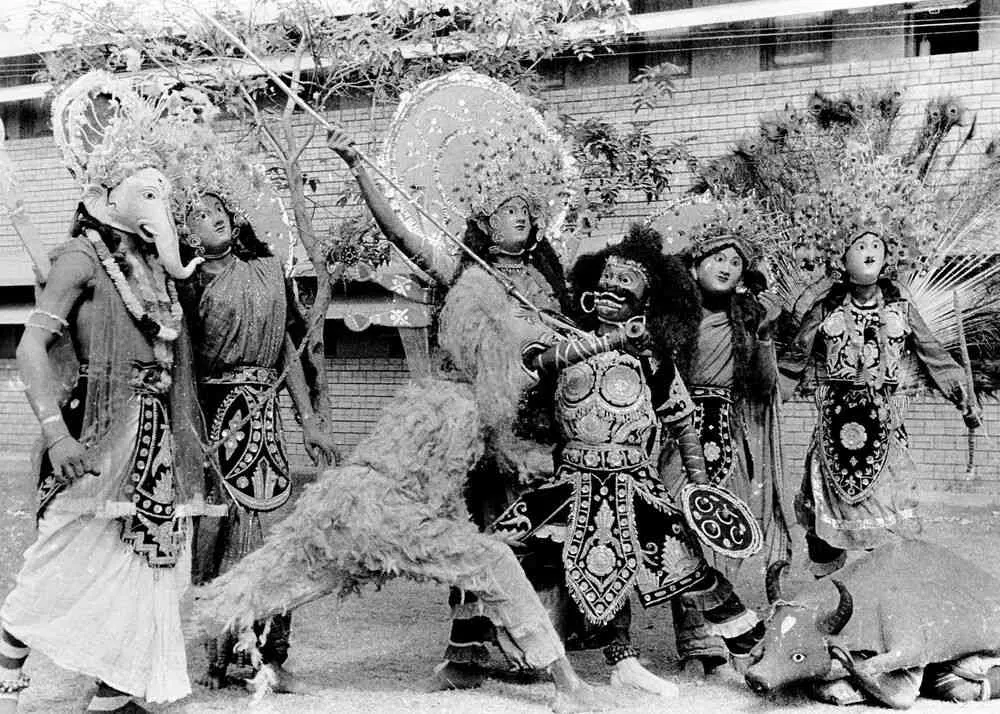
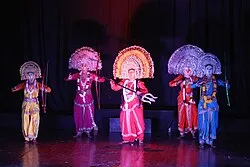
Purulia Chhau is performed at night in open spaces, on a temporarily constructed stage or open ground. The performance is athletic and physically demanding, incorporating mock combat techniques called khel, stylised gaits of birds and animals called chalis and topkas, and movements derived from the chores of village housewives called uflis. The energy of the Purulia style is particularly forceful, contrasting with the more symbolic and abstract Seraikella style. Masks are worn throughout the Purulia and Seraikella performances; the Purulia masks are notably large, covering the entire face and head, and are shaped and painted to represent the character being portrayed. The reverberating beats of the dhamsa and dhol drums dominate the musical accompaniment, creating a powerful sonic environment.
Central Motifs and Their Significance
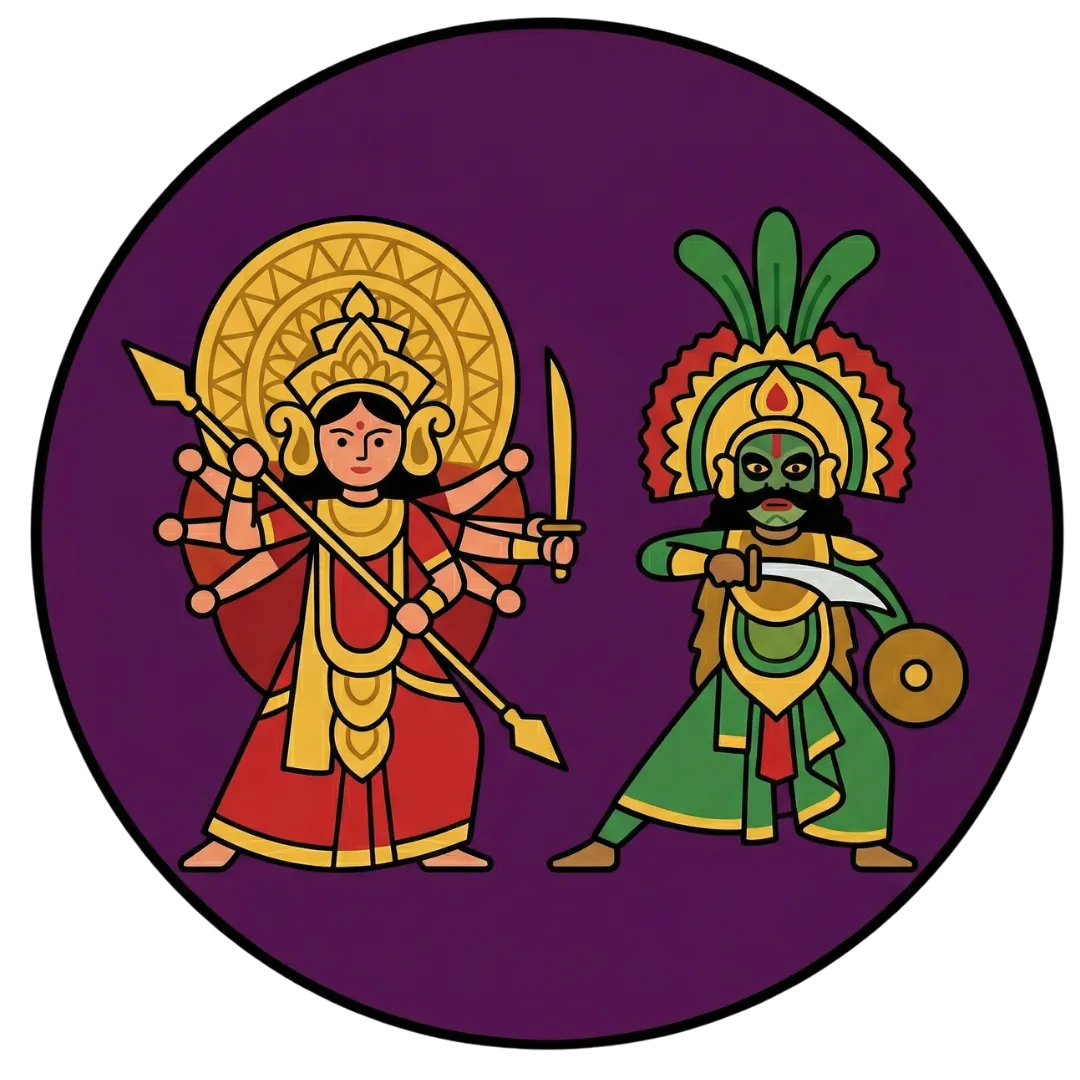
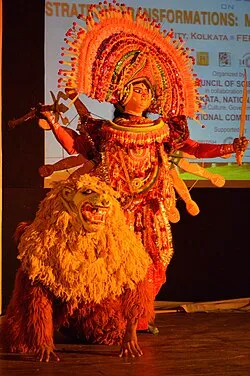
Episodes from the Mahabharata and Ramayana are central to the Chhau repertoire, including battle scenes involving figures such as Arjuna, Bhima, and Karna, and episodes from the Ramayana involving Rama, Ravana, and Hanuman. Stories from the Puranas, including those involving Shiva, Kali, and Durga, are also performed. Local folklore provides additional narrative material. The masks encode significant visual information: a lion mask, for example, incorporates both face and body costume to create a complete visual representation of the character. The martial vocabulary of the dance, including mock combat and athletic acrobatics, reflects the form's historical connection to the physical training traditions of warrior communities.
Process
Training in Chhau is initiated in childhood within families of traditional artists. Practitioners learn the movement vocabulary, the physical demands of athletic performance, and the interpretive conventions of each narrative theme from senior practitioners within their community. Mask-making is a parallel craft tradition, historically carried out by potters who also make clay images of Hindu gods and goddesses, and is transmitted through specialist families within the Purulia district. The GI tag for Purulia Chhau masks recognises this specialised craft heritage. The music ensemble for Chhau performance includes the reed pipes mohuri and shehnai as melodic instruments, and the dhol, dhumsa kettledrum, and kharka or chad-chadi as percussion instruments.
Mediums Used
The distinctive masks of Purulia Chhau are made first in clay and then finished and decorated with shola, a type of plant pith, and other materials. They have received a Geographical Indication designation. Costumes are elaborate, colour-coded, and designed to represent specific mythological characters. The musical ensemble uses mohuri, shehnai, dhol, dhumsa, and kharka. The Jhumur song tradition, associated with the Chhau narrative, draws on folk music with rich lyrical content.
New Outlook
Following the 2010 UNESCO inscription, Chhau has received increased national and international visibility. The number of active troupes in Purulia has grown, and demand for performances has expanded beyond the traditional festival context to include urban stages and cultural events throughout the year. Contemporary challenges include the increasing use of electronic musical instruments in place of traditional acoustic instruments, the introduction of popular Hindi and Bengali film songs into performance programmes, and the lightening of costumes to accommodate faster-paced performances demanded by modern audiences. Scholars and practitioners have noted that these changes, while sustaining the number of active groups, alter the form's traditional character.
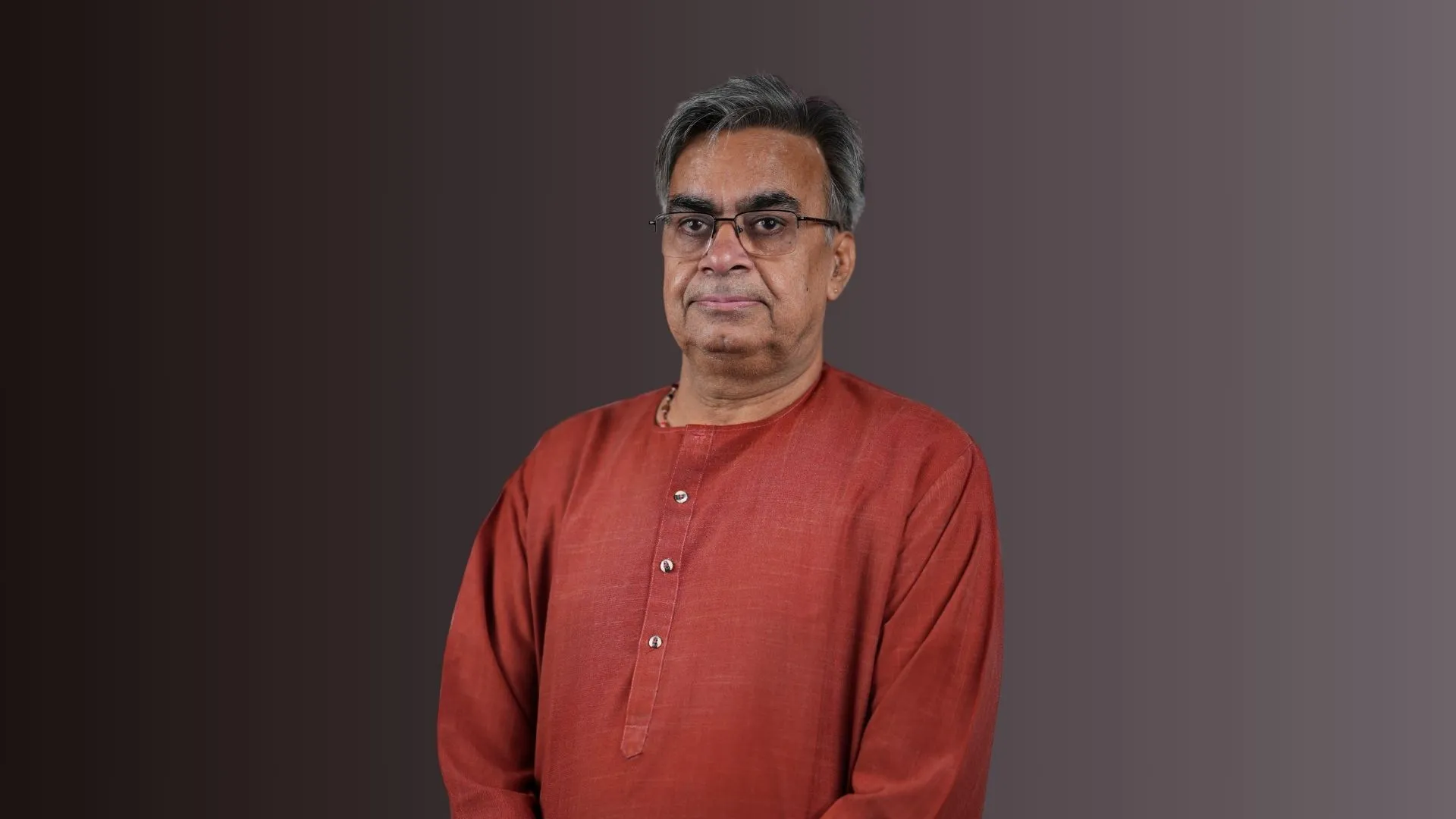
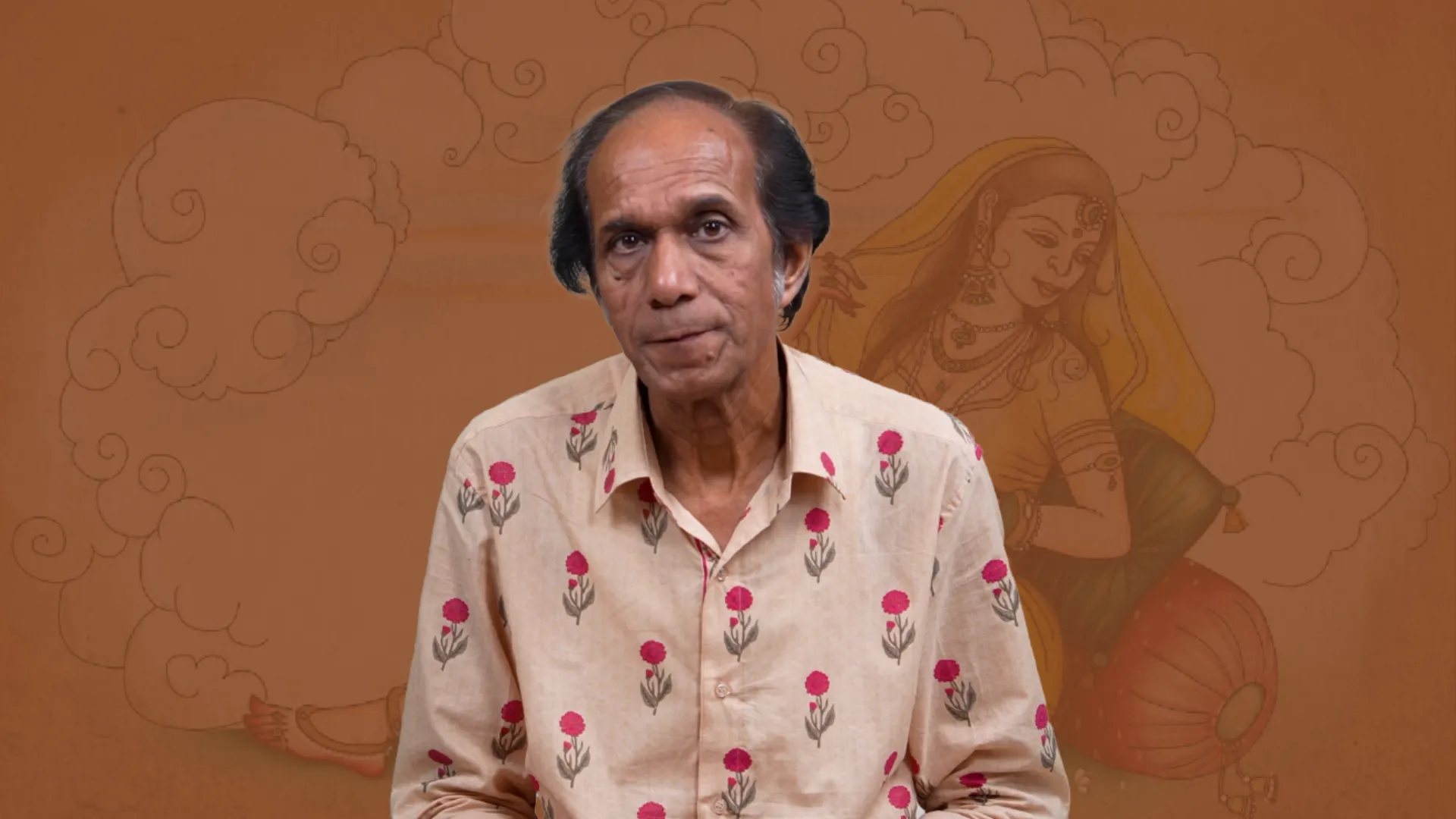
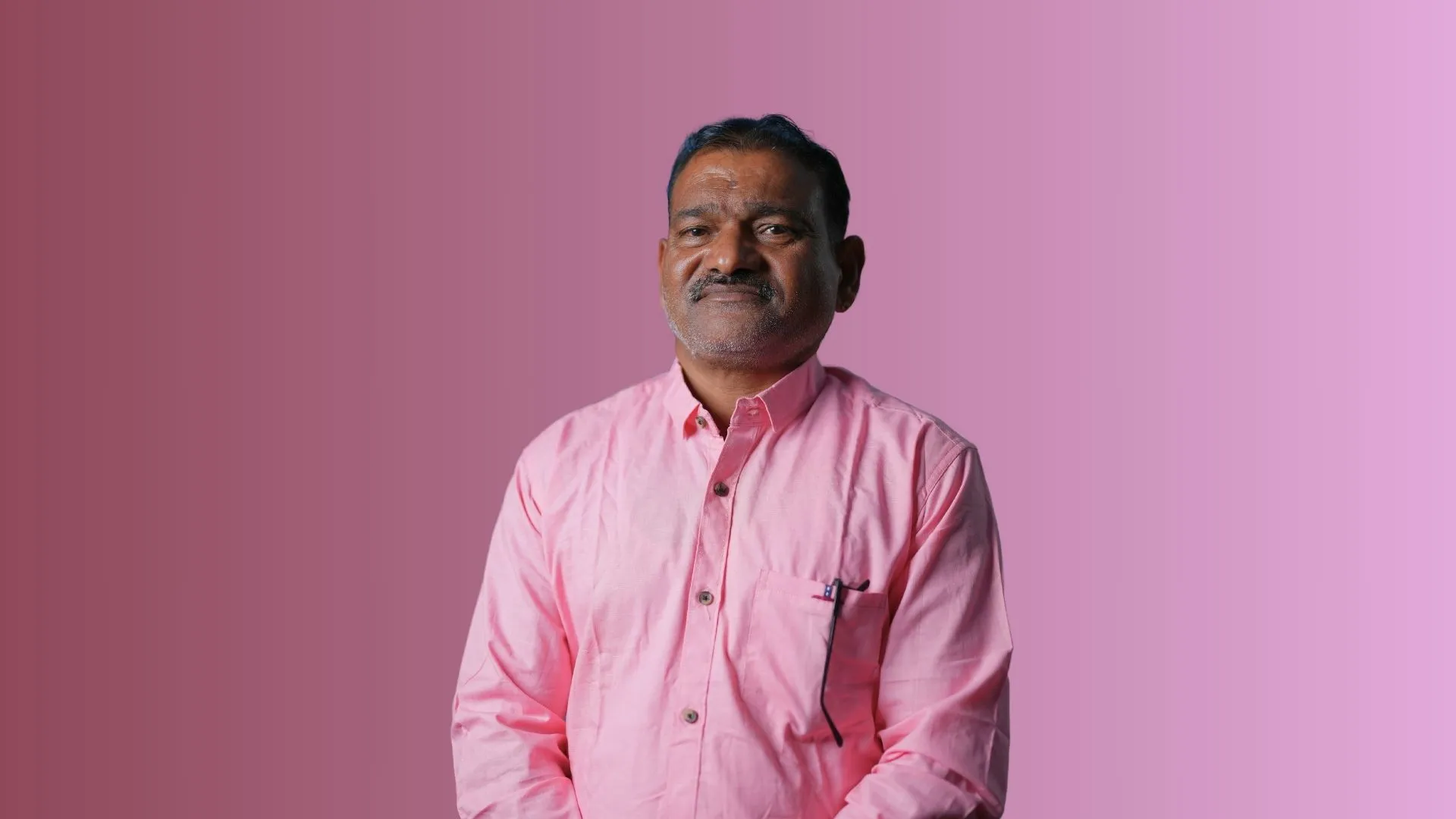
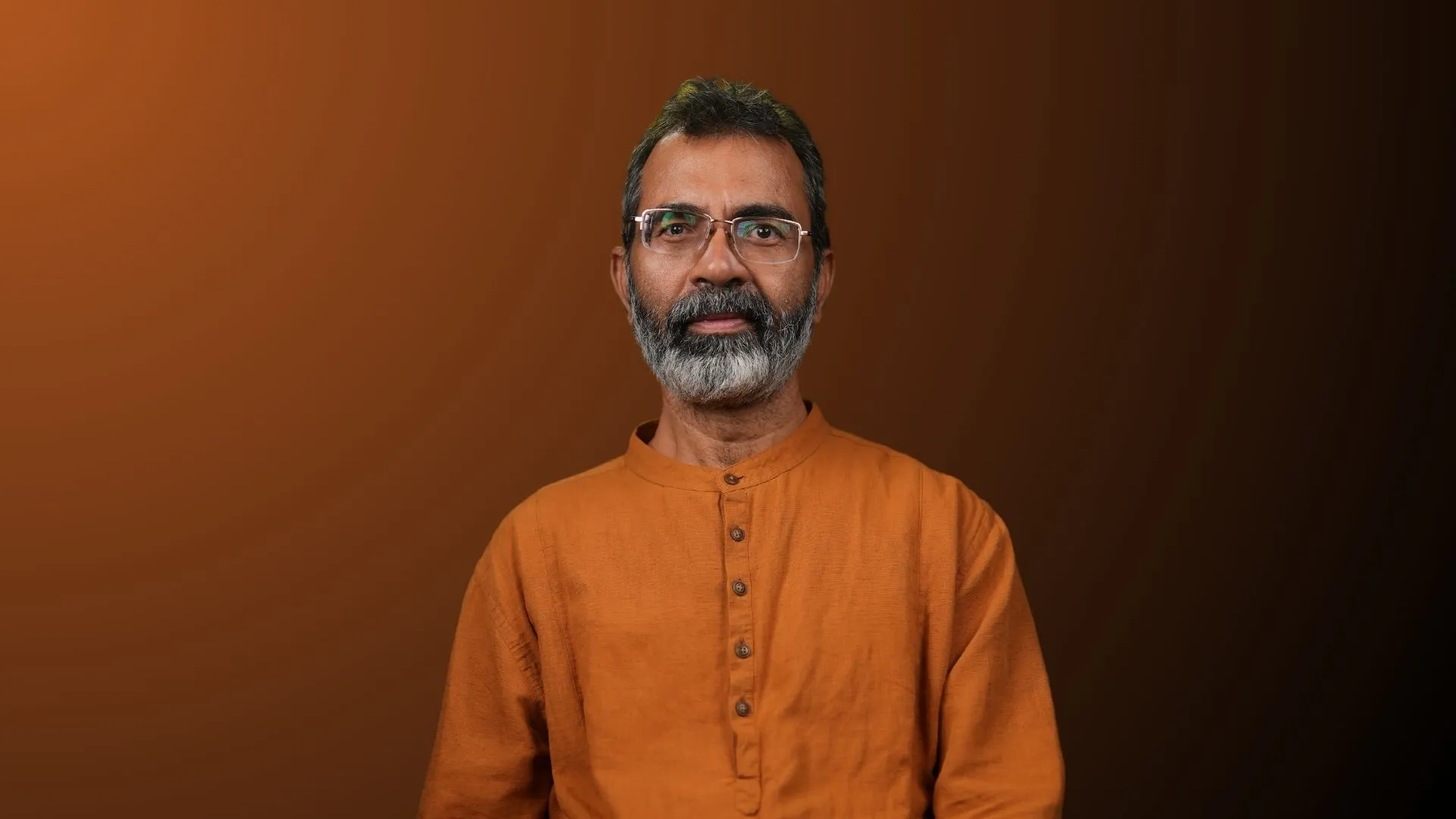
Learn Chhau (Purulia)
Bibliography
Sources
Bhattacharya, Sureshchandra. Chhau Dance of Purulia. Sangeet Natak Akademi.
Choudhury, Malay. Chhau er Jagat.
Mukhopadhyay, Asim Kumar. Studies in Purulia Chhau.
UNESCO. Nomination File No. 00337: Chhau Dance. UNESCO, 2010. Available at ich.unesco.org.
Image Sources
“Chhau.” Wikipedia, https://en.wikipedia.org/wiki/Chhau. Accessed 4 July 2026.
“Chhau Dancer from Purulia in West Bengal Performing a Local Masked Dance.” Alamy, https://www.alamy.com/stock-photo-chhau-dancer-from-purulia-in-west-bengal-performing-a-local-masked-22232859.html. Accessed 4 July 2026.
“Purulia Chhau Dance in Purulia Region, West Bengal: UNESCO-Recognized Masked Martial Folk Dance.” Casual Walker, https://casualwalker.com/purulia-chhau-dance-in-purulia-region-west-bengal-unesco-recognized-masked-martial-folk-dance-representing-gods-goddesses-and-demons-a-male-performance-chhau-folk-dance-history-origin-c/. Accessed 4 July 2026.
“The Story of How Chhau Escaped from Royal Palaces and Became the Entertainment of the Common Man.” Scroll.in, https://scroll.in/magazine/1064837/the-story-of-how-chhau-escaped-from-royal-palaces-and-became-the-entertainment-of-the-common-man. Accessed 4 July 2026.
“Chhau.” Wikipedia, https://en.wikipedia.org/wiki/Chhau. Accessed 4 July 2026.