

Chang - The Folk Dance Tradition of Rajasthan
Let us know more about Chang dance from Rajasthan!
Introduction
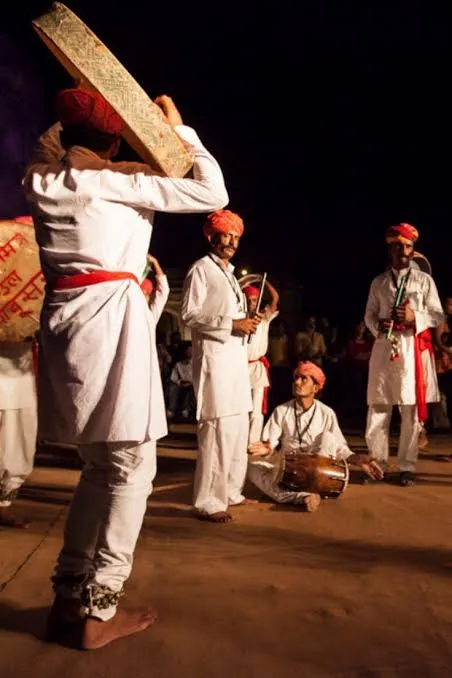
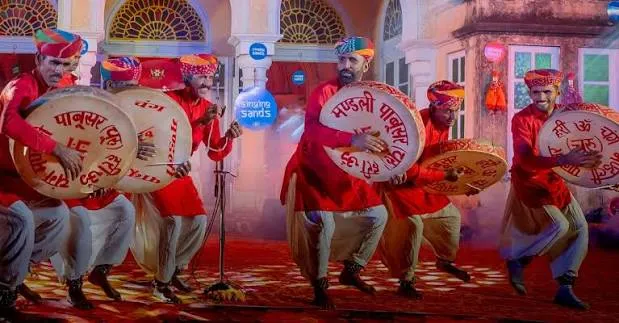
Chang is a traditional folk dance of Rajasthan, India, originating in the Shekhawati region and most prominently performed during the festival of Holi. Named after the principal percussion instrument used in the performance, the chang (a large frame drum resembling a tambourine), the dance is an exclusively male group form in which participants sing, dance, and play instruments in a communal circle. The dance period extends from the day of Maha Shivaratri and concludes on Dhulandi, the day following Holi. Chang is also locally referred to as Dhamal, a term that also designates the genre of folk songs sung during the performance.
The dance is most active in the districts of Sikar, Churu, Jhunjhunu, and Bikaner, all within the Shekhawati belt of northern Rajasthan. It occupies a central place in the celebration of Holi in this region and serves as a communal social event where men gather in the village square (chauk) after completing agricultural and domestic work.
Etymology
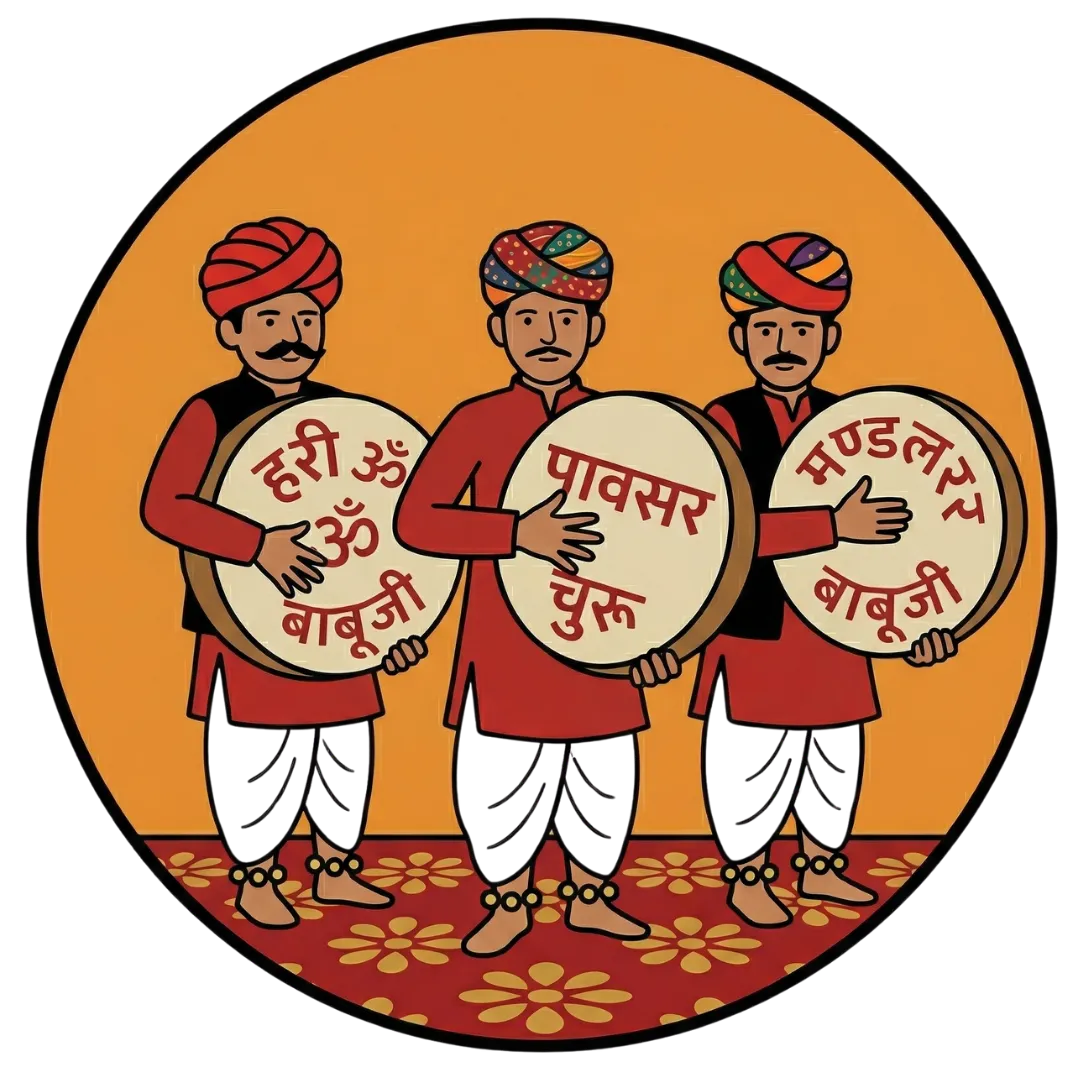
The name Chang derives directly from the instrument at the heart of the performance. The chang is a large single-sided frame drum with a wooden circular body typically measuring two to three feet in radius, covered on one side with stretched male sheepskin leather. The drum is sometimes decorated with turmeric paste and painted designs. The folk songs performed during the dance are called Dhamaal, and this term is used interchangeably with Chang as a name for the dance form itself in some documentary sources.
Origin
The dance traces its origin to the Shekhawati region of Rajasthan. Within this region, the districts of Sikar, Churu, Jhunjhunu, and Bikaner are documented as the principal areas where the dance is performed in a structured and organized manner. U. B. Mathur, in his work Treasure-trove of Rajasthan (Folklorists, 2002), describes Chang as a group dance performed by men to the rhythmic beat of the chang instrument, locating it firmly within the folk traditions of this geographic zone.
Location
The primary geography of Chang is the Shekhawati region of northern Rajasthan. Performances also occur in Bikaner and in border districts of Rajasthan, and the dance has spread more broadly across the state owing to its association with Holi celebrations, which are observed statewide. Devi Lal Samar, the founder of Lok Kala Mandal in Udaipur and a noted scholar of Rajasthani folk arts, identified Shekhawati as one of the distinct cultural zones of Rajasthan with its own characteristic dance traditions, of which Chang is a defining example.
Community
Chang is primarily associated with the communities of the Shekhawati region and is performed by men across caste lines. Contemporary accounts of the dance describe it as a form that transcends caste barriers, functioning as a socially inclusive celebration. Certain performance variations involve men dressing in female traditional costume and performing movements associated with Ghoomar, which is a women's dance. This cross-dressing element is documented as a distinct feature of Holi celebrations in the region and is considered part of the festive inversion associated with Holi in north India.
Relevance
Chang holds particular importance as the centerpiece of Holi celebrations in Shekhawati. Its continued practice in villages and towns of Sikar, Churu, Jhunjhunu, and Bikaner reflects an unbroken tradition of seasonal communal assembly. The dance has been documented in academic surveys of Rajasthani folk performing arts and has received coverage through cultural institutions such as Shekhawati Heritage (Indian Heritage Cities Network). It is considered a marker of regional identity in Shekhawati and is classified as a vulnerable form in contemporary surveys of Rajasthani performing arts, indicating reduced reach outside its core geography.
History
Background
Chang belongs to the broader category of seasonal harvest and festival dances documented across north and northwest India. The Shekhawati region, historically associated with merchant communities (Marwaris) and feudal Rajput landholders, developed a distinctive folk culture in which Holi occupied a prominent ceremonial role. The dance cycle beginning on Maha Shivaratri and ending on Dhulandi corresponds to a period of approximately two to three weeks in the Hindu lunar calendar (typically February to March). During this window, men gather nightly in the village chauk to perform Chang, making it as much a social institution as a performing art form.
Devi Lal Samar's tripartite classification of Rajasthani folk dances into hilly, Rajasthani, and eastern plains categories placed Chang within the Rajasthani category associated with the Shekhawati and Marwar belts. This classification is an early academic framework for understanding the geographic distribution of performing arts in the region.
Culture and Societies
The Shekhawati region developed a distinctive material culture from the 18th to early 20th centuries, during which its merchant families accumulated wealth through trade networks extending across India. This wealth funded elaborate haveli architecture decorated with fresco paintings, and also sustained performing arts including folk music and dance. Chang festivals were and continue to be a defining expression of communal identity in this landscape. The Gindar dance, another Holi-associated form of the Shekhawati town of Rajaldesar in Churu district, shares performance context with Chang, pointing to a shared seasonal festival culture in the region.
Religious Significance
Chang is performed as part of the Holi festival cycle, which in Hinduism celebrates the victory of good over evil, specifically the legend of Prahlada and Holika. The performance period beginning on Maha Shivaratri also situates the dance within the ritual calendar associated with Shiva worship. However, the dance itself is not a strictly devotional or temple-based performance. It functions primarily as a festive communal activity rather than as a ritual offering to a deity. The folk songs (Dhamaal) sung during Chang performances include praise of Bhaironji of Badhali, a local form of the deity Bhairav associated with Shiva. This establishes a loose but documented religious referent, though the dance as a whole is not classified as a devotional form in the manner of Terah Taali or similar Rajasthani traditions.
Understanding the Art
Style
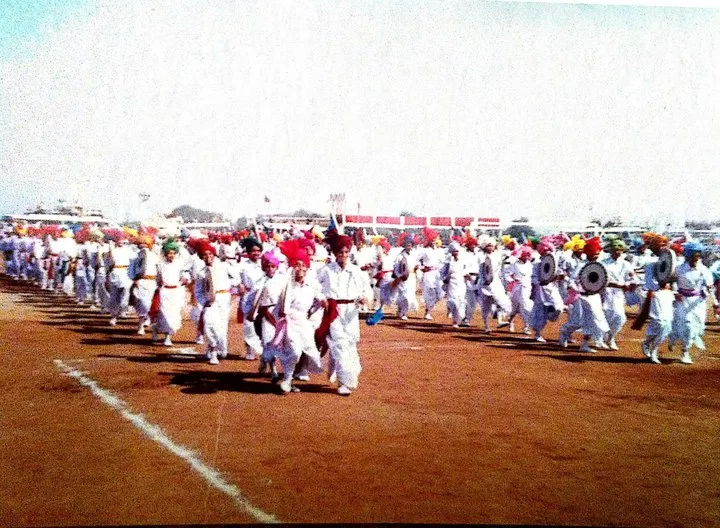
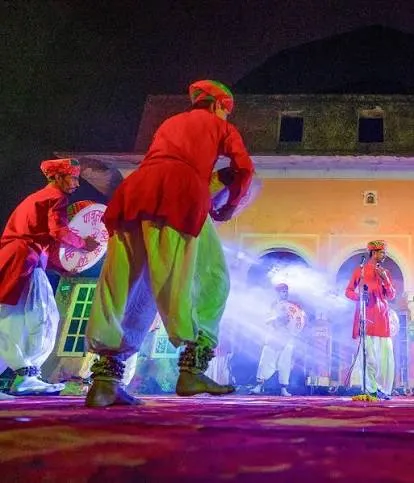
Chang is performed by a group of men who dance in a circle, each playing the chang instrument while also singing. The movements are energetic, characterized by fast-paced steps responding to the accelerating beats of the drum. Some accounts describe a sub-performance called Sang, which involves theatrical presentations within the dance event, though the structure of Sang remains limited in academic documentation. One distinctive stylistic element is the practice of men dressing in female costume to perform Ghoomar movements, which introduces a theatrical and carnivalesque dimension to the event consistent with the spirit of Holi.
Central Motifs and Their Significance
The primary symbolic content of Chang relates to the seasonal transition associated with Holi: the end of winter, the arrival of spring, and the agricultural renewal of the Rabi (winter crop) harvest cycle. The 108-night reference to Shivaratri as the start of the dance period also links it to the broader Hindu ritual calendar. The cross-dressing element carries social significance as a sanctioned inversion of gender norms during the Holi period.
Process
Performances take place in the evening and continue through the night in the village chauk. Men gather after completing daily work obligations. The chief instrument is the chang drum. Accompaniment also includes cymbals (manjiras), bamboo flute (bansuri), and ghungroo (ankle bells). The flute repertoire draws on folk traditions evoking pastoral imagery associated with Rajasthani village life. Songs are performed collectively, with the rhythmic beats of the chang providing the structural foundation. As Holi approaches, performances intensify in frequency and energy. The dance concludes with Dhulandi, the day of the playing of colors.
Mediums Used
The chang instrument itself is the defining material element. It consists of a wooden circular frame covered with sheepskin leather on one side, with a diameter of approximately two to three feet. The turmeric and paint decorations on the drum body are documented in Vipin Behari Goyal's Tirthraj Pushkar: Insight into Rural Life in Rajasthan (1997). Other instruments include bronze or iron cymbals, natural bamboo flutes with eight tone holes, and ghungroo ankle bells. In recent performances, dholak and harmonium have also been incorporated.
New Outlook
Chang faces challenges associated with urbanization and the migration of Shekhawati's historically commercial communities to metropolitan centers. The dance depends on village assembly and a communal calendar that is disrupted when populations relocate. Documentation efforts by cultural bodies such as the Indian Heritage Cities Network (which maintained a shekhawatiheritage.in portal) have attempted to record the tradition. The Jodhpur RIFF (Rajasthan International Folk Festival) has occasionally featured Shekhawati folk traditions including Chang. Contemporary status surveys classify Chang as a medium-relevance, vulnerable form, indicating that while it is not extinct, it is not thriving beyond its core geographic zone.
Learn Chang
Bibliography
Sources
Goyal, Vipin Behari. Tirthraj Pushkar: Insight into Rural Life in Rajasthan. Vipin Behari Goyal, 1997.
Kothari, Komal. Folk Musical Instruments of Rajasthan. Rupayan Sansthan, 1977.
Mathur, U. B. Treasure-trove of Rajasthan. Folklorists, 2002.
Sharma, B. K., Seema Kulshreshtha, and Asad R. Rahmani. Faunal Heritage of Rajasthan, India: General Background and Ecology of Vertebrates. Springer Science & Business Media, 2013.
Image Sources
"Chang Dance." Pinterest (UK), https://uk.pinterest.com/pin/836332593307570156/. Accessed 22 July 2026.
"Chang Dance." Wikipedia, Wikimedia Foundation, https://en.wikipedia.org/wiki/Chang_dance. Accessed 22 July 2026.
"Chang Dance." Dancing Peacock, https://dancingpeacock.in/chang-dance. Accessed 22 July 2026.
"Chang Dance." Dancing Peacock, https://dancingpeacock.in/chang-dance. Accessed 22 July 2026.