
Carnatic Classical - The Music Tradition of South India
Let us know more about Carnatic music!
Introduction
Carnatic classical music is one of the two principal classical music systems of India, the other being Hindustani music of North India. It is primarily practiced in the southern states of Tamil Nadu, Karnataka, Andhra Pradesh, and Kerala. The Carnatic system is distinguished by its emphasis on vocal music as the foundation of all musical expression, the extensive codification of melody (raga) and rhythm (tala), the central role of devotional composition in the repertoire, and the elaboration of improvisation within the structure of composed pieces. The tradition has a continuously documented history of theoretical and compositional development spanning at least several centuries, with the foundational theoretical framework articulated in the Sangita Ratnakara of Sarangadeva (13th century CE) and the tradition reaching its compositional peak in the 18th and early 19th centuries.
The overwhelming majority of the classical Carnatic repertoire consists of devotional compositions in praise of Hindu deities. This devotional character is not incidental but constitutive of the tradition's identity: the three composers known as the Carnatic Trinity, Tyagaraja (1767 to 1847), Muthuswami Dikshitar (1776 to 1827), and Syama Sastri (1762 to 1827), produced compositions that are both musically sophisticated vehicles for raga and tala development and theological statements of devotional philosophy.
Etymology
The term Carnatic is an Anglicization of Karnataka Sangitam, meaning music of Karnataka or codified music. The Sanskrit term Karnataka in this context does not refer exclusively to the modern state of Karnataka but to a broader cultural-geographical designation associated with the southern Deccan region. In Tamil usage, the tradition is referred to as Tamil Isai or Thenisai (southern music), a designation that emphasizes its southern geographic identity relative to the northern Hindustani system. The distinction between the two classical systems is conventionally dated to the political disruptions accompanying the Islamic sultanate expansion into North India from the 12th and 13th centuries onward. The Carnatic tradition, insulated from the Persian and Arabic musical influences that substantially shaped Hindustani music, retained closer continuity with the pre-medieval Sanskrit musical theory tradition.
Origin
The theoretical foundations of Carnatic music are traced to ancient Sanskrit treatises including the Natya Shastra of Bharata Muni (estimated between 200 BCE and 200 CE), which discusses the theory of swara (musical note), sruti (microtone), and grama (modal scale). The Dattilam (approximately the same period as the Natya Shastra) provides additional early documentation of melodic theory. The Sangita Ratnakara of Sarangadeva (13th century CE, composed at the Yadava court in Devagiri) is considered the primary theoretical source for both Carnatic and Hindustani music before their divergence.
Purandara Dasa (1484 to 1564) is credited with systematizing Carnatic pedagogy. Revered as the Pitamaha (grandfather) of Carnatic music, Purandara Dasa developed the foundational exercises for teaching the system: sarali swaras (scale exercises), alankaras (ornamental exercises), geethams (simple songs), and swarajathis (advanced practice compositions). This pedagogical system, still in use today, provided the framework through which the tradition was transmitted across generations. Purandara Dasa composed in Kannada and Sanskrit and is associated with the Haridasa movement of devotional music in Karnataka.
Location
The primary geographic centers of Carnatic classical music are Tamil Nadu, Karnataka, Andhra Pradesh, and Kerala. Chennai (formerly Madras) in Tamil Nadu is the most significant institutional center for the tradition, hosting the Madras Music Season, an annual festival of Carnatic music and dance that has been conducted since 1927 and is considered the preeminent annual gathering of Carnatic musicians and audiences in the world. Bangalore in Karnataka, Hyderabad in Telangana, Thiruvananthapuram in Kerala, and Thanjavur (historically the most significant royal patronage center) in Tamil Nadu are other major centers.
The Thanjavur Maratha court (17th to 19th centuries) was among the most important institutional patrons of Carnatic music during the period of the Carnatic Trinity, all three of whom were active in the Telugu and Tamil-speaking regions of South India. The Swati Tirunal of Travancore (1813 to 1846) was a significant royal composer and patron active in Kerala.
Community
Carnatic classical music has historically been practiced primarily, though not exclusively, by Brahmin communities of South India, particularly Iyer, Iyengar, and Telugu Brahmin families. The institutional and educational infrastructure of the tradition, including the kutcheri (concert) system and the gurukula (residential discipleship) mode of transmission, was primarily sustained by these communities. However, musicians from non-Brahmin and non-Hindu communities have participated in the tradition at significant levels. T. Balasaraswati (1918 to 1984), a devadasi community musician and Bharatanatyam dancer, was also a significant Carnatic vocalist. Several Muslim musicians have excelled in the tradition, and the violin, introduced by Baluswami Dikshitar (brother of Muthuswami Dikshitar) in the late 18th century, was subsequently adopted by musicians from various backgrounds.
Contemporary practice has expanded significantly beyond the traditional Brahmin-dominated community to include practitioners from all caste and religious backgrounds, and the tradition is practiced by diaspora Tamil, Telugu, and Kannadiga communities globally.
Relevance
Carnatic classical music is recognized as one of India's highest-status cultural traditions and is institutionally supported by the Sangeet Natak Akademi, the central government's apex body for the performing arts. The tradition is taught in a network of private music schools and academies throughout South India and globally. The Madras Music Academy, founded in 1928, is the oldest and most authoritative institutional body for the tradition. Several universities in South India offer undergraduate and postgraduate degrees in Carnatic music. The tradition has a significant recording industry, with hundreds of commercially available albums by leading artists. The Sangeet Natak Akademi Award and the Padma awards from the Government of India are regularly conferred on eminent Carnatic musicians.
History
Background
The history of Carnatic music between the period of Sarangadeva (13th century) and Purandara Dasa (16th century) is documented through a series of theoretical texts and through the records of the Vijayanagara Empire (1336 to 1646), which was a major patron of music, literature, and the arts. The Vijayanagara court produced the Swaramela Kalanidhi of Ramamatya (1550 CE), a theoretical text that documents the melodic systems in use during that period. The Chaturdandi Prakasika of Venkatamakhin (approximately 1620 CE) proposed the 72-melakarta system, a classification of all possible heptatonic scales within the South Indian tuning framework, which became the theoretical foundation of raga classification in Carnatic music.
The consolidation of the tradition in its present form occurred during the 18th and early 19th centuries with the output of the Carnatic Trinity. Tyagaraja composed an estimated 700 compositions (of which approximately 400 to 600 are in the active repertoire), predominantly in Telugu, in praise of Rama, in a compositional form called the kriti. Muthuswami Dikshitar composed approximately 480 compositions in Sanskrit and Tamil, many structured as mantra-embedded texts with considerable musicological sophistication, in a variety of forms including kriti, mangala, and tillana. Syama Sastri composed approximately 40 compositions, primarily in Telugu and Sanskrit, in praise of Goddess Kamakshi of Kanchipuram.
Culture and Societies
The kutcheri (concert) format that structures modern Carnatic performance developed in its present form in the late 19th and early 20th centuries. Before this period, Carnatic music was performed primarily in temple and court contexts. The emergence of a public concert system, influenced in part by the establishment of the Madras Music Academy and by changes in patronage structures following the end of the Maratha and Nayak courts, produced the standardized concert format that is now universal. The standard kutcheri sequence progresses from an opening varnam through a series of kritis to a main raga-tanam-pallavi composition and concludes with lighter pieces.
The devadasi community (women dedicated to temple service) was historically a primary professional performance community for both Carnatic music and Bharatanatyam. The devadasi system, through which these women were trained to high levels of musical proficiency, was abolished by legislation in 1947, which had significant implications for the transmission of repertoire and practice that had been maintained within that community.
Religious Significance
Carnatic classical music is deeply and constitutively religious. The vast majority of the classical repertoire consists of compositions addressed to Hindu deities, and the act of musical performance is understood within the tradition as a form of worship. Tyagaraja explicitly articulated the position that sangeetam (music) is a vehicle for experiencing the divine, a view expressed in his composition Swara raga sudha (nectar of notes and ragas). The concept of nada-brahman, the identity of sound with ultimate reality, is central to the philosophical self-understanding of the tradition. Concert performances begin and end with invocatory compositions and often include compositions addressed to multiple deities in a programmatic sequence. Temple music in South India, particularly the performance of tevaram hymns by odhuvars in Tamil Nadu Shaiva temples, represents an active liturgical branch of the broader Carnatic tradition. The Thyagaraja Aradhana, an annual festival commemorating Tyagaraja held at Thiruvaiyaru in Tamil Nadu, is among the largest gatherings of classical musicians in the world.
Understanding the Art
Style
The Carnatic system is built upon three interdependent elements: sruti (the fixed pitch reference or drone), swara (the seven notes of the scale, named Sa, Ri, Ga, Ma, Pa, Dha, Ni), and tala (rhythmic cycle). Raga is the melodic framework that defines a set of notes, their specific ornaments, characteristic phrases, and the aesthetic mood they produce. The 72-melakarta (parent raga) system of Venkatamakhin provides the theoretical foundation for the approximately 300 ragas in current use, of which approximately 60 to 70 are in frequent performance use.
The principal compositional forms of Carnatic music include the kriti (a three-part structure of pallavi, anupallavi, and charana), the varnam (a technical study-composition used to begin concerts and practice sessions), the javali (a lighter romantic composition), the tillana (a rhythmic composition using solfege syllables and brief text), and the ragam-tanam-pallavi (an extended improvisatory form constituting the centerpiece of a serious concert). Improvisation within raga frameworks, called alapana (melodic improvisation without rhythm) and niraval and kalpanaswaras (improvisation within a rhythmic framework), are central features of performance.
Central Motifs and Their Significance
The devotional content of Carnatic compositions focuses primarily on praise of Hindu deities with philosophical elaboration. Tyagaraja's compositions frequently engage with Vedantic and Vaishnava theological themes, including the nature of devotion, the contrast between worldly attachment and divine grace, and the capacity of music itself to communicate with the divine. Muthuswami Dikshitar's compositions integrate the mantra traditions of the Shrividya school of Tantra with classical raga theory, producing compositions that function simultaneously as musical works and as mantric utterances. These compositions encode specific Sanskrit seed syllables (bijaksharas) within their texts in accordance with tantric conventions.
Process
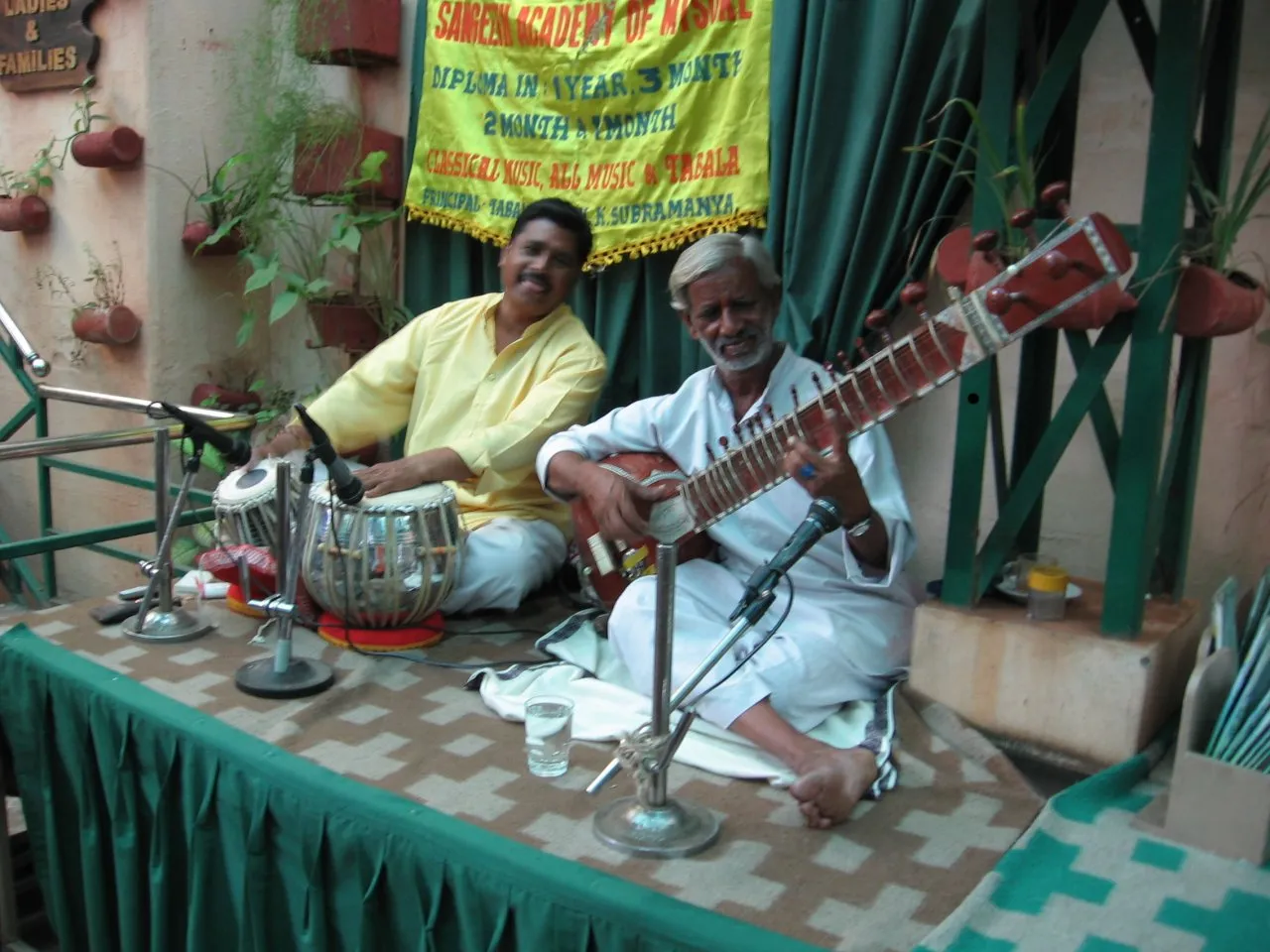
Carnatic music training traditionally followed the gurukula model, in which the student resided with the teacher for extended periods. Contemporary training is primarily conducted through weekly or more frequent private lessons combined with institutional instruction. The pedagogical sequence developed by Purandara Dasa, progressing from sarali swaras through alankaras, geethams, and swarajathis before proceeding to kritis and advanced forms, remains the universal standard for beginning students. Advanced students learn raga and tala theory, and the practice of manodharma sangita (improvisation) is developed over years of training.
Mediums Used
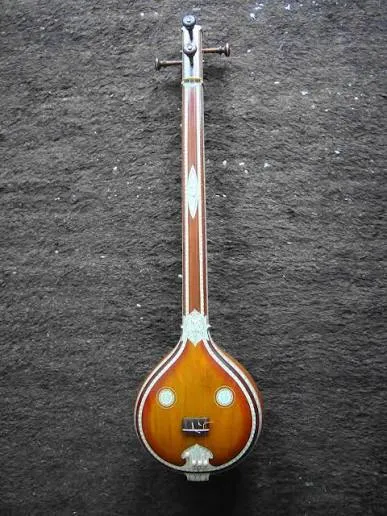
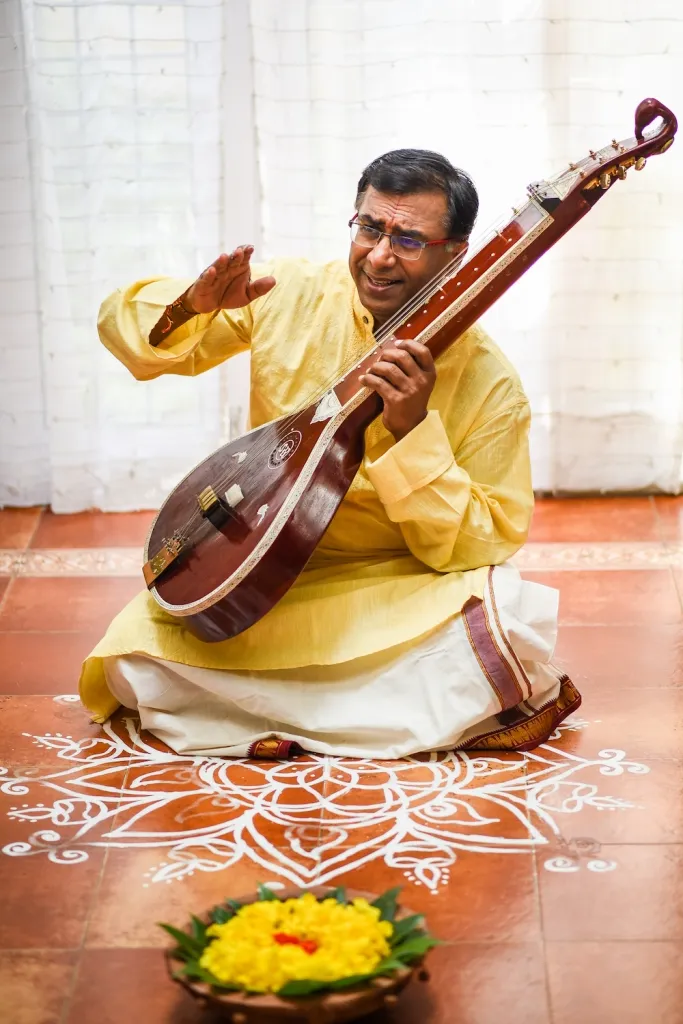
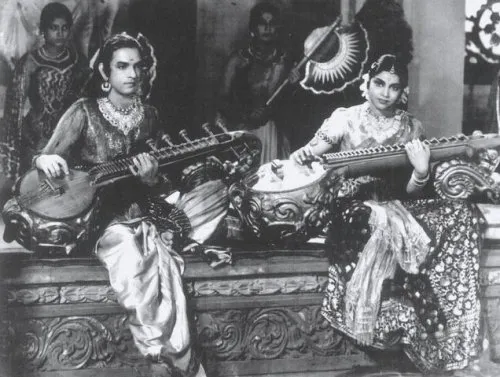
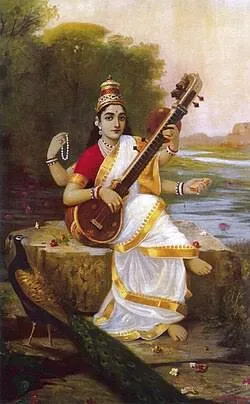
The principal instruments of Carnatic music are the veena (plucked chordophone, considered the foundational instrument), the violin (adopted in the late 18th century and now fully integrated), the venu (bamboo flute), the gottuvadyam (a slide version of the veena), and the nadaswaram (outdoor reed instrument used primarily in temple and processional contexts). Percussion instruments include the mridangam (primary rhythmic instrument), the ghatam (clay pot used as a percussion instrument), the kanjira (small frame drum with a lizard skin membrane), the tavil (barrel drum used with nadaswaram), and the morsing (jaw harp). The tanpura provides the drone, though electronic sruti boxes are widely used in contemporary practice.
New Outlook
Carnatic classical music has maintained strong institutional health in the 21st century while also adapting to new contexts. The diaspora Tamil and Telugu communities in North America, the United Kingdom, Singapore, and Australia have established significant Carnatic music teaching and performance networks. Major recording labels have produced extensive catalogs of Carnatic music. Digital platforms have enabled access to concert recordings, teaching videos, and compositions for practitioners globally.
Several musicians have engaged in fusion and collaborative projects that contextualize Carnatic music within broader world music and crossover frameworks. The violinist L. Subramaniam, the vocalist T.M. Krishna, and the saxophonist Kadri Gopalnath have all engaged in cross-genre collaborations. These engagements have generated debates within the tradition about the relationship between classical purity and artistic adaptation. The Madras Music Academy continues to function as the authoritative institutional arbiter of classical standards.
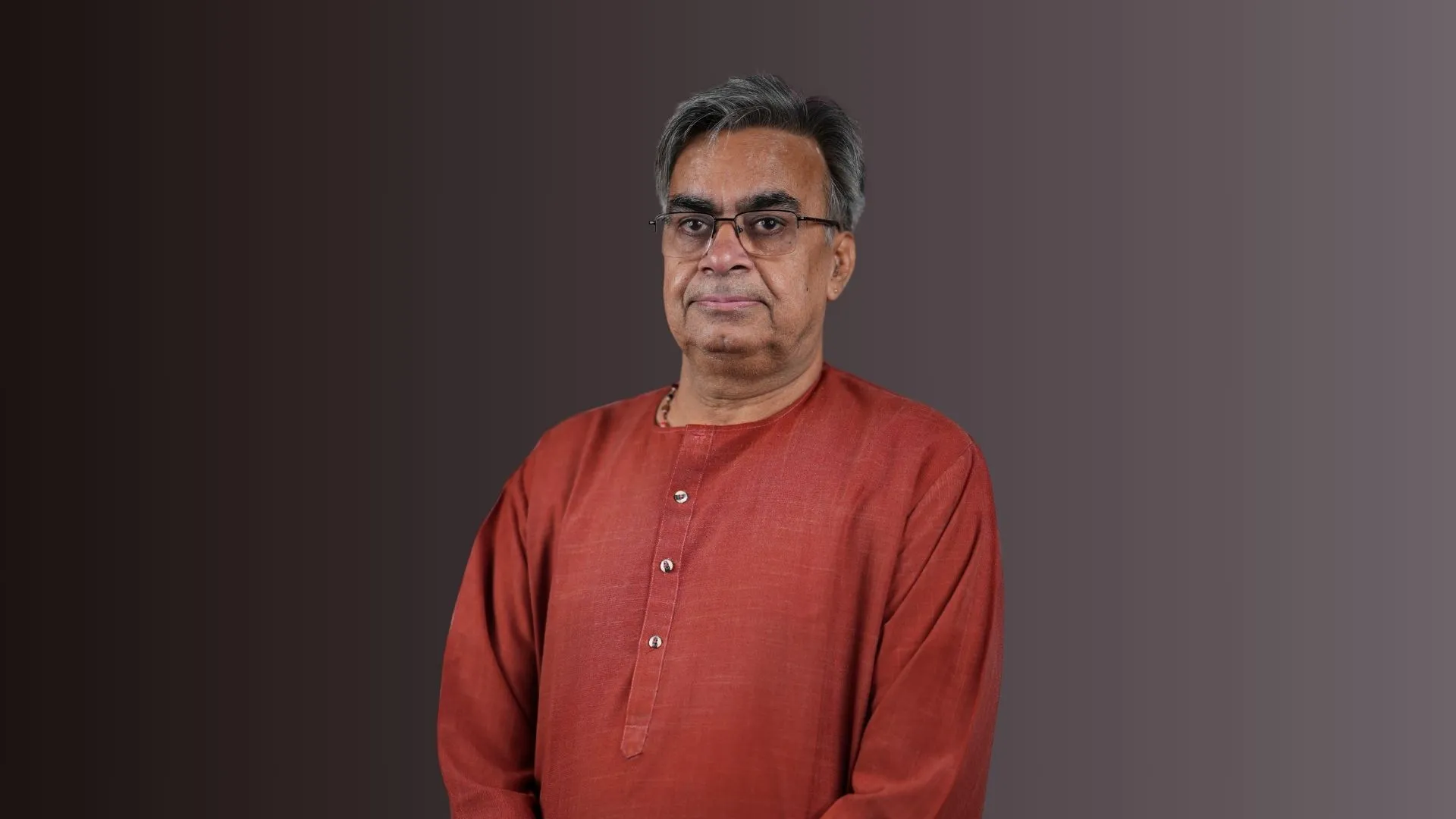
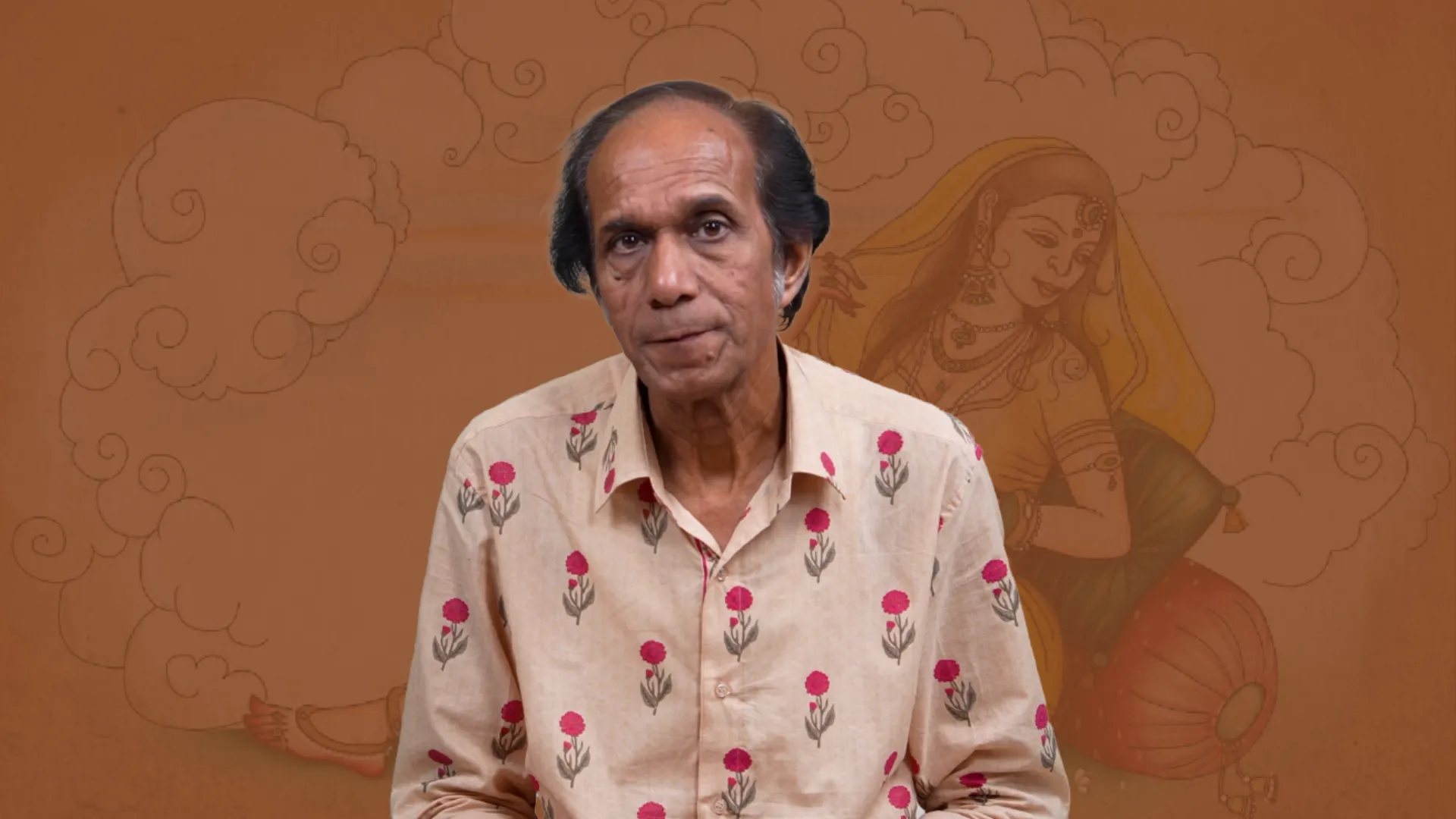
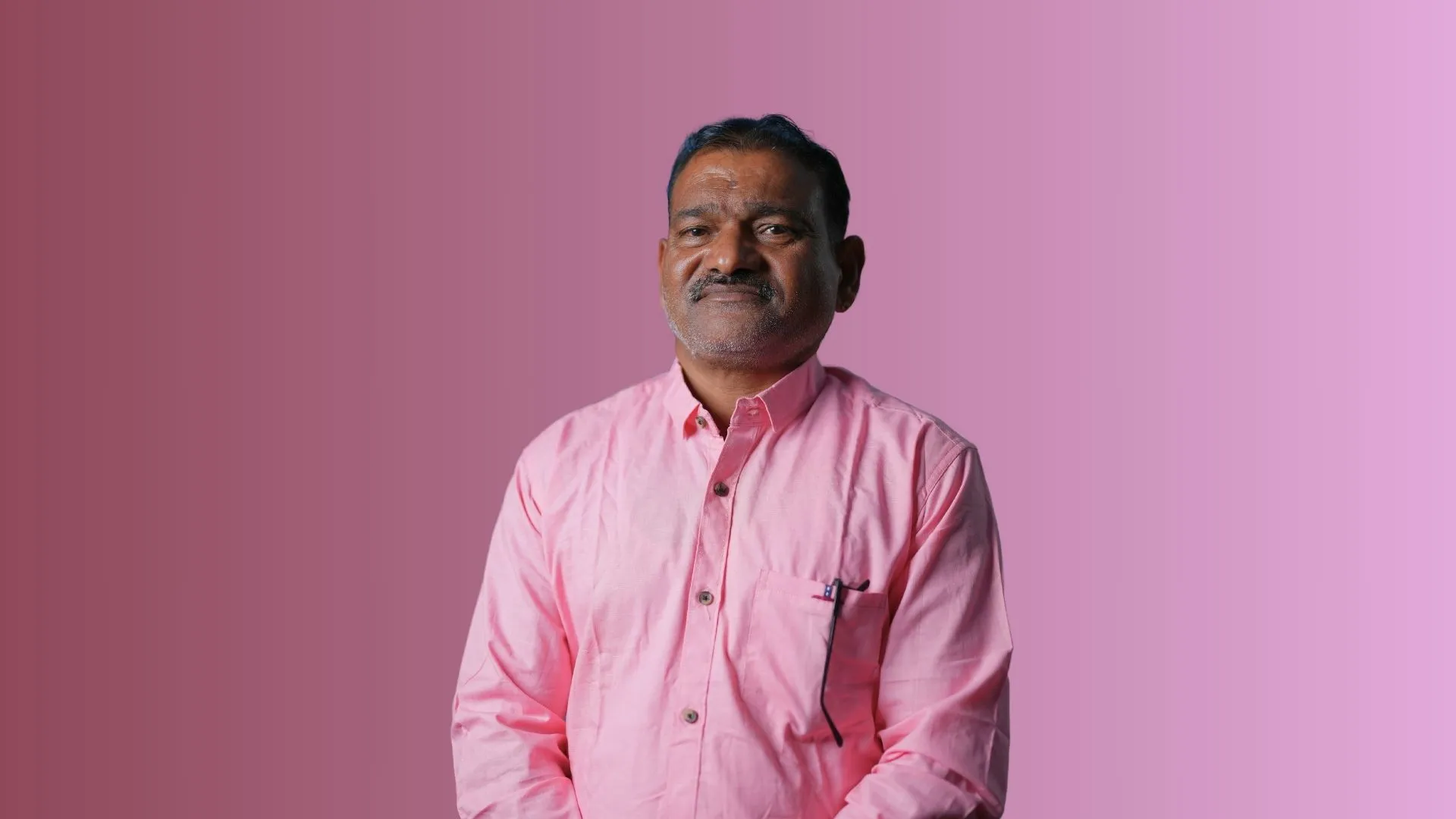
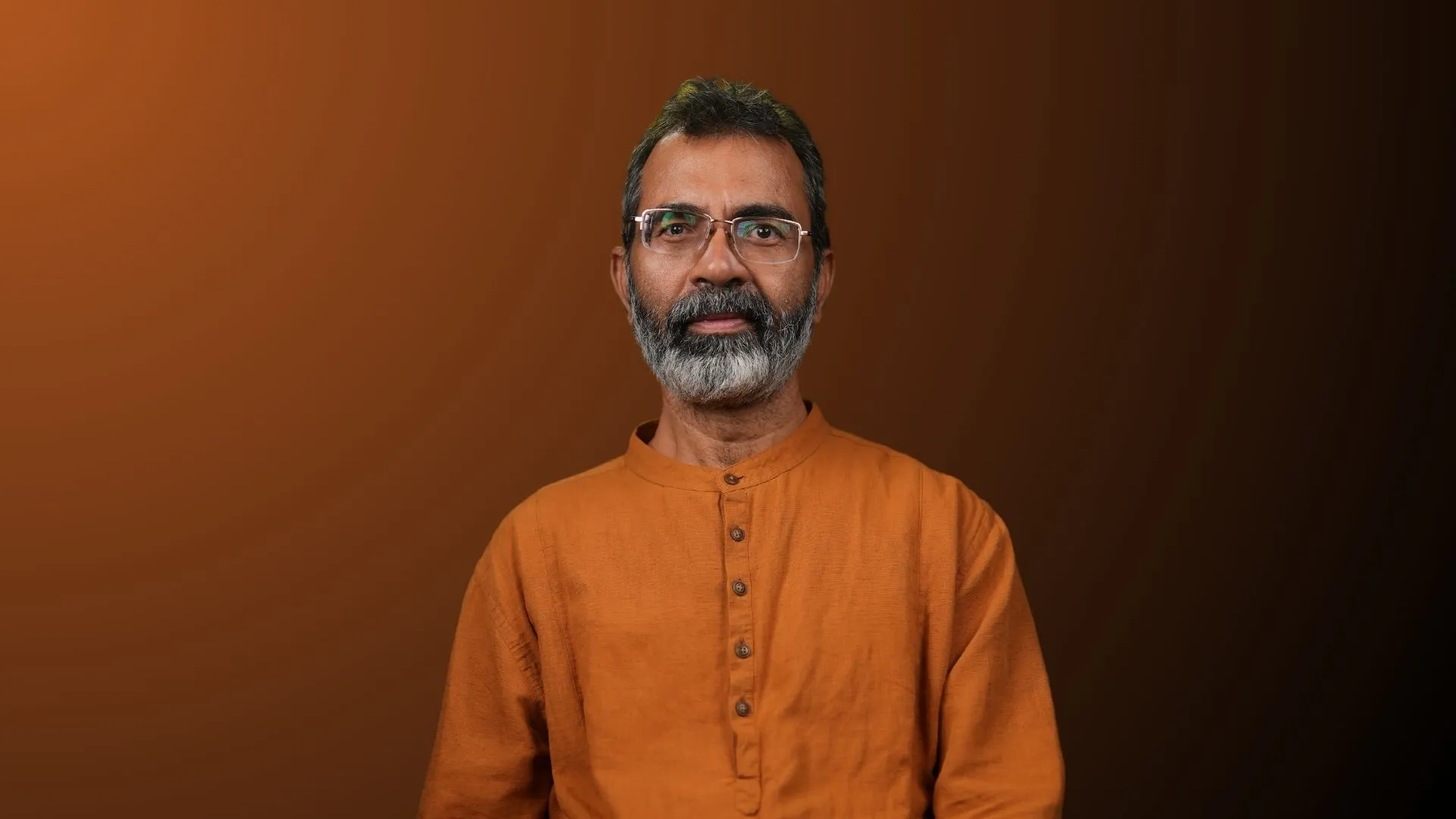
Learn Carnatic Music
Bibliography
Sources
Dikshitar, Subbarama. Sangeeta Sampradaya Pradarsini. Ethnomusicological Society of South India, 1904. Reprint, 2006.
Jackson, William J. Tyagaraja: Life and Lyrics. Oxford University Press, 1991.
Nettl, Bruno, editor. The Garland Encyclopedia of World Music: South Asia. Routledge, 2000.
Sambamoorthy, P. South Indian Music. 6 vols., The Indian Music Publishing House, 1973.
Seetha, S. Tanjore as a Seat of Music. University of Madras, 1981.
Viswanathan, T., and Matthew Harp Allen. Music in South India: The Karnataka Concert Tradition and Beyond. Oxford University Press, 2004.
Image Sources
"The Ritualistic Singing of S.P.S. in Carnatic Music." Acharyanet, https://www.acharyanet.com/the-ritualistic-singing-of-s-p-s-in-carnatic-music/. Accessed 22 July 2026.
"10 Movies Every Carnatic Musician Should See." High On Score, https://highonscore.com/10-movies-every-carnatic-musician-should-see/. Accessed 22 July 2026.
"Carnatic Music Image." Google Images, https://encrypted-tbn0.gstatic.com/images?q=tbn:ANd9GcSi8KBaPtgpw7UXuN0xS4P6KUsIUWWpDVj04n5CJvaWSg&s=10. Accessed 22 July 2026.
"File: Carnatic Music (132527502).jpg." Wikimedia Commons, https://commons.wikimedia.org/wiki/File:Carnatic_Music_%28132527502%29.jpg. Accessed 22 July 2026.
"Carnatic Music." Wikipedia, Wikimedia Foundation, https://en.wikipedia.org/wiki/Carnatic_music. Accessed 22 July 2026.