
Bhakti Sangeet - The Music Tradition of Pan-India
Discover more about the Bhakti Sangeet, a collection of interrelated devotional practices unified by their emphasis on loving devotion.
Introduction
Bhakti Sangeet is a vast and historically layered tradition of devotional music in India, rooted in the theological premise that music constitutes a direct medium of communion with the divine. Spanning numerous regional languages, melodic frameworks, and ritual contexts, Bhakti Sangeet encompasses compositions and performance practices that emerged from the Bhakti movement, which swept across the Indian subcontinent between approximately the 7th and 17th centuries CE. The tradition includes, but is not limited to, the genres of bhajan, kirtan, abhang, padavali kirtan, haveli sangeet, shyama sangeet, and gurbani kirtan. Each form carries distinct regional and theological identities while sharing the foundational conviction that musical devotion, whether directed toward a deity with form (saguna) or a formless absolute (nirguna), constitutes a path toward liberation. The tradition is not a single, codified musical system but a collection of interrelated devotional practices unified by their emphasis on bhakti, or loving devotion. Bhakti Sangeet is practiced across Hindu, Sikh, and syncretic spiritual communities, and has shaped the development of classical, semi-classical, and folk music throughout the subcontinent.
Etymology
The term Bhakti Sangeet derives from two Sanskrit words. Bhakti originates from the root bhaj, meaning to share, divide, or to be devoted to, and carries the theological sense of loving devotion directed toward a deity or divine principle. Sangeet derives from the Sanskrit root sam (together) combined with gita (song), yielding the compound meaning of music performed in union. The term sangeet in classical Indian usage encompasses not only vocal and instrumental music but also dance, reflecting the integrated nature of performance arts in Sanskrit treatise traditions. The compound Bhakti Sangeet therefore denotes music performed in the spirit of devotion. Historical usage of this compound varies across regional traditions; in Braj and Rajasthani contexts, the term has historically applied to compositions in praise of Krishna, while in Maharashtra the equivalent tradition is often identified through the term abhang sangeet or sant sangeet.
Origin
The origins of Bhakti Sangeet as an organized tradition are traceable to two broad streams. The first stream emerged in South India between the 7th and 10th centuries CE with the poetry and songs of the Alvars (Vaishnava poet-saints) and Nayanars (Shaiva poet-saints). The Alvars composed in Tamil and their devotional hymns, collectively called the Divya Prabandham, were compiled in the 10th century by Nathamuni into a body of 4,000 verses. The Nayanars similarly produced the Tirumurai, a collection of Shaiva hymns of which the Tevaram by Appar, Sundarar, and Thirugnana Sambandhar forms the core. These collections established the precedent of vernacular devotional poetry set to music within liturgical frameworks.
The second stream arose in North India beginning in the 12th century and intensified through the 15th to 17th centuries. Key figures in this northern Bhakti movement include Kabir (approximately 1440 to 1518), Mirabai (approximately 1498 to 1547), Tulsidas (1532 to 1623), Surdas (approximately 1478 to 1583), and the Ashtachhap poets associated with the Pushti Marg founded by Vallabhacharya (1479 to 1531). These saints composed in vernacular languages including Braj Bhasha, Awadhi, Rajasthani, and Maithili, making devotional music accessible beyond Sanskrit-literate audiences.
Purandara Dasa (1484 to 1564), active in Karnataka, is credited with systematizing Carnatic devotional music and is revered as the Pitamaha (grandfather) of Carnatic music. His compositions formed the foundation of haveli sangeet and were instrumental in transmitting devotional music through organized pedagogy. The Gita Govinda, composed by Jayadeva in the 12th century in Sanskrit, is considered among the earliest formalized sets of devotional musical compositions (ashtapadis) that influenced later padavali kirtan traditions in Bengal and Manipur.
Location
Bhakti Sangeet as a tradition has no single geographic center, as it developed simultaneously and independently across multiple regions of the Indian subcontinent. Tamil Nadu and Kerala are the primary regions associated with the Alvar and Nayanar tradition. The Vaishnavite tradition of Vrindavan and Mathura in Uttar Pradesh gave rise to haveli sangeet. Maharashtra is the principal location for the abhang tradition associated with the Varkari movement and saints such as Dnyaneshwar (1275 to 1296), Eknath (1533 to 1599), and Tukaram (1608 to 1650). West Bengal and Odisha are centers of padavali kirtan and shyama sangeet. Punjab is the home of gurbani kirtan within the Sikh tradition. Rajasthan is associated with compositions by Mirabai and the mewar kirtan tradition. The tradition therefore extends across the entire Indian subcontinent with regional concentrations tied to specific saint-poet lineages and institutional centers.
Community
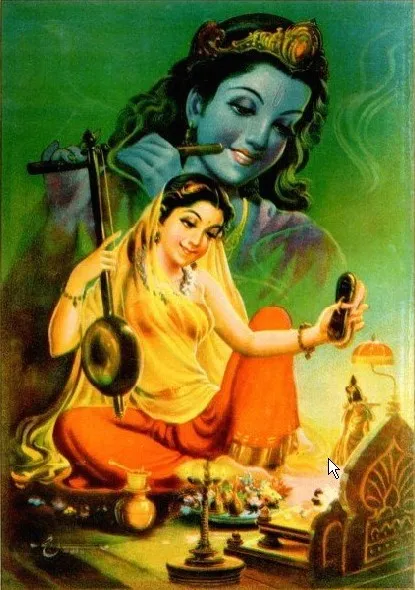
Bhakti Sangeet is practiced across multiple caste, community, and religious backgrounds, one of its historically significant features being its relative democratization of religious participation through music. The Bhakti movement itself was notable for including saint-poets from communities outside the traditional Brahmin priestly class, including Kabir (weaver community), Ravidas (cobbler community), Namdev (tailor community), Chokhamela (Mahar community), and Kanakadasa (shepherd community). Within Sikh communities, gurbani kirtan is performed by trained ragis (kirtan singers) and is institutionally central to Sikh worship. In Vaishnava communities of Bengal, padavali kirtan is performed by specialized groups known as Vaishnava padavali kirtaniya. In Maharashtra, the Varkari tradition involves mass public kirtan at pilgrimage sites such as Pandharpur. The tradition has historically included women as central practitioners, most visibly through the figure of Mirabai, whose compositions remain widely performed.
Relevance
Bhakti Sangeet holds high cultural relevance in contemporary India. It functions both as a living religious practice and as a significant component of India's performing arts heritage. Public performances of bhajans and kirtans remain central to Hindu and Sikh religious life across the country. The tradition has also been incorporated into classical music curricula, with compositions by Kabir, Mirabai, Tulsidas, and Surdas forming standard repertoire in both Hindustani and Carnatic vocal training. Broadcasting institutions including All India Radio have historically disseminated Bhakti Sangeet performances nationally. Several state governments and cultural bodies such as the Sangeet Natak Akademi recognize Bhakti Sangeet performers with awards.
History
Background
The intellectual and theological foundation of Bhakti Sangeet is rooted in the concept of Nada-Brahman, the doctrine articulated in various Upanishadic and Tantric texts that sound (nada) is identical with ultimate reality (Brahman). The Sama Veda, one of the four Vedas, is itself composed as a musical text, setting Rigvedic hymns to melodic patterns, and is considered among the earliest instances of organized sacred song in the Indian tradition. The Natya Shastra of Bharata Muni (estimated between the 2nd century BCE and the 2nd century CE) codifies the relationship between music, emotion (rasa), and divine experience.
The institutionalization of devotional music as a path to liberation gained theological articulation in the Bhagavata Purana (estimated 9th to 10th centuries CE), particularly the tenth canto, which describes Krishna's cosmic music as expressed through the flute and its effect on all creation. The Narada Bhakti Sutras and Sandilya Bhakti Sutras formalized bhakti as a legitimate philosophical path equivalent to jnana (knowledge) and karma (action). These texts provided the doctrinal basis for the saint-poet movements that followed.
Culture and Societies
The Bhakti movement represented a significant cultural and social intervention in medieval Indian society. The saint-poets who produced much of the foundational repertoire of Bhakti Sangeet composed in vernacular languages and frequently challenged caste-based restrictions on religious participation. Kabir's compositions, which drew equally from Hindu and Islamic spiritual vocabularies, are among the most widely cited examples of devotional poetry that transcended sectarian boundaries. The nirguna tradition he exemplified, together with figures such as Ravidas, Dadu Dayal, and Pipa, produced a body of sung compositions that are categorized as nirguni bhajans and continue to be performed across North India.
The saguna tradition, centered on devotion to deity with form, particularly Krishna, produced a distinct body of musical literature. The Ashtachhap poets under Vallabhacharya composed kirtans specifically for ritual performance at haveli (temple-home) settings. Their compositions observe specific raga-tala assignments for different times of day and seasons, a system known as ashta-yama seva, integrating musical performance into the daily ritual schedule of the deity. The Varkari tradition in Maharashtra used kirtan as a vehicle for social commentary alongside devotional expression. Tukaram's abhangs documented social inequity while asserting the primacy of devotion over ritual hierarchy. These compositions were intended for communal singing and are categorized as kirtan in Maharashtra, forming a distinct subcategory of Bhakti Sangeet with an identifiable performance tradition.
Religious Significance
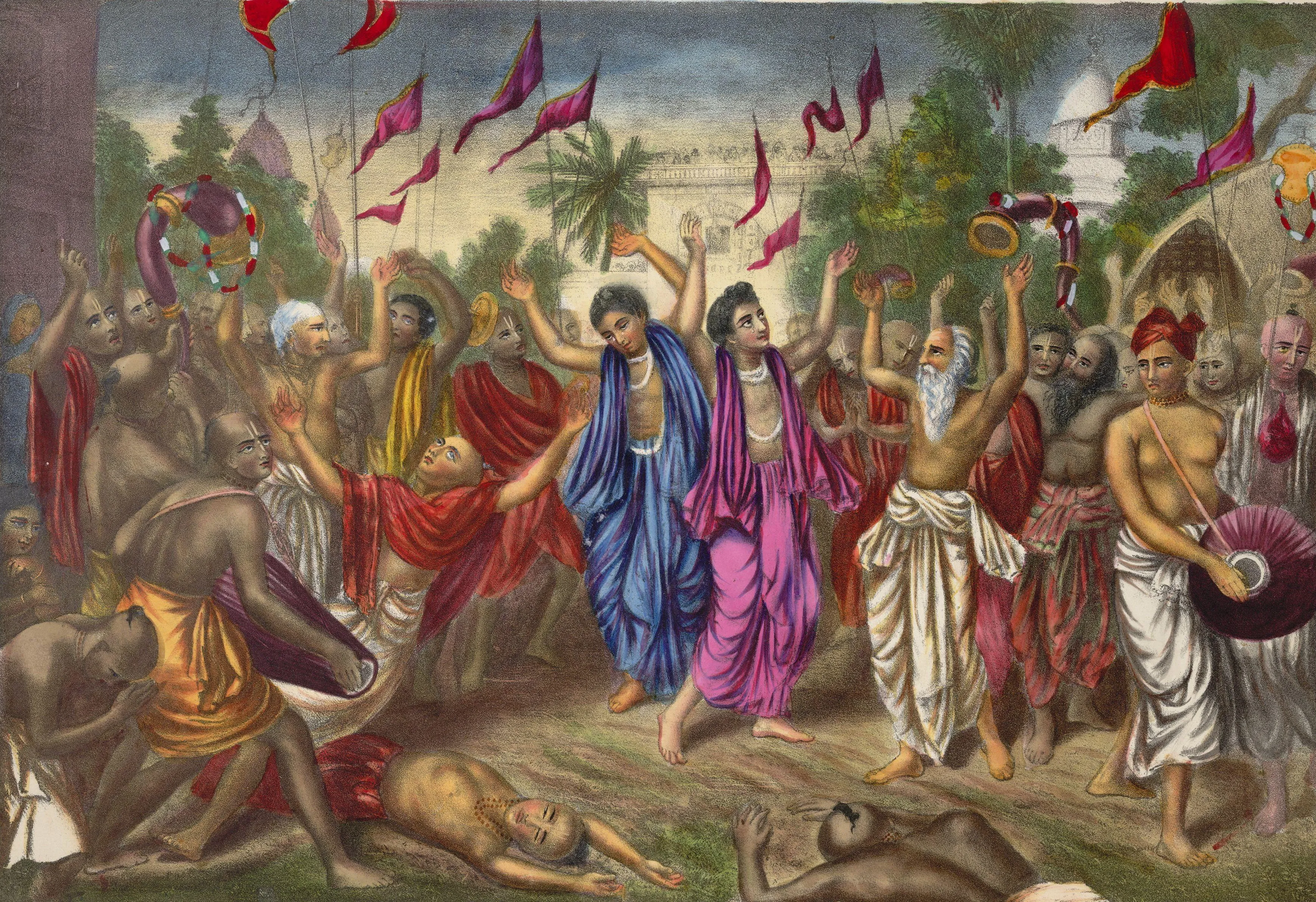
Bhakti Sangeet occupies a central position in the religious life of multiple communities across India. In Vaishnavite contexts, kirtan is understood not merely as musical performance but as a form of seva (service to the deity), a doctrine articulated in the Bhagavata Purana and elaborated by commentators of the Gaudiya Vaishnava tradition including Rupa Goswami (1489 to 1564). The Gaudiya tradition, founded by Chaitanya Mahaprabhu (1486 to 1534), placed sankirtan (communal singing) at the center of devotional practice, a practice that subsequently spread through the work of his followers and was documented in texts such as the Chaitanya Charitamrita of Krishnadasa Kaviraja (1615 CE).
In the Sikh tradition, shabad kirtan, the singing of compositions from the Guru Granth Sahib, is the primary form of congregational worship. The compositions in the Guru Granth Sahib are organized by raga, reflecting the integration of Hindustani classical music theory into Sikh devotional practice. In the Shaiva traditions of Tamil Nadu, the Tevaram hymns set to Panniru Thirumurai music are sung as liturgical performance in temples. The Oduvars (temple singers of Tamil Nadu) constitute a specialized hereditary community responsible for singing these compositions in temple worship contexts.
Understanding the Art
Style
Bhakti Sangeet does not constitute a single musical style but encompasses a spectrum of regional and genre-specific forms united by devotional intent. The bhajan, the most widely practiced form, is a composed devotional song typically structured in sthayi (refrain) and antara (verse) format, performed with raga-based melodic material and tala-based rhythmic cycles. Kirtans are characterized by their communal, participatory nature and often employ call-and-response patterns between a lead performer and a responding group. Abhangs in the Varkari tradition are performed in a group setting with instruments including the veena, mridanga, cymbals (taal), and the ektar (single-stringed instrument), and are metrically distinct from bhajans composed in classical raga structures.
Haveli sangeet, associated with the Pushti Marg tradition in Mathura and Nathdwara, is among the most formally structured forms of Bhakti Sangeet. Compositions are assigned to specific ragas according to the time of day, season, and ritual context, and are performed within the architectural setting of the haveli (sacred residential temple). The seasonal cycle of compositions in this tradition covers all twelve months and integrates musical performance with visual offerings (swaroopa darshan) of the deity.
Gurbani kirtan within the Sikh tradition is performed in strict raga contexts as codified in the Guru Granth Sahib, which assigns each shabad to a specific raga. The principal instruments used are the taus, dilruba, saranda, rabab, and harmonium, with tabla and pakhawaj as percussion instruments.
Central Motifs and Their Significance
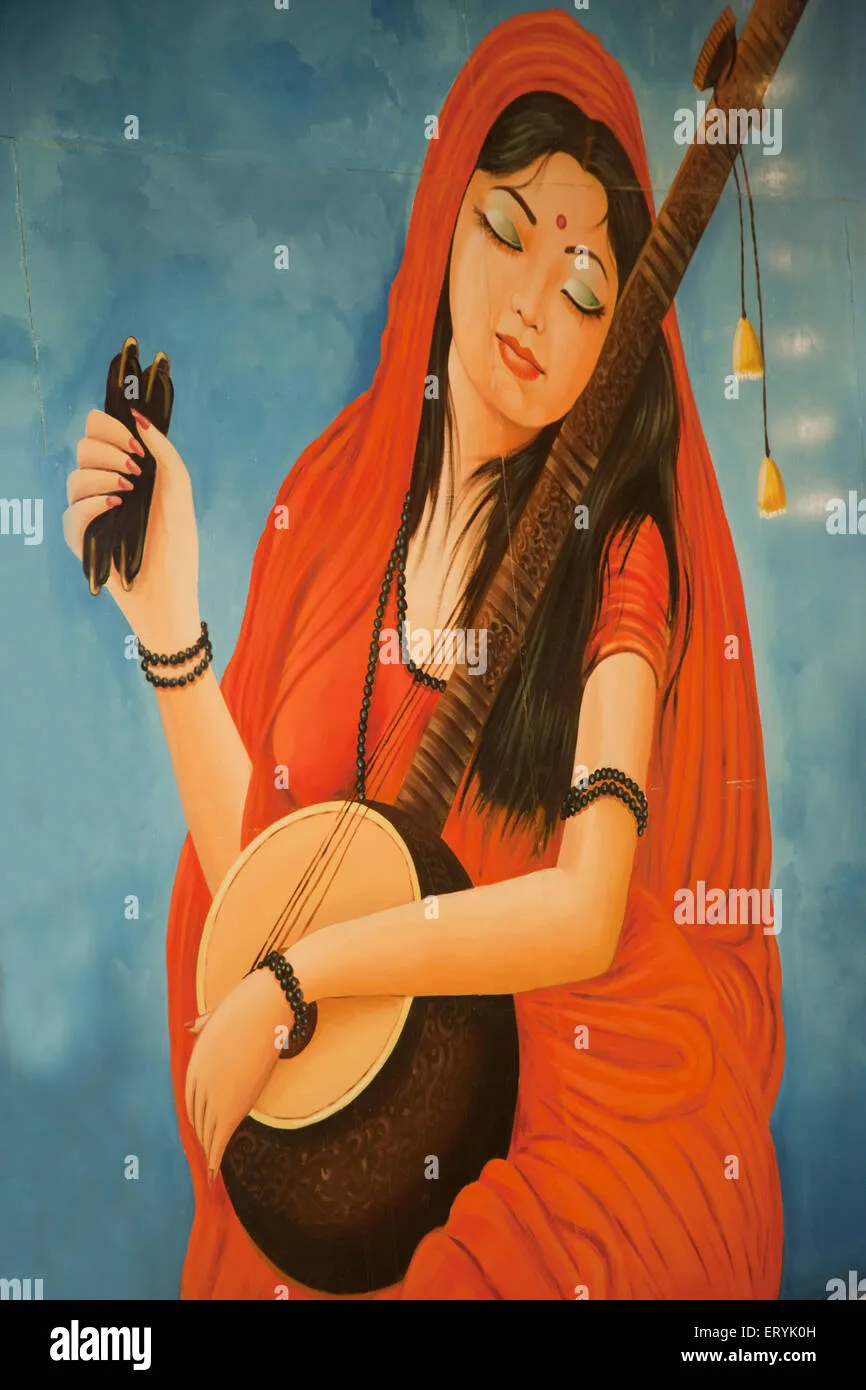
The devotional content of Bhakti Sangeet compositions encompasses several recurring thematic categories. In saguna traditions, compositions describe the divine form, attributes, and activities of deities, particularly Krishna and Rama. The viraha (separation) motif, depicting the longing of the devotee for the divine, is among the most significant in the Bhakti tradition, and is most prominently expressed in compositions attributed to Mirabai and in the padavali tradition of Bengal. The motif of union (milan) constitutes the complementary counterpart to viraha.
In nirguna traditions associated with Kabir, Ravidas, and Dadu, the central motif is the formless divine identified through paradoxical language and through the interior experience of the practitioner. Kabir's compositions frequently use the motif of the surat-shabda yoga, the merging of consciousness (surat) with the divine word (shabda), reflecting the influence of Nath yoga on his thought.
Process
Bhakti Sangeet is transmitted primarily through the guru-shishya (teacher-disciple) system, in which compositions, melodic settings, and performance practice are transferred orally from teacher to student over extended periods. In haveli sangeet, transmission occurs within specialized families (kirtankar families) who hold hereditary rights to perform within specific temples. In the Varkari tradition, kirtankars undergo training that includes both the musical and doctrinal dimensions of the tradition. In the Gaudiya tradition, training in sankirtan is institutionally maintained through mathas (monasteries) and temples.
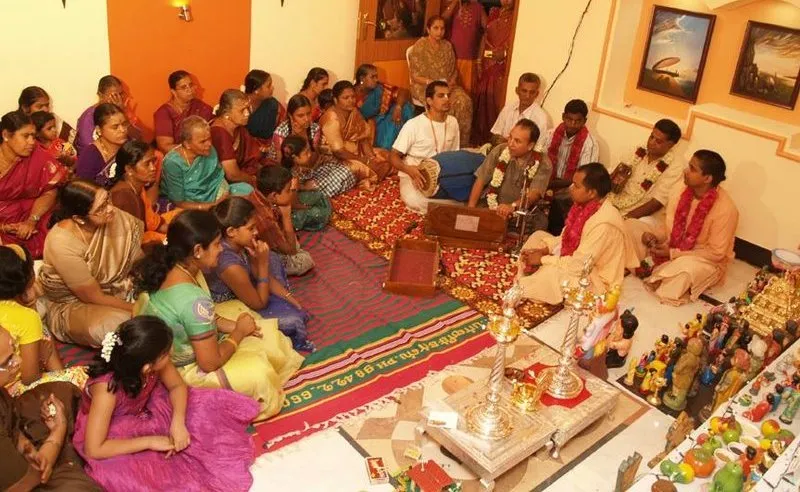
Performance contexts vary significantly. Communal performance at temples, during festivals such as Janmashtami, Holi, Ram Navami, and Diwali, and at life-cycle events such as naming ceremonies and death anniversaries (barsi) represents the primary context of Bhakti Sangeet. Individual or small-group recitation as personal spiritual practice (sadhana) is also documented across all regional traditions.
Mediums Used
The instrumental accompaniment of Bhakti Sangeet varies by region and form. Instruments commonly used include the harmonium (widely adopted in North India from the 19th century onward), tabla, dholak (hand drum), pakhawaj (barrel drum), mridangam (in South Indian forms), khol or mridanga (in Bengal and Manipur), cymbals (manjira, jhanj, taal), tanpura (drone instrument), sitar, sarangi, and veena. In the Sikh tradition, stringed instruments of medieval Indian origin including the rabab and taus are specifically associated with gurbani kirtan performance.
New Outlook
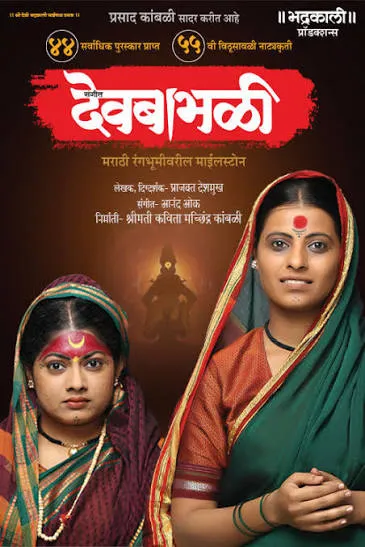
Contemporary Bhakti Sangeet practice has expanded significantly beyond traditional performance contexts. Commercial recordings of bhajans and kirtans by artists such as Pandit Jasraj, Anup Jalota, Lata Mangeshkar, M.S. Subbulakshmi, and Anuradha Paudwal have made the tradition widely accessible. The Global Kirtan movement, influenced by Gaudiya Vaishnava missionary activity beginning with the International Society for Krishna Consciousness (ISKCON) founded in 1966, has introduced kirtan practice to international audiences. Western artists and practitioners including Krishna Das (Jeffrey Kagel) and Jai Uttal have produced recordings of bhajans and kirtans that have circulated widely outside India. Academic study of Bhakti Sangeet has increased at institutions including Banaras Hindu University, the Indira Kala Sangit University in Khairagarh, and the Sangeet Natak Akademi in New Delhi. Ethnomusicological research has documented regional traditions, with notable contributions from scholars such as Charles Capwell on Bengal kirtan and Anna Schultz on Bhakti performance in Maharashtra.
Learn Bhakti Sangeet

Bibliography
Sources
Hawley, John Stratton, and Mark Juergensmeyer. Songs of the Saints of India. Oxford University Press, 1988.
Vaudeville, Charlotte. Kabir. Oxford University Press, 1974.
Wulff, Donna M. Drama as a Mode of Religious Realization: The Vidagdhamadhava of Rupa Gosvami. Scholars Press, 1984.
Hay, Stephen. Sources of Indian Tradition. Vol. 1, Columbia University Press, 1988.
Schomer, Karine, and W. H. McLeod, editors. The Sants: Studies in a Devotional Tradition of India. Motilal Banarsidass, 1987.
Novetzke, Christian Lee. Religion and Public Memory: A Cultural History of Sant Namdev in India. Columbia University Press, 2008.
Barz, Richard. The Bhakti Sect of Vallabhacarya. Thomson Press, 1976.
Image Sources
"Bhakti Movement." Wikipedia, https://en.wikipedia.org/wiki/Bhakti_movement. Accessed 09 July 2026.
"Chaitanya Sankirtan." Wikimedia Commons, https://commons.wikimedia.org/wiki/File:Chaitanya_sankirtan.jpg. Accessed 09 July 2026.
"Sangeet Devbabhali." Wikimedia Commons, https://commons.wikimedia.org/wiki/File:Sangeet_Devbabhali.jpg. Accessed 09 July 2026.
"Bhajan." Wikipedia, https://en.wikipedia.org/wiki/Bhajan. Accessed 09 July 2026.
"Bhakti Bhajan." Alamy, https://www.alamy.com/stock-photo/bhakti-bhajan.html. Accessed 09 July 2026.