

Baul - The Folk Dance Tradition of West Bengal
Get to know about Baul, a sync of Bengal and its folk music, dance, philosophy, and spiritual practice.
Introduction
Baul is a syncretic devotional tradition of Bengal combining folk music, dance, philosophy, and spiritual practice. Bauls are wandering minstrels who sing songs expressing their philosophy of love, equality, and inner divinity, rejecting organised religion, caste distinctions, temples, and formal ritual. The tradition draws from Hindu Vaishnavism, Sufi Islam, and Tantric Buddhism, producing a distinctive synthesis that is regarded as uniquely Bengali in character. The music of the Bauls was inscribed on the UNESCO Representative List of the Intangible Cultural Heritage of Humanity in 2005. Rabindranath Tagore acknowledged Baul verse as a significant influence on his own work, and drew attention to the tradition in a series of lectures in Europe during the 1930s.
Etymology
The word Baul is debated in origin. The most widely cited derivation is from the Sanskrit vatula, meaning mad or divinely inspired, or from vyakula, meaning impatiently eager or disturbed. Philosopher Shashibhusan Dasgupta observed that both derivations are consistent with the sense in which the word is used, denoting people inspired with ecstatic eagerness for a spiritual life. Recent scholarly research has also proposed a connection to the Persian word aul and a possible link to a specific branch of Sufism designated ba'al.
Origin
Bengal; devotional songs traceable to the fifteenth century in Bengali literature; the Baul movement reached its most visible form in the nineteenth and early twentieth centuries
Location
West Bengal, particularly Birbhum district; Bangladesh, especially Chittagong, Sylhet, Mymensingh, and Tangail districts; also in Tripura, Assam, and eastern Bihar
Community
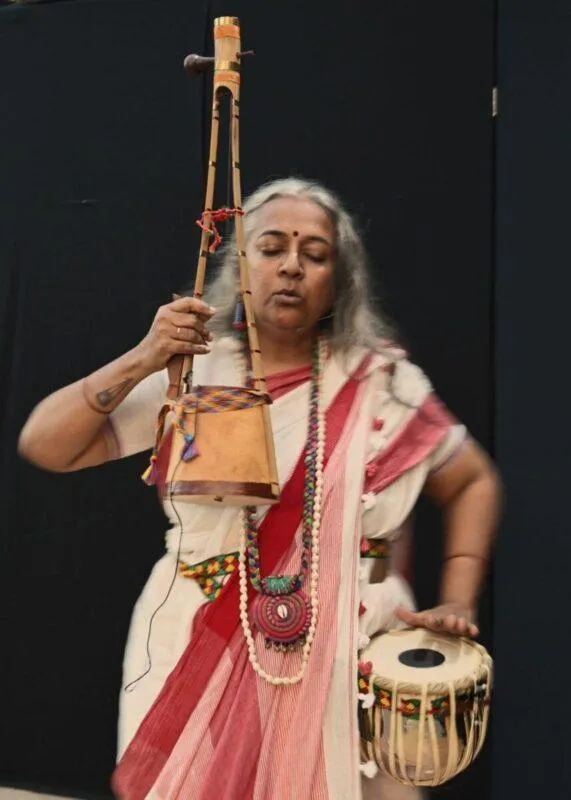
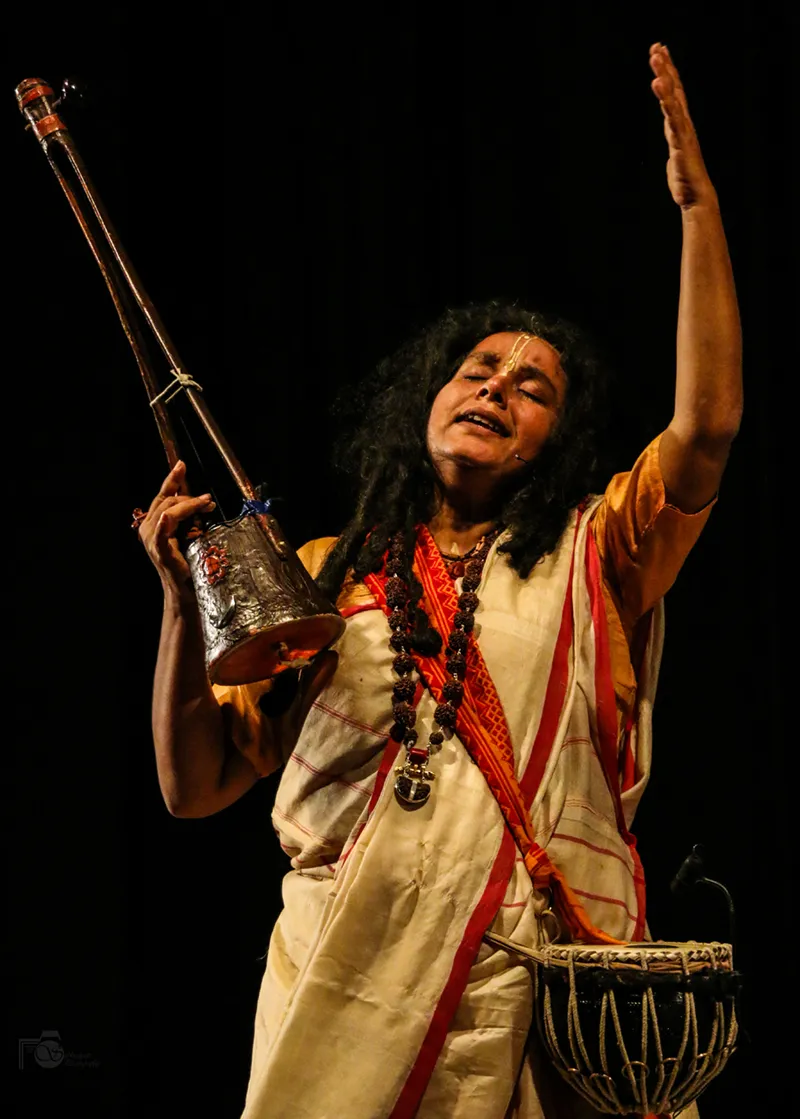
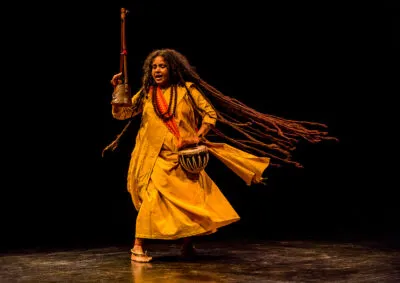
Members belonging to both Vaishnava Hindu and Sufi Muslim traditions; wandering minstrels who reject caste, orthodox institutional religion, and conventional social norms; identified by saffron robes, flowing hair, and the ektara
Relevance
Thriving; the tradition is recognised by UNESCO and maintains active practice, scholarly attention, and international performance presence
History
Background
The documentary history of the Baul tradition is complicated by the fact that Bauls historically resisted recording their practices, lives, and beliefs. The earliest traceable references to the word 'Baul' appear in Bengali texts of the fifteenth century. Scholar Dr. Jeanne Openshaw has argued that Baul music may have been transmitted in oral form until the end of the nineteenth century, when collection and documentation began. The first textual traces found by cultural historians link the Baul philosophical orientation to the Charyapadas, the oldest Bengali texts, comprising poems composed by Siddhachryas between the eighth and eleventh centuries. These poems reflect a tradition of achieving personal freedom through tantric practice, employing metaphorical language that resonates with Baul expression. Birendranath Bhattacharya's study Banglar Baul o Baul Gan, published after years of fieldwork, established that Bauls belonging to both Hindu and Muslim communities share similar spiritual practices, and that these practices are central to understanding the songs. The most celebrated individual Baul, Lalon Fakir (1774-1890), composed over a thousand songs, of which approximately six hundred have been traced. He never wrote down his compositions.
Culture and Societies
Bauls live communally and move between villages and towns, sustaining themselves through the performance of their music. The original seat of Baul activity was the Birbhum district of West Bengal. Over time, the Baul domain extended across West Bengal into Bangladesh and into Tripura, Assam, eastern Bihar, and Odisha. The two most important annual gatherings for Baul performance are the Kenduli Mela and the Pous Mela, both held in West Bengal. In Bangladesh, the Lalon Smaran Utshab, held annually at the shrine of Lalon Fakir in Kushtia, is the most significant Baul event. The tradition's influence on Bengali cultural life is considerable: Rabindranath Tagore drew from Baul philosophy and verse in composing his own work, and described Bauls in lectures to European audiences. Baul culture has been the subject of Bengali fiction and cinema, including the 2010 film Moner Manush by Goutam Ghosh, based on a novel by Sunil Gangopadhyay and focused on the life of Lalon Fakir.
Religious Significance
Baul music and philosophy have profound and documented spiritual significance, though this significance operates outside of orthodox institutional religion. UNESCO's 2005 inscription describes the tradition as representing an unorthodox devotional movement influenced by Hinduism, Buddhism, Vaishnavism, and Sufi Islam, yet distinctly different from any of these. Bauls reject organised religion, caste, temples, and sacred places, locating the divine exclusively within the human body. Their central philosophical concept is deha tattva, a spirituality centred on the body as the dwelling place of God. The most frequently cited image in Baul philosophy is the Moner Manush, the person of the heart, representing the divine presence within each individual. This inner search constitutes the spiritual practice, or sadhana, of Baul life. Songs are understood as both religious expression and spiritual instruction, and are used by spiritual leaders to transmit the philosophy to disciples.
Understanding the Art
Style
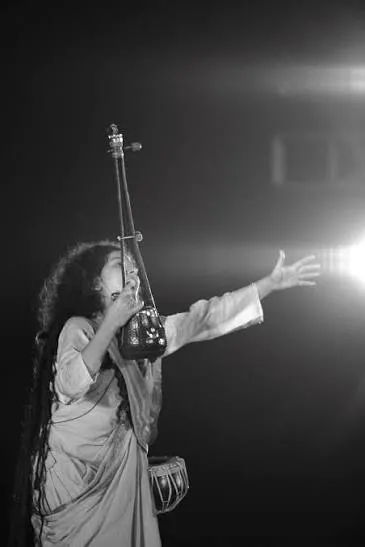
Baul performances typically take place in open-air settings: village fairs, temple grounds, train carriages, and melas. A Baul singer performs accompanied by a small ensemble of instruments, singing and moving in a manner that combines spiritual expression with folk performance. The ektara, a one-stringed drone instrument, is the most distinctive marker of the Baul singer. The singing style is emotionally direct, without the formal ornamentation of classical vocal traditions, and the lyrics carry layered meanings accessible to the initiated. The primary lyrical content concerns the soul's relationship with the divine, expressed through metaphors of love, longing, and journey. The aesthetic of simplicity and emotional authenticity is central: Bauls are described as pouring their feelings into their songs without stylistic artifice.
Central Motifs and Their Significance
Baul songs consistently address a set of interlocking themes: the search for the Moner Manush or inner divine, the nature of love as the path to liberation, the critique of empty ritual and social hierarchy, and the concept of the body as a sacred site. Songs frequently use metaphors of the river, the boat, the bird in a cage, and the marketplace of life to communicate philosophical content. The rejection of caste discrimination and the affirmation of equality across religious communities are recurring moral themes, associated particularly with Lalon Fakir's compositions. The deha tattva framework places the entire spiritual journey within the lived experience of the body, making it accessible to those without scriptural education.
Process
The Baul tradition is transmitted orally, through the guru-shishya relationship. A Baul guru initiates disciples and transmits the philosophical and musical content of the tradition. The process of initiation involves instruction in the esoteric body-centred practices, known as sadhana, that underpin the lyrical content of the songs. These practices are not documented in public-facing literature and are understood to require direct transmission from teacher to student. Musical training occurs within this framework; performers learn songs, instrumental technique, and the interpretation of metaphorical lyrical content from their teachers. The ektara is the principal instrument, supplemented by the dotara, a multi-stringed instrument made from jackfruit or neem wood, the duggi, a small earthen hand drum, the khol, the dhol, the kartal, and the bamboo flute.
Mediums Used
Baul music uses primarily the ektara, dotara, duggi, ghungur, kartal, mandira, and bamboo flute. The voice is the primary vehicle of expression. Costumes are traditional: saffron robes called alkhalla, uncut hair often coiled or wound, and a necklace of tulsi beads. Performances are entirely oral with no written scripts or fixed musical notation.
New Outlook
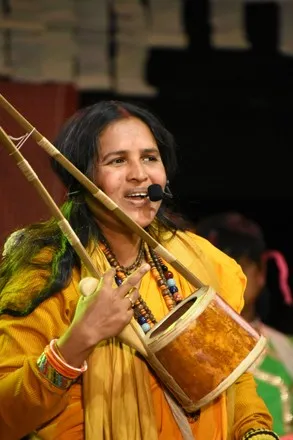
The Baul tradition was inscribed on the UNESCO Representative List of the Intangible Cultural Heritage of Humanity in 2005, a recognition that has drawn international attention to the form. In West Bengal, the tradition has seen development of folk fusion forms, including a genre described as baul rock, with Kartik Das Baul associated with this hybrid style. International performances by artists including Rina Das Baul have taken the tradition to Sweden, France, and Portugal. The Palli Baul Samaj Unnayan Sangstha in Bangladesh works to preserve the tradition, and the Bangladesh Shilpakala Academy organises national and international programmes. Academic study of the tradition has expanded significantly since the late twentieth century, with contributions from scholars in subaltern studies, ethnomusicology, and religious studies.
Learn Baul






Bibliography
Sources
Bhattacharya, Birendranath. Banglar Baul o Baul Gan (The Bauls of Bengal and Baul Songs). Calcutta, mid-20th century.
Dasgupta, Shashibhusan. Obscure Religious Cults as a Background of Bengali Literature. Firma K.L.M., 1946.
Openshaw, Jeanne. Seeking Bauls of Bengal. Cambridge University Press, 2002.
Salomon, Carol. “Bauls.” South Asian Folklore: An Encyclopedia, edited by Peter Claus and Margaret Mills, Routledge, 2003.
Tagore, Rabindranath. The Religion of Man. George Allen and Unwin, 1931.
Image Sources
“Living the Tradition of Baul.” Stance on Dance, https://stanceondance.com/2019/09/05/living-the-tradition-of-baul/. Accessed 4 July 2026.
“Parvathy Baul.” Wikipedia, https://en.wikipedia.org/wiki/Parvathy_Baul. Accessed 4 July 2026.
“Rina Das Baul Performing Song.” Shutterstock Editorial, https://www.shutterstock.com/editorial/image-editorial/rina-das-baul-performing-song-first-day-12813851h. Accessed 4 July 2026.
“The Baul Tradition.” MILAP – Indian Arts & Culture, https://milap.co.uk/2023/03/the-baul-tradition/. Accessed 4 July 2026.
“The Baul Tradition in Bengal: A Celebration of Dance, Music and Spirituality.” Oaklores, https://oaklores.com/2025/05/29/the-baul-tradition-in-bengal-a-celebration-of-dance-music-and-spirituality/. Accessed 4 July 2026.