
Ali Ai Ligang Dance - The Folk Dance Tradition of Assam
Let us learn about the Ali Ai Ligang dance from Assam!
Introduction
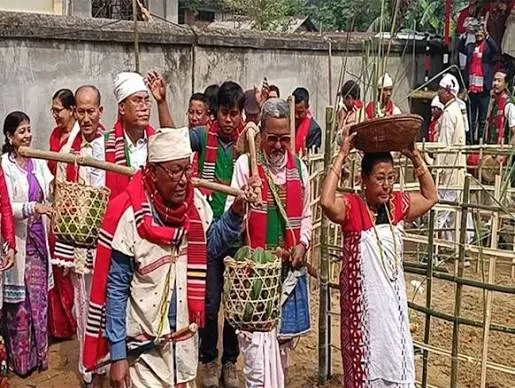
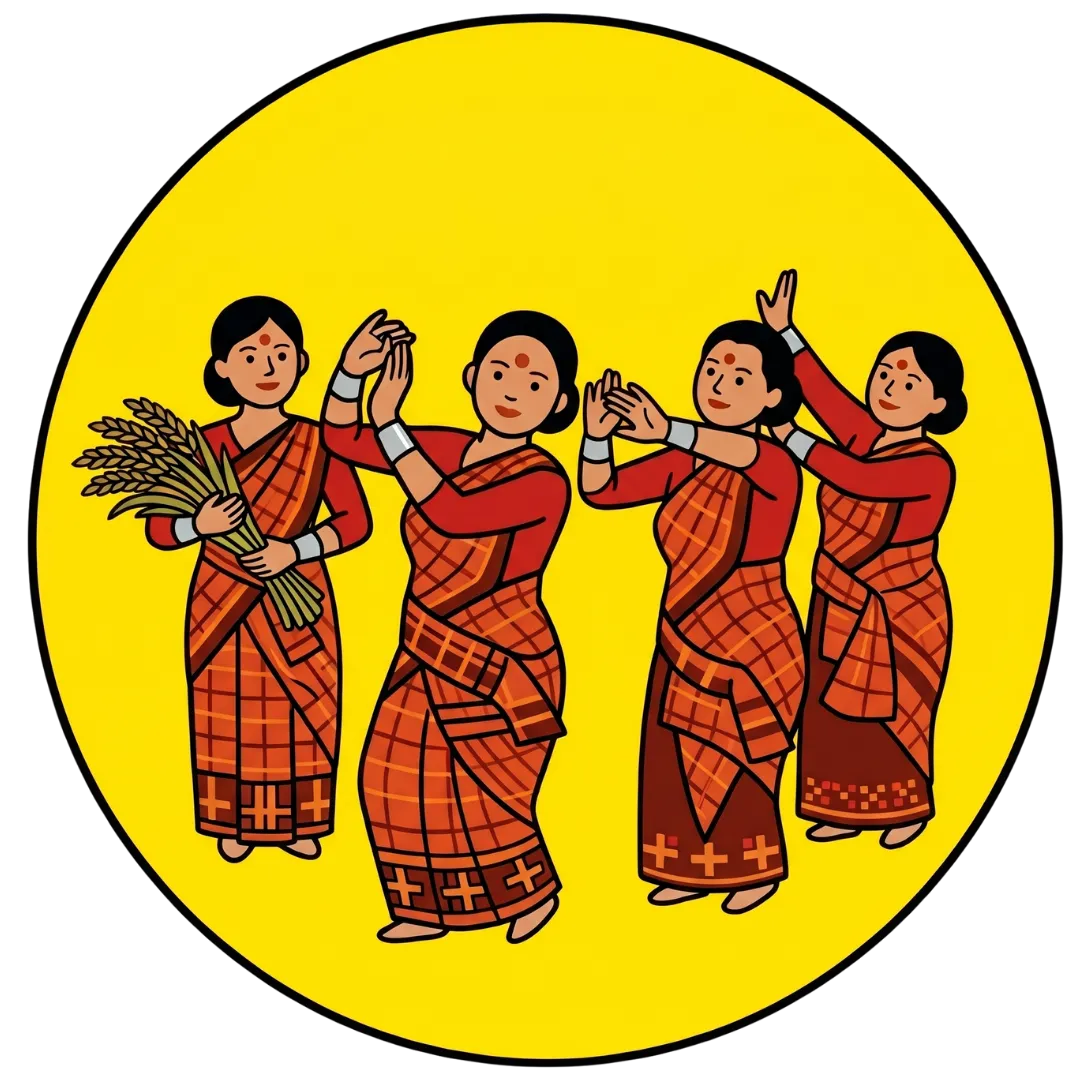
Ali Ai Ligang Dance refers to the dance performances associated with Ali Ai Ligang, the principal festival of the Mising (also written Mishing) tribe of Assam and Arunachal Pradesh in northeast India. The dance, called Gumrag or Gumrag Soman, is performed by young men and women of the community during the festival to mark the ceremonial beginning of the paddy sowing season, to express gratitude to nature deities, and to celebrate community renewal. The Ali Ai Ligang festival is held annually on the first Wednesday of the month of Phagun (corresponding to mid-February in the Gregorian calendar).
Etymology
The festival name Ali Ai Ligang is composed of three terms from the Mising language: Ali, meaning root or seed (some sources record the meaning as legumes or edible roots from jhum cultivation practice); Ai (also written Aye), meaning fruit; and Ligang, meaning to sow. The compound term signifies the ceremonial sowing of roots and fruits, marking the onset of the agricultural cycle. The associated dance is called Gumrag, meaning a group dance or community celebration dance in the Mising language. The term So:man (or Soman) added to Gumrag indicates its collective and joyful character.
Origin
The Mising people are an indigenous Tibeto-Burman community, identified as part of the Tani linguistic and ethnic group, originally from the hills of present-day Arunachal Pradesh. They have been described as one of the only riparian tribes of northeast India due to their close settlement along the Brahmaputra and its tributaries in the plains of Assam. The Ali Ai Ligang festival traces its origins to the period when the Mising practised jhum (slash-and-burn) cultivation, during which edible roots and seeds were the primary crops sown. As the community transitioned to wet paddy cultivation following greater contact with Indo-Aryan cultures in the plains, the festival's focus shifted to the sowing of Ahu paddy (a short-duration variety), while retaining its original agricultural symbolism. The Mising Nane Kebang (the community's principal socio-cultural organisation) standardised the date of the festival in 1956, fixing it to the first Wednesday of Phagun.
Location
The Mising community is primarily settled in Upper Assam, in districts including Jorhat, Sivsagar, Dibrugarh, Tinsukia, Lakhimpur, Majuli, and Dhemaji. They are also found in parts of Arunachal Pradesh. Ali Ai Ligang and its associated Gumrag dance are observed wherever the Mising community is settled, from village fields and community grounds to urban auditoriums and community halls in Guwahati and Jorhat, where urban Mising residents organise community celebrations. The festival is also observed in diaspora communities.
Community
The performers of the Gumrag dance are young men and women of the Mising community. The Mising people follow the nature-based religious tradition of Donyi Poloism, which venerates the sun (Donyi) and moon (Polo) as supreme deities and includes reverence for ancestral spirits and forces of nature. The festival rituals and associated dances are directed toward the deity Donyi Polo and toward agricultural patron deities. The community organisation Mising Nane Kebang (also referred to as Mising Kabang) plays an administrative role in organising festival celebrations at the district and urban levels.
Relevance
Ali Ai Ligang is described by community members and official sources as the only major festival of the Mising community, making it the central annual cultural event for the group. The Gumrag dance is the primary expressive art form associated with this festival and with Mising cultural identity. As the Mising are one of the largest tribal communities in Assam (with a population of approximately 680,000 according to the 2011 census), Ali Ai Ligang has significance at the state level as a representation of Assam's tribal heritage. The dance's current Vulnerable designation in this database reflects its restricted community base and the limited formal documentation and institutional support for the art form.
History
Background
The Mising community's oral tradition places the origins of Ali Ai Ligang in the period of jhum cultivation in the hills, from which their ancestors gradually descended to the plains of Assam. The festival's adaptation from hill agriculture (edible roots, tubers) to wet paddy cultivation represents a cultural transition documented in the community's own accounts. No pre-20th-century textual sources have been identified in available academic literature that document the Gumrag dance specifically. The festival has been observed in its standardised form since 1956. The inauguration of organised urban celebrations in Jorhat began approximately 40 years before 2025 (i.e., around the 1980s), as noted by community leaders.
Culture and Societies
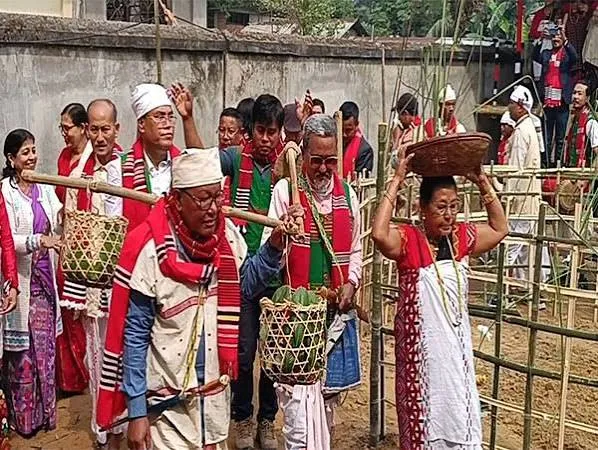
Ali Ai Ligang is a five-day celebration during which ploughing, burning of jungle, tree-cutting, and fishing are prohibited, directing communal attention to the ceremonial sowing ritual. The first day involves the ceremonial start of paddy sowing by the head of each household. Community members gather at the Morung Okum (a youth dormitory), where offerings of Apong (rice beer), dry meat, and dry fish are made to the deity. The Gumrag dance follows the ceremonial sowing, beginning at the village's easternmost house and proceeding around courtyards, to the field, and to the river. The final day (Lilen) is observed with a grand community feast featuring traditional Mising food including pork, Purang Apin (packed boiled rice), and Nogin Apong (rice wine). The festival has been incorporated into urban cultural calendars in Assam, where auditorium-based celebrations maintain community identity among the urban Mising population.
Religious Significance
The Gumrag dance during Ali Ai Ligang is a ritual offering to the deities Donyi Polo (sun and moon) and to fertility goddess Koje Yango, who is invoked for blessing the agricultural season. Song themes during the dance include a man's life, human experiences of joy and sorrow, love, and the relationship with nature. The ritual prohibition on ploughing and cutting during the festival days expresses a communal compact with natural forces, ensuring the propitious start of the growing season under divine protection. The community seeks protection from insects and natural calamities for the coming crop cycle through these ritual observances.
Understanding the Art
Style
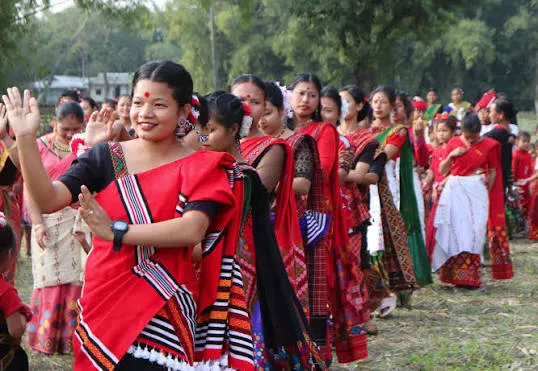
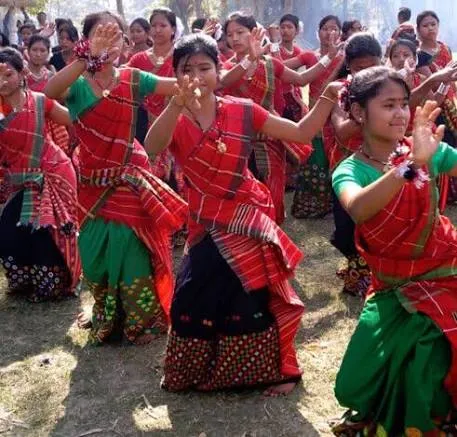
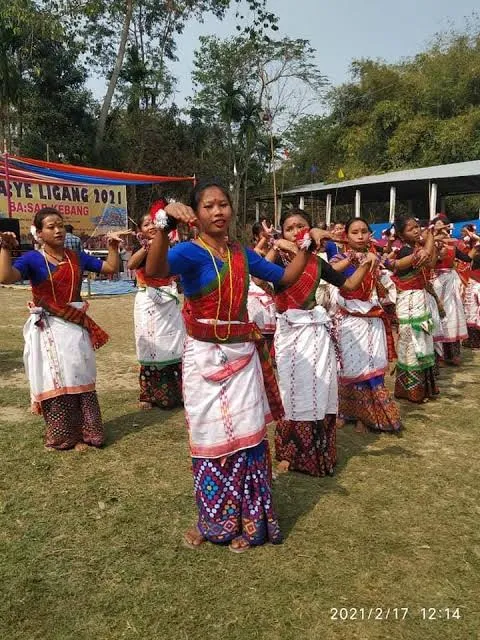
The Gumrag dance is characterised by rapid stepping, flinging and fluttering of hands, swinging of hips, and circular formations. The dance has been described as expressing the vernal spirit, procreative energy, and the joy of the harvest season. Male and female community members dance together, with participants typically moving in coordinated group formations. The style is improvisatory within a traditional movement framework rather than formally codified, consistent with its folk tradition transmission.
Central Motifs and Their Significance
The central motif of Gumrag is the enactment of agricultural activities including sowing, transplanting, and harvesting, through expressive movements and chants. The dance symbolises respect for the land and ancestral spirits, and invokes agricultural abundance. Song lyrics in the Mising language express the community's lived experience: the agricultural calendar, love and longing, generational memory, and the river-connected landscape of their settlements.
Process
Gumrag is transmitted informally within the Mising community through participation in annual festival celebrations. There is no formal institutional training system. Young people learn by observing and participating from childhood. Traditional Mising attire is worn during the festival: men wear Gonro Ugon and Mibu Galuk (traditional garments); women wear Ege, Ribi Gaseng, and Gero Segreg, which are handwoven garments in traditional Mising patterns. Mising women are noted for their skilled weaving, and the textile traditions are closely linked to festival cultural expression.
Mediums Used
The instruments accompanying Gumrag include sifung (bamboo flute with five holes, producing a lower tone than the north Indian Bansuri), cymbal, gong, and gungang (gagana, a jaw harp). Drums are also used. The folk songs (oi: nitom) sung during the dance are in the Mising language and are specific to the festival context.
New Outlook
Ali Ai Ligang and the associated Gumrag dance face the pressures common to tribal folk performance traditions: migration of younger generations to urban centres, weakening of jhum cultivation-based cultural memory, and the displacement of indigenous knowledge by mainstream educational systems. Urban celebrations in Guwahati and Jorhat have been important in maintaining community engagement, but these stage-based events differ in character from the village-level festival performances. Documentation of the Gumrag tradition is limited, and formal academic study of the form is minimal. Preservation of the Mising language, which carries the song tradition, is a parallel concern connected to the dance's long-term continuity.
Learn Ali Ai Ligang




Bibliography
Sources
Barpujari, H. K., editor. The Comprehensive History of Assam. Publication Board of Assam, 1990.
Gogoi, Lila. The Tai and the Tai Kingdoms. Publication Board of Assam, 1968.
Image Sources
"Ali A:yé Lígang." Wikipedia, https://en.wikipedia.org/wiki/Ali_A:y%C3%A9_L%C3%ADgang. Accessed 21 July 2026.
"Ali Ai Ligang: A Celebration of Spring." Discover East, https://www.discovereast.in/heritage/ali-ai-ligang-a-celebration-of-spring/. Accessed 21 July 2026.
"Assam: Mising Tribe Celebrates the Ali Ai Ligang Festival in Jorhat." The News Mill, https://thenewsmill.com/2025/02/assam-mising-tribe-celebrates-the-ali-ai-ligang-festival-in-jorhat/. Accessed 21 July 2026.
"Ali Aye Ligang." Wikimedia Commons, https://commons.wikimedia.org/wiki/File:Ali-Aye-Ligang.jpg. Accessed 21 July 2026.