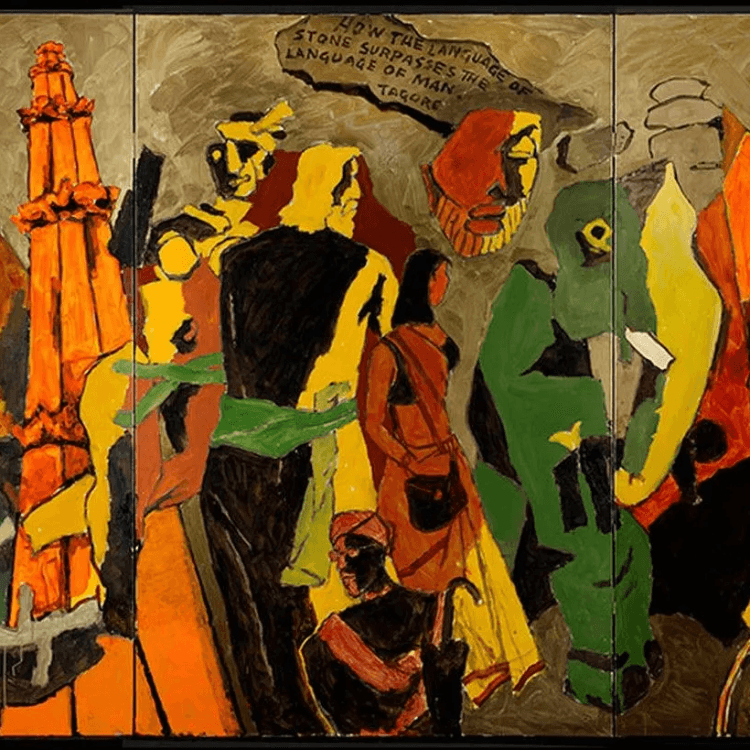

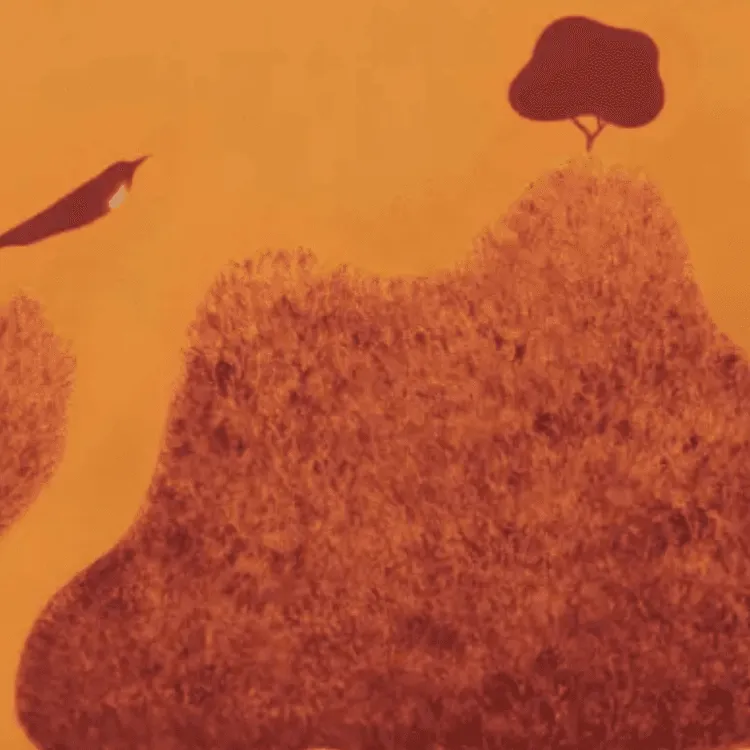

Jagdish Swaminathan, most commonly known as J. Swaminathan, was born in Shimla on June 21, 1928. He was a contemporary Indian painter, writer and activist who helped Gond and Bhil painters win international recognition. He played a role in the establishment of the Bharat Bhawan, a multi-art complex in Bhopal, in 1982, and served as the director of its Roopankar Art Museum till 1990. He joined the Communist Party of India in his early years and remained a member till the middle of the 1950s while working as a journalist and art critic for a Communist Party magazine.
Group 1890 and Contra
In August 1962, Swaminathan gathered eleven other artists at a house in Bhavnagar, and the group took the house number as its name. Their manifesto rejected both copying Western modernism and the revivalism of the Bengal School. Group 1890 held one exhibition, at Rabindra Bhavan in New Delhi in October 1963. Prime Minister Nehru opened it, and the Mexican poet Octavio Paz wrote the catalogue essay. Swaminathan kept the argument going in print with his journal Contra '66.
His own painting
He studied at Delhi Polytechnic and then, from 1958, at the Academy of Fine Arts in Warsaw. In 1968 he received a Nehru Fellowship to study the traditional sacred image in contemporary art. His painting moved through two major series:
- Colour Geometry of Space, which borrowed the flat coloured fields of folk shrines.
- Bird, Mountain, Tree, his best-known work: a single bird hovering beside a mountain in a field of colour.
Late in life he returned to tribal symbols, sometimes applying paint with his fingers.
The vivid artwork created by the Gond tribe in India is well-known among art connoisseurs. Animals, flora, and sceneries from everyday life are shown in their work in a vibrant, highly patterned manner akin to native art. J. Swaminathan's initiatives to promote Gond tribal art led to the art's later widespread use not just in India but also on a global scale.
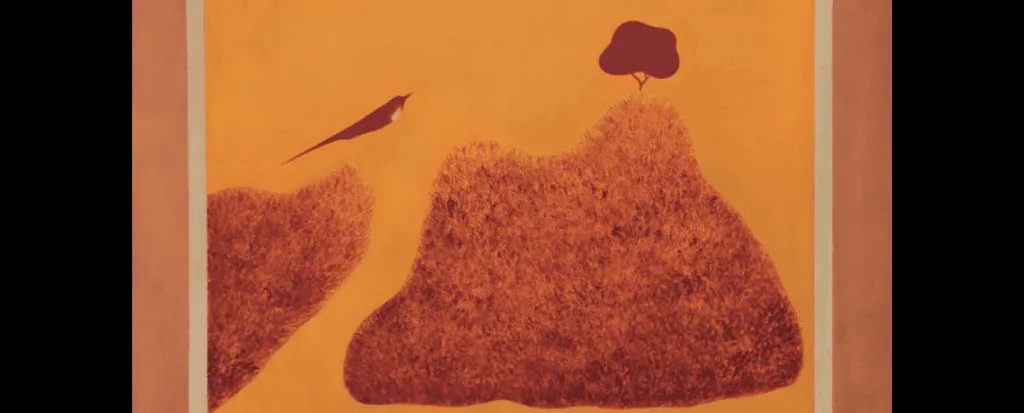
Source: Saffron Art
Early Inspirations for Gond Paintings
Since each and every house is built or rebuilt using local colours and materials like charcoal, coloured soil, plant sap, leaves, cow dung, limestone powder, etc., pictorial art on walls and floors has been a part of Gond domestic life. Tattoos or stylized human and animal figures make up the images. The Gonds have tended to be reduced to manual labour over time as a result of the decline in agriculture and social patronage. Natural pigments were employed before mass-produced paints were accessible, and the tribe's artwork was rarely if ever printed on paper.
Establishment of Bharat Bhavan
The Bharat Bhavan art centre in Bhopal, Central India, was founded in the early 1980s with the goal of creating a shared venue for various modern art practices. J. Swaminathan was passionate about promoting the artistic manifestations of India's rural and tribal civilizations, and served as the mission's leader. Young artist groups were encouraged by J. Swaminathan to travel to rural areas to research these expressions.
A group of these painters came across a masterful wall painting in the village of Patangarh, in Mandla district while on the road. It had been created by Jangarh Singh Syam, a young labourer who would go on to become a legendary figure in the history of Gond painting. Swaminathan directed Roopankar, Bharat Bhavan's art museum, from its opening in 1982 until 1990. He also mentored the Bhil painter Bhuri Bai, and his catalogue The Perceiving Fingers argued against calling this work primitive.
Changing Picture of Gond Tribal Art
At Bharat Bhavan, Jangarh Singh Syam's creative practice underwent substantial modifications. He was given access to a wide range of storylines thanks to his heritage in traditional music and storytelling, which he expressed and translated into paintings. This was a unique instance of contemporary Indian art where a traditional or folk artist successfully used new mediums and instruments including canvases, acrylic, oil, and pens to produce unexpected effects. Jangar's artwork began to appear in numerous galleries throughout the world and was well acclaimed. More than a hundred painters from the Pardhan (Gond) community worked on their paintings between the middle of the 1980s and 1995
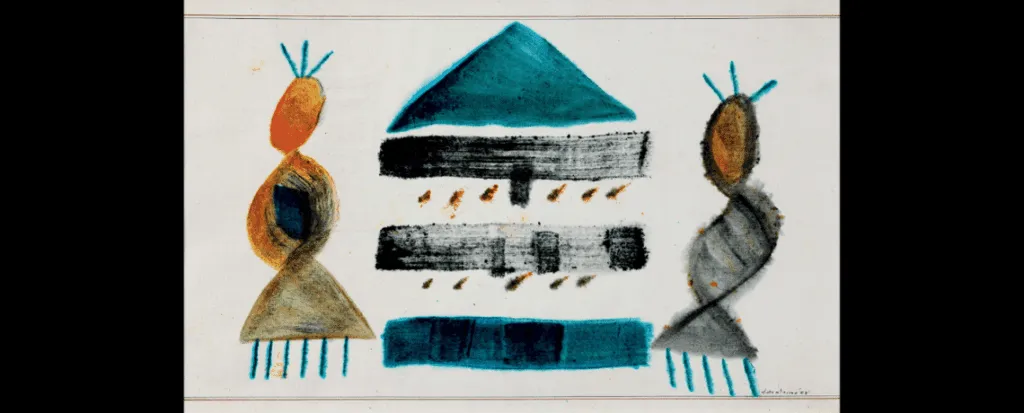
Source: Saffron Art
By giving their myths, stories, fables, tattoos, and music concrete visual forms that had hitherto been hidden from "mainstream" society, these artists developed a new visual lexicon. The historically marginalised gained a foothold and momentum in the nation's narrative, and creative energy soared with the rise of individualism in a previously collective society. It was a paradigm change in culture. Images that were copied from oral histories took the form of flying birds, slithering snakes, or sprouting trees and floated to the beat of the music in a variety of inventive permutations.
The Gond painters have created their own tools over time to use with a variety of modern mediums and materials. To begin, they would create dots and estimate the visual volume. Connecting these dots would create an outside shape, which would then be filled with colours. Every object people see in life undergoes an aesthetic transformation as a result of their reactions to the current social context and environment.
Legacy
J. Swaminathan was the first to recognise Jangarh Singh's artistic brilliance and capacity to fundamentally alter how Gond tribal art was perceived. Swaminathan died in 1994. Today most people who buy a Gond painting have never heard his name, which is roughly what he would have wanted. For the history of the form he championed, read tracing the history of Gond art.