

Thiruvathira - The Folk Dance Tradition of Kerala
Explore Thiruvathirakali, the performance tradition of Kerala, and learn about its origins, techniques, cultural significance, and artistic heritage.
Introduction
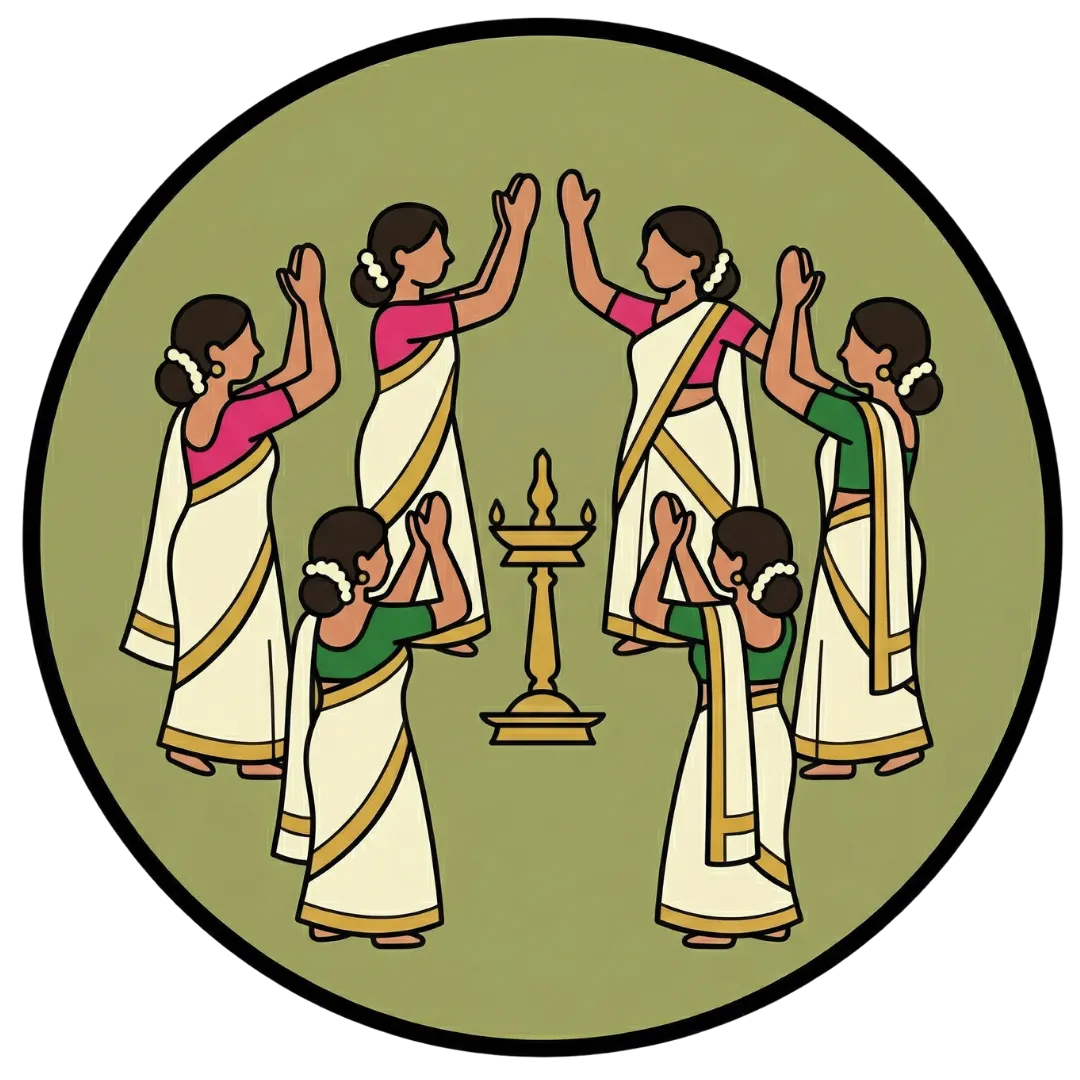
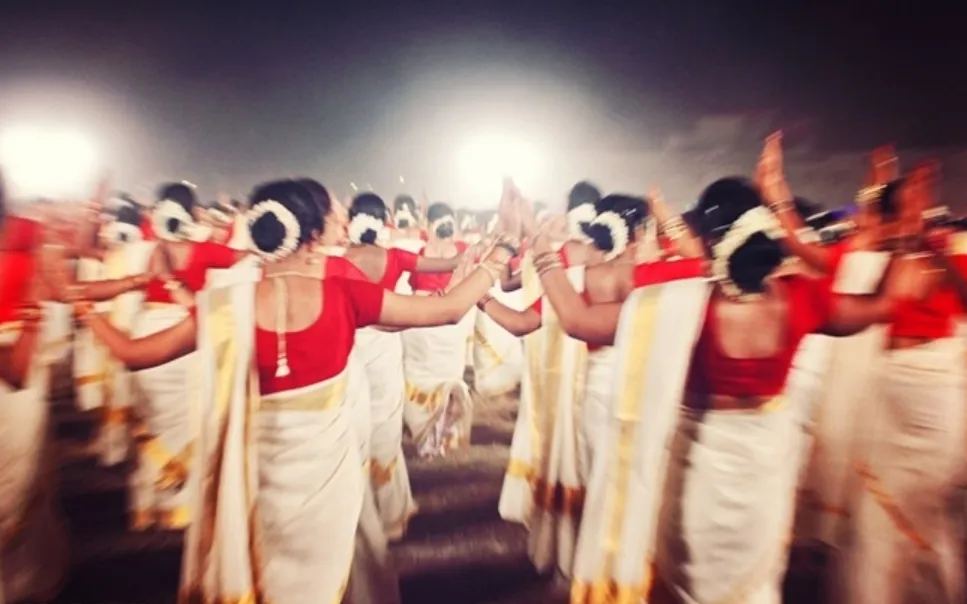
Thiruvathira, also known as Thiruvathirakali or Kaikottikali, is a traditional group dance performed by Hindu women in Kerala, India. The dance is performed primarily on the occasion of the Thiruvathira festival, which falls during the Malayalam month of Dhanu (December to January), and also during the Onam harvest festival. Dancers form a circular group around a lit traditional lamp (Nilavilakku) and move in rhythmic patterns while singing devotional songs and clapping their hands in structured sequences. The art form is associated with the worship of Lord Shiva and Goddess Parvati and carries significance as a ritual for marital well-being and the blessings of womanhood.
Etymology "Thiruvathira" refers to the Thiruvathira nakshatra (star), which is associated with Lord Shiva's birth star in Kerala's Hindu calendar tradition. "Kali" means play or dance. "Kaikottikali" is formed from "kai" (hand), "kotti" (clapping), and "kali" (dance), meaning "the clapping dance." The term Kummikali, used in some regions, also refers to related circular women's folk dances.
Origin Thiruvathirakali is rooted in Kerala's agrarian festival culture and is historically linked to the Thiruvathira festival, which marks the birth star of Lord Shiva during the full moon period of the Malayalam month of Makaram (January to February) in some regional traditions, or the month of Dhanu in the more widely observed Kerala tradition. The dance's association with Onam is well documented; in some accounts, it is said to have been performed in celebration of the King Mahabali, whose annual visit Onam commemorates. The ritual's specific connection to Lord Shiva and Goddess Parvati is also documented: the Thiruvathira nakshatra is associated in mythology with the day Shiva appeared before Parvati to accept her as his consort following her penance.
Location Thiruvathirakali is performed across Kerala, though it was historically more prominent in the central and upper-class Hindu communities of the state. The dance is performed in homes, temple courtyards, and public spaces during festivals. Professional troupes and training institutions for the dance form operate throughout Kerala.
Community Thiruvathirakali is traditionally associated with Hindu women of Kerala. It was historically practiced more within upper-class Hindu communities but has since become broadly practiced across communities and castes. Women of all ages participate, and the dance is now performed by participants of different religious backgrounds in secular festival contexts.
Relevance Thiruvathirakali is one of the most widely practiced folk dance forms in Kerala and is performed during the state's two most prominent festivals, Onam and Thiruvathira. It is included in the Kerala School Kalolsavam competition circuit. A documented record performance took place on May 1, 2017, when the Twenty20 Kizhakkambalam organization, in association with the Chavara Cultural Centre, coordinated 6,582 participants in a synchronized performance.
History
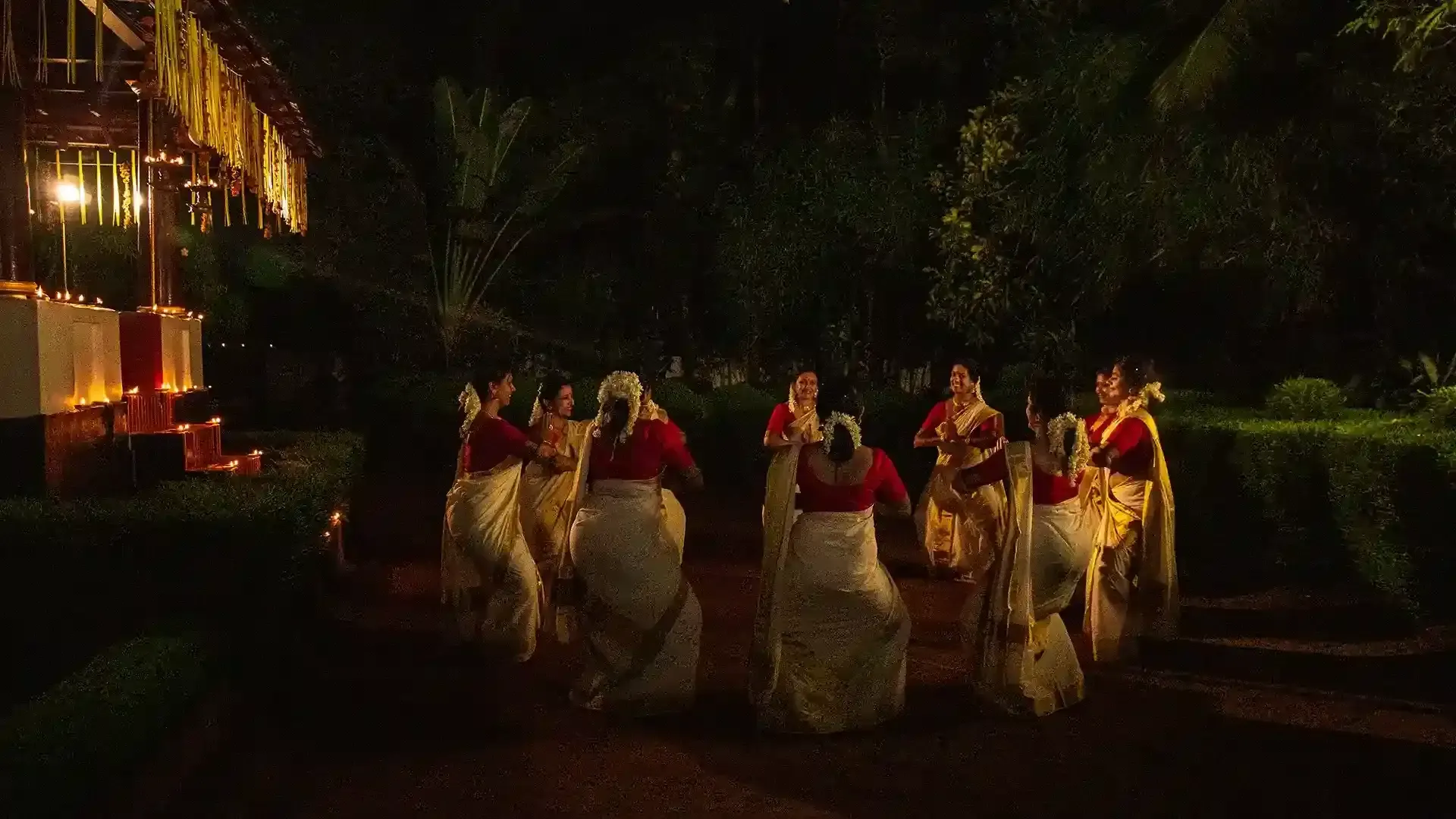
Background The dance's connection to the Thiruvathira festival places it within a ritual tradition that predates available textual documentation. The festival's mythology, involving Goddess Parvati's penance and the death and revival of Kamadeva (the god of love and desire), is recounted in Hindu texts. According to the mythology, Rati Devi, the wife of Kamadeva, fasted and performed penance to have Shiva revive her husband, and women observe Thiruvathira as a festival of marital devotion in her commemoration. The Thiruvathira festival also has significance in Tamil Nadu as Arudhra Darisanam, celebrated at the Nataraja Temple in Chidambaram, as documented in the 7th-century Tevaram hymns of saints Appar and Sambandar.
Culture and Societies The dance is performed within a socially significant ritual framework. Women observe fasting on Thiruvathira day, avoid rice and heavy food, perform rituals through the night, adorn their hair with Dashapushpam (ten medicinal herbs), and participate in an early morning bath after the dance concludes. These practices structure the dance as part of a larger ceremonial complex connected to femininity, marital devotion, and community bonds among women. The performance in the Onam context is directed toward welcoming King Mahabali and celebrating the harvest.
Religious Significance Thiruvathirakali has explicit religious significance within Kerala's Shaivite Hindu tradition. The dance is dedicated to Lord Shiva and Goddess Parvati and is performed as a ritual affirmation of marital harmony and the aspiration for a long and auspicious married life. The lamp around which dancers circle symbolizes divine presence. The Dashapushpam herbs worn in the hair are part of a ritual consecration. The songs sung during the dance invoke Shiva-Parvati mythology or narrate stories of King Mahabali, depending on the festival context.
Understanding the Art
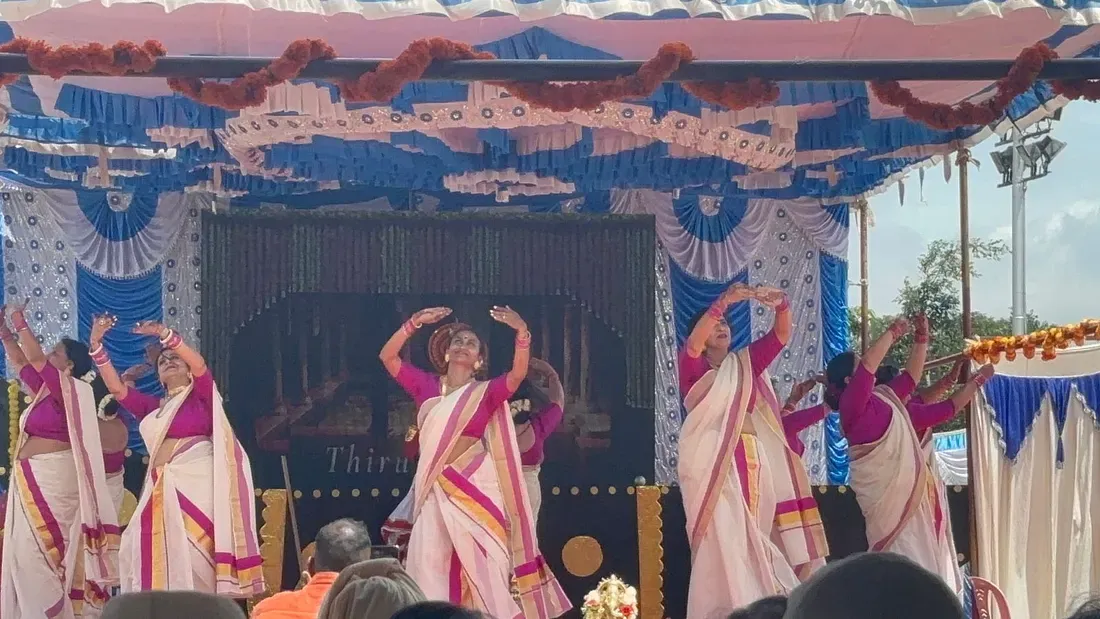
Style A group of eight to ten women (or more in contemporary performances) form a circle around a Nilavilakku. The lead singer sings the first line of a Thiruvathira Pattu (song), and the ensemble repeats it while moving in coordinated patterns. The movements include clapping one's own hands and clapping palms with adjacent dancers, sitting on toes, half-bending the knees, subtle jumps, and rhythmic changes of direction. The aesthetic quality described in documentation is lasya, the principle of grace, tenderness, and feminine elegance in Indian performance aesthetics.
Central Motifs and Their Significance The central motifs of Thiruvathirakali are devotion to Shiva and Parvati, the aspiration for marital happiness, and the celebration of womanhood. Songs performed in the Onam context center on King Mahabali and the harvest. The lamp symbolizes the divine. The circular movement of the dancers around the lamp is consistent across all contexts and carries symbolic resonance with the idea of devotees encircling the divine.
Process The dance involves no instruments other than cymbals in traditional contexts, as it was historically performed in domestic and ritual settings rather than on a professional stage. The group's coordination is maintained through the rhythmic structure of the song, the clapping patterns, and the lead singer's guidance. Performances in the festival context traditionally begin at night and continue until dawn.
Mediums Used The primary mediums are the voice, the rhythmic clapping of hands, and minimal percussion via cymbals. The Nilavilakku is an essential prop. Traditional attire is the Mundu Neriyathu (white cloth pair with gold border), and hair is adorned with jasmine flowers and the Dashapushpam herbs for the Thiruvathira festival specifically.
New Outlook
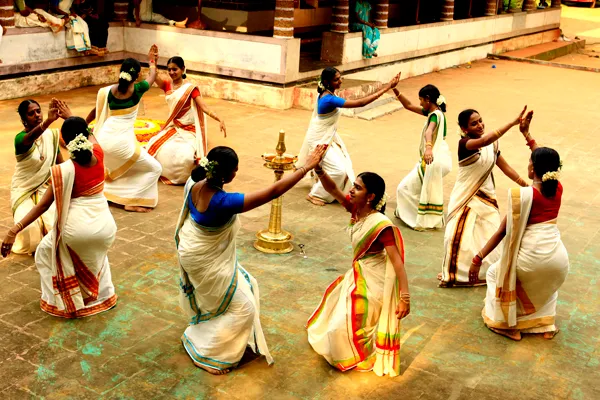
Thiruvathirakali has been professionalized in contemporary Kerala through the development of training academies, stage competition circuits, and formalized choreography. It is frequently featured in state tourism promotion. Its inclusion in the Onam festival as a visual marker of Kerala's cultural identity has broadened its audience and sustained its cultural relevance beyond its original ritual context.
Learn Thiruvathirakali
Bibliography
Sources
Cultural Heritage of Kerala. S.V.S. Publishers, 1978.
Kerala Kalamandalam. Documentation of Kerala Folk Arts. Various years.
Image Sources
“Dance.” Medium, Tourist in My Own Country. Accessed on May 21, 2026.
“Thiruvathirakali.” Kerala Tourism Photo Gallery. Accessed on May 21, 2026.
“Thiruvathira Kali.” Pinterest. Accessed on May 21, 2026.
“Thiruvathira Kali: Traditional Dance of Kerala.” Organikos, 30 May 2012. Accessed on May 21, 2026.