

Mohiniyattam - The Classical Dance Form of Kerala
Explore Kathakali, the traditional dance of Kerala, and learn about its origins, techniques, cultural significance, and artistic heritage.
Introduction
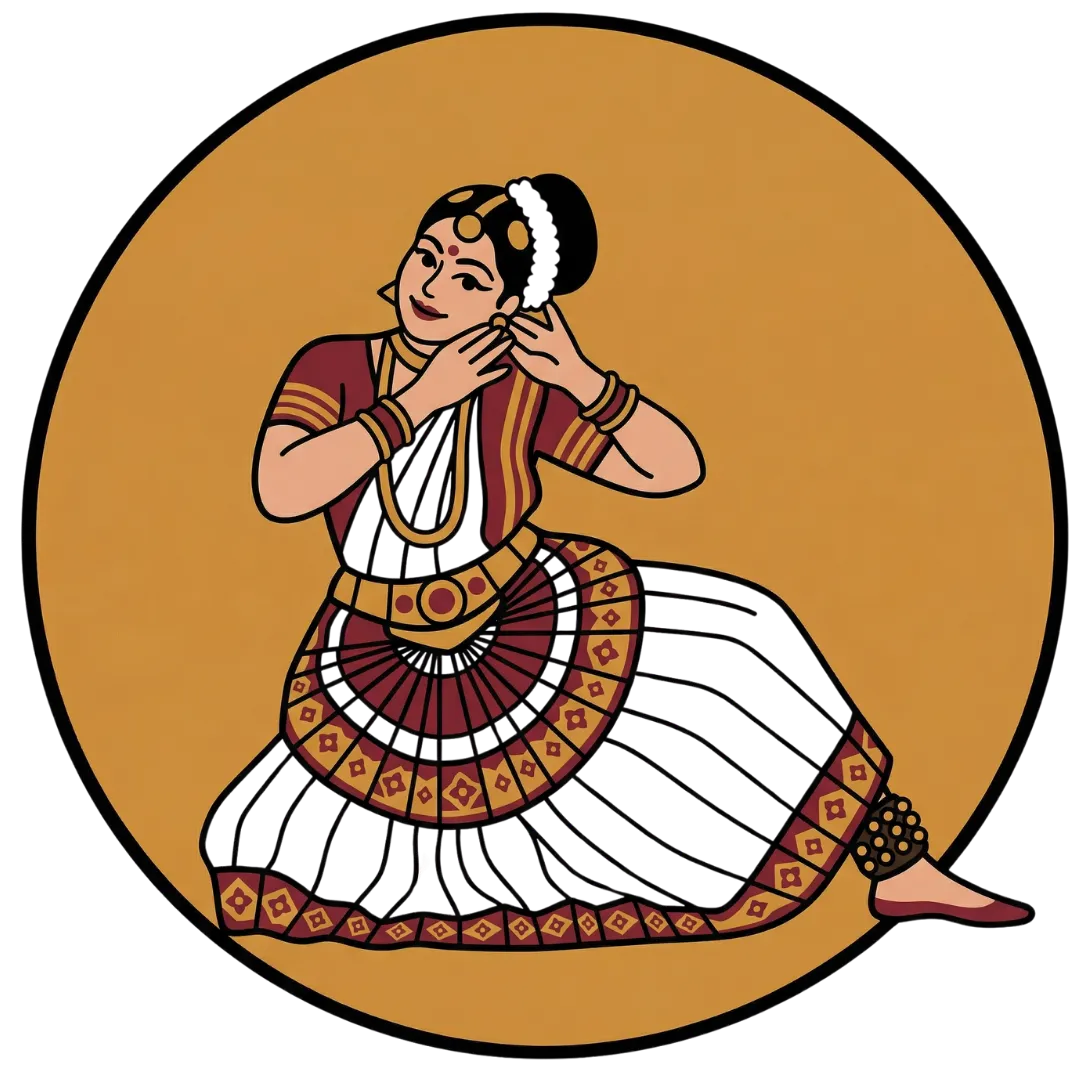
Mohiniyattam is one of the eight major Indian classical dance forms, originating in the state of Kerala. It is a solo dance form primarily performed by women, characterised by the lasya aesthetic: graceful, fluid, and gentle movements without abrupt leaps or sharp percussive shifts. The dance is named after Mohini, the female avatar of Vishnu in Hindu mythology, and performed in honour of Vishnu. Its defining movement quality involves swaying upper torso movements, circular arm and hand paths, soft footwork with glides and rising on toes, and nuanced facial abhinaya (expressive storytelling). It is accompanied by Carnatic and Sopanam music, with compositions drawn from the repertoire established by Maharaja Swati Tirunal of Travancore in the nineteenth century.
Etymology Mohiniyattam combines two elements: Mohini, the mythological enchantress or feminine avatar of Vishnu, and attam (Malayalam), meaning dance or performance. The compound means 'dance of the enchantress.' The word Mohini derives from Sanskrit moha, meaning 'to enchant' or 'to cause bewilderment.' The term appears in the sixteenth-century legal text Vyavaharamala by Mazhamagalam Narayanan Namputiri, constituting its first known written mention, and in the seventeenth-century text Ghoshayatra by the poet Kunjan Nambiar.
Origin The precise historical origins of Mohiniyattam are contested in the scholarly literature. Temple sculptures at the eleventh-century Vishnu temple at Trikodithanam and at the Kidangur Subramanya temple depict female dancers in Mohiniyattam-like poses, suggesting the existence of a female dance tradition in Kerala connected to temple ritual by the eleventh century. The eighteenth-century Sanskrit treatise Balarama Bharatam, composed by Travancore king Kartika Tirunal Bala Ram Varma, mentions Mohini Natana among multiple dance styles, indicating its established presence by the eighteenth century. The form was structured into its present classical repertoire under Maharaja Swati Tirunal (1813–1846), who commissioned Vadivelu of the Tanjore Quartet to organise its performance elements, and who personally composed padams (narrative-devotional compositions) in Malayalam, Telugu, and Sanskrit.
Location Mohiniyattam is associated with the region of Kerala, with historical concentration in central Kerala following the conclusion of Swati Tirunal's reign. The Kerala Kalamandalam at Cheruthuruthy, established in 1930, became the primary institutional centre for its training and preservation. Major cities including Thiruvananthapuram, Kochi, and Thrissur host institutions, academies, and festivals featuring Mohiniyattam.
Community Historically, the practitioner community included Devadasis (temple dancing women known by regional designations including Thevadichi, Tali Naga, and Koothachi) who performed in temple contexts. In the nineteenth century, Mohiniyattam was also performed by women from the Kerala Hindu community in private patronage contexts. Following colonial-era criticism and bans, the post-independence revival has broadened the practitioner community to women from diverse backgrounds. Male dancers now also perform Mohiniyattam, though the form is primarily understood and taught as a female tradition.
Relevance Classified as High Priority and Thriving. Mohiniyattam is recognised by the Sangeet Natak Akademi as one of the eight classical Indian dance forms and is taught at the Kerala Kalamandalam and numerous private institutions. It is the subject of both performance and scholarship, with researchers including Justine Lemos, Nirmala Paniker, and Deepti Omchery Bhalla having contributed analytical and historical documentation.
History
Background The documentary history of Mohiniyattam begins with the Vyavaharamala (1709), which records a payment to be made to a Mohiniyattam dancer, establishing the existence of a performer designated by this title in early eighteenth-century Kerala. The Ghoshayatra of Kunjan Nambiar (seventeenth to eighteenth century) and the Balarama Bharatam (eighteenth century) of Kartika Tirunal further document the dance's presence as an established tradition.
The form received systematic attention during the reign of Maharaja Swati Tirunal (1813–1846), who ascended the Travancore throne at the age of sixteen in 1829. Swati Tirunal promoted all fine arts, attracting musicians and scholars from across India to Travancore. With the Tanjore musician-composer Vadivelu, and court musicians including Kilimanoor Vidwan Koyil Tampuran and Irayimman Tampi, Swati Tirunal structured Mohiniyattam's repertoire to include Chollukettu (the invocatory item), Jatiswaram, Padavarnam, Padam, and Tillana. The performance was then rendered by the Devadasi dancer Sugandhavalli. Swati Tirunal composed approximately fifty Padams and numerous varnams for the form, which remain at the core of contemporary performance repertoire.
Following Swati Tirunal's reign, the dance persisted primarily in central Kerala through the activities of Palakkad Parameshwara Bhagavathar, one of the king's court musicians, who returned to his homeland and trained dancers. By the late nineteenth century, Mohiniyattam had declined in both social standing and artistic organisation. Colonial British rule introduced Victorian moral frameworks that condemned Indian classical dance as morally improper; between 1931 and 1938, laws were enacted in the princely states of Kerala that, without specifically naming Mohiniyattam, effectively prohibited temple dancing and 'lewd dance or theatre.' Researcher Justine Lemos argues that the historical framing of temple dancers as prostitutes was a colonial construct, and that examination of historical evidence does not support the characterisation of Mohiniyattam performers as devadasi prostitutes specifically, though the broader anti-nautch movement that drove these bans affected all classical dance traditions.
The revival was led by the Malayalam poet Vallathol Narayana Menon, who included Mohiniyattam in the programme of his Kerala Kalamandalam, founded in 1930. Vallathol helped repeal bans on temple dancing and appointed Guru Krishna Panikker and Kalyani Amma as the first regular Mohiniyattam teachers at the institution. Their disciples Thankamani Gopinath, Chinnamu Amma, and Kalyani Kutty Amma became the primary transmitters of the revived tradition. Kalamandalam Kalyanikutty Amma, described as the mother of modern Mohiniyattam, defined its characteristic movement quality as resembling a paddy plant swaying in a subtle breeze or a coconut leaf moving in the wind.
Culture and Societies The historical social context of Mohiniyattam connects it to the Devadasi tradition of South India, specifically the practices of temple-associated women in Kerala. Researchers debate whether Kerala had a Devadasi system identical to that of Tamil Nadu, with some scholars (Kerala Tourism, 2024) arguing that female dancing in Kerala was more of an itinerant patronage tradition than a temple-marriage system. The post-revival period has definitively moved Mohiniyattam from any temple or patronage-based social context into an institutional academic one, with training formalised at government institutions and private academies.
Recent years have seen public debate about discrimination on the basis of skin colour in Mohiniyattam admissions and training, resulting in wider calls for inclusive practice that the classical dance organisations have begun to address. Scholar and dancer Nirmala Paniker has written about the deeper historical and ritualistic roots of compositions like Chandanam and Mookkuthi, arguing that these were not merely morally objectionable pieces but carried connections to Kerala's ritual and folk traditions including Mudiyettu and Theyyam.
Religious Significance Mohiniyattam's central mythological anchor is the story of Mohini, the female avatar of Vishnu. In Hindu mythology, Mohini appeared during the churning of the cosmic ocean (Samudra Manthan) to distract the Asuras (demons) while the gods recovered the Amrita (nectar of immortality). A second related episode involves Bhasmasura, a demon granted a boon by Shiva that anything he touched would turn to ash; Vishnu appeared as Mohini and distracted Bhasmasura into placing his own hand on his head, thus destroying him. Both episodes are foundational to Mohiniyattam's narrative and mythological context, and the essence of divine enchantment informs the aesthetic of the form.
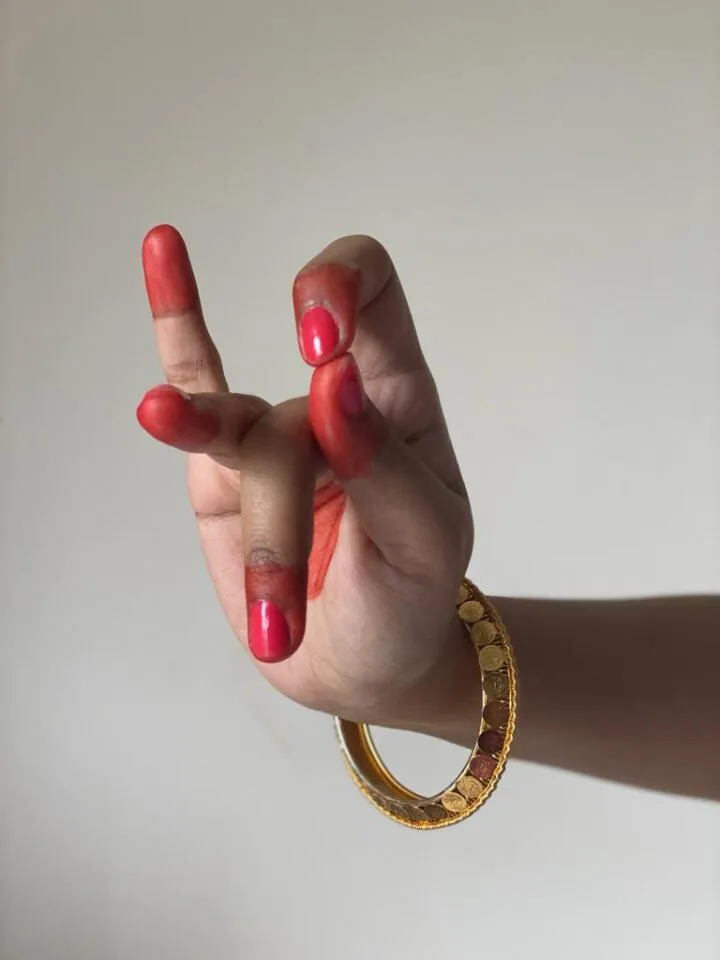
Mohiniyattam, as analysed by the CCRT (Centre for Cultural Resources and Training), lays emphasis on acting: the dancer identifies herself with the character and sentiments of the compositions, particularly in the Padams and Pada Varnams, which allow extended opportunities for facial expression. The gesture language is drawn from Hastalakshana Deepika (the same Kerala text used by Kathakali), with additional borrowings from the Natya Shastra, Abhinaya Darpana, and Balarambharatam.
Understanding the Art
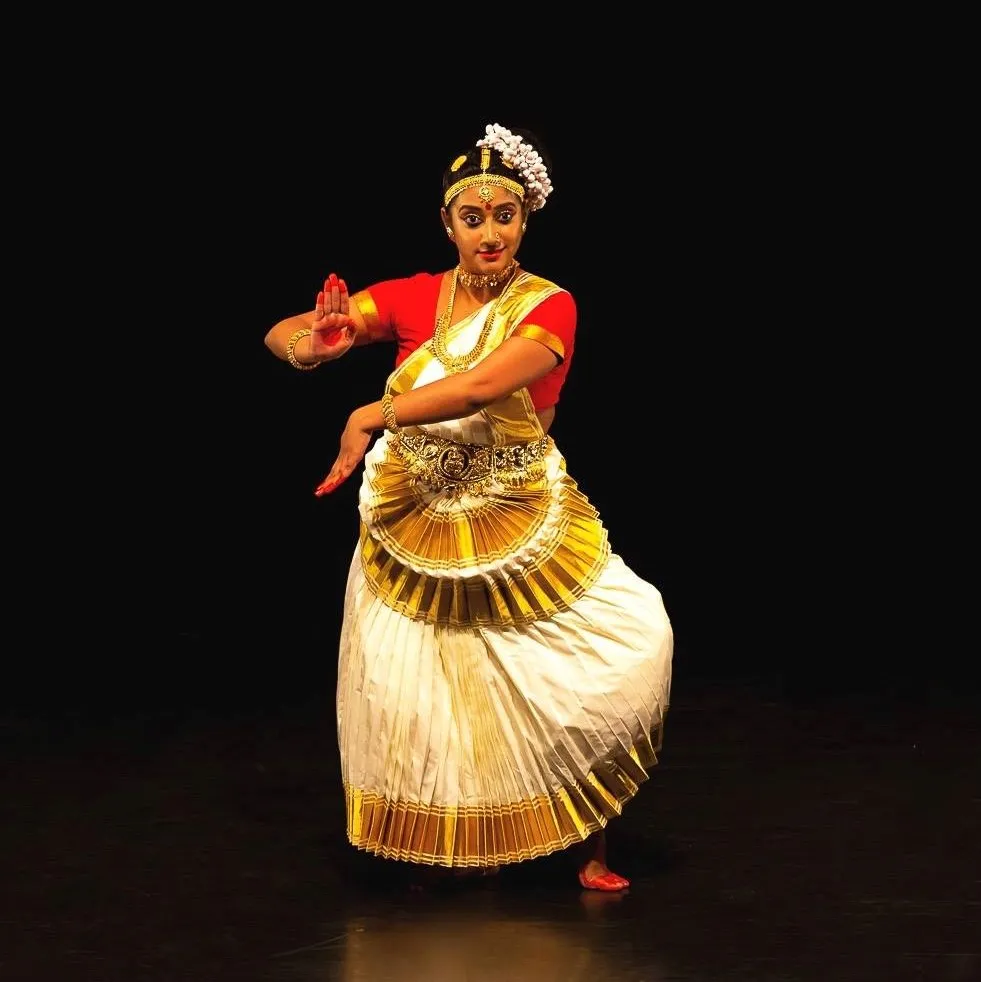
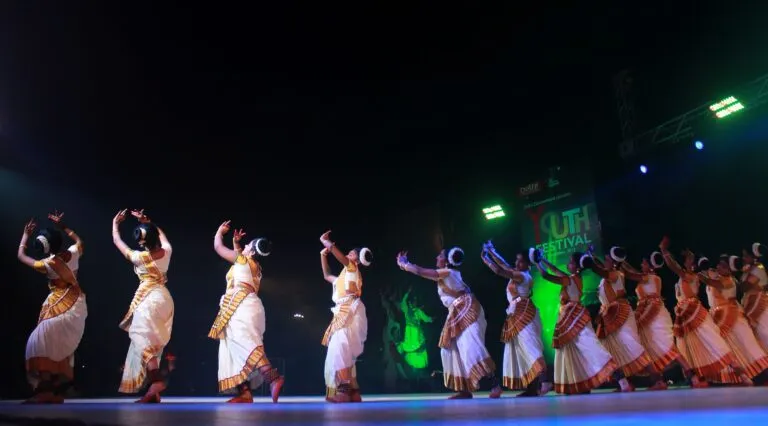
Style Mohiniyattam belongs to the lasya stylistic category, which in Sanskrit aesthetics denotes feminine, tender, and graceful performance. This contrasts with the tandava style of Kathakali. The movement vocabulary of Mohiniyattam is characterised by continuous swaying of the torso (particularly the upper body), circular arm paths, undulating body movements, gliding footwork, and smooth weight transfer. Movements rise and fall like waves. There are no sharp angles, sudden jumps, or rapid percussive footwork sequences of the kind found in Bharatanatyam or Kuchipudi. Circular movements are described as a defining element.
Two distinct musical bases are used in Mohiniyattam: the Carnatic classical music tradition common to South Indian classical arts, and Sopanam, an indigenous Kerala musical tradition characterised by its own rhythmic patterns associated with the maddalam drum used for female roles in Kathakali. The oscillations of Sopanam melody align with the swaying body movements of Mohiniyattam.
The gestures and facial expressions of Mohiniyattam are positioned closer to the natural (gramya) and the realistic (lokadharmi) end of the classical Indian aesthetics spectrum, rather than the highly formalised and conventionalised (natyadharmi) end. This makes Mohiniyattam's abhinaya more accessible to audiences unfamiliar with the precise codification of Kathakali or classical Bharatanatyam.
Central Motifs and Their Significance The traditional repertoire follows a sequence: Chollukettu (invocatory, beginning with an offering to Goddess Bhagavati and ending with a prayer to Shiva), Jatiswaram (rhythmic pure dance), Padavarnam (combined rhythm and expression), Padam (slow narrative-devotional composition), Tillana (energetic pure dance concluding section), and Slokam (Sanskrit verse recitation). Two additional items, Pandattam and Omanatinkal (lullaby), were introduced by Vallathol and are frequently performed. Swati Tirunal's compositions form the core literary and musical repertoire, with themes emphasising devotion, love, and divine stories, particularly those involving Vishnu as Mohini and as Krishna.
Process Mohiniyattam training is structured through institutional curricula at Kerala Kalamandalam and private academies. The teaching methodology, established during the Kalamandalam revival period, emphasised refined movement qualities while excluding elements considered morally objectionable by post-colonial reform standards. Contemporary training incorporates both the traditional repertoire and modern compositions by established choreographers. Performances are designed as recitals rather than dramas, with the solo dancer embodying multiple characters through abhinaya.
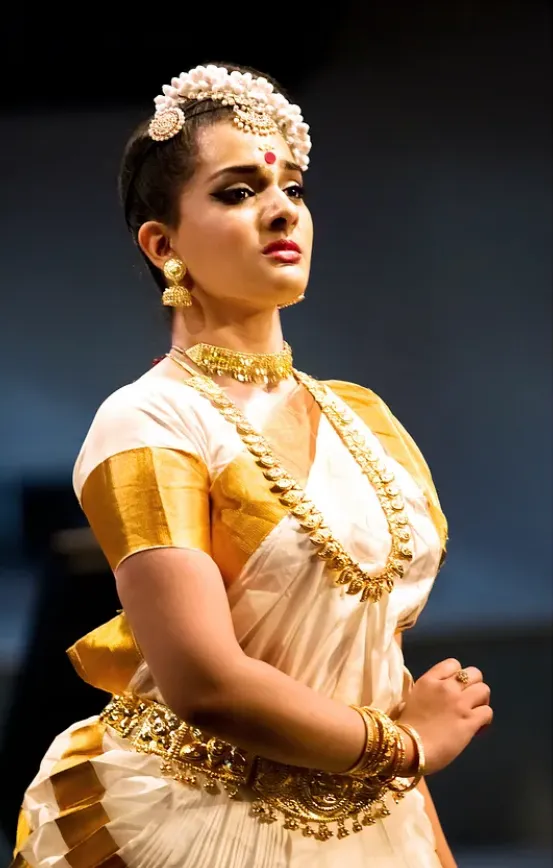
Mediums Used The Mohiniyattam costume is a white or off-white (ivory, cream) sari with a bright gold or gold-laced brocade border, similar to the ceremonial Kasavu saree of Kerala. A fitted choli (blouse) in matching fabric, and a golden waist belt tucking the sari end at the waist, complete the lower costume. Jewellery is relatively restrained compared to Kathakali: items for fingers, neck, and ears, with the Hindu tikka (forehead mark) in place. Eye makeup is drawn to accentuate eye movements visible to audiences. The hair is gathered and tied into a smooth round chignon on one side of the head (typically the left), ringed with fragrant flowers, usually jasmine (Mulla).
Musical accompaniment includes the edakka (hourglass drum specific to Kerala), mridangam, veena, flute, kuzhitalam or cymbals, and in modern productions violin and harmonium. The distinct rhythmic identity of the Sopanam tradition is maintained by selecting compositions appropriate to Mohiniyattam's movement aesthetics.
New Outlook
Mohiniyattam has expanded from regional Kerala performance to national and international stages since the mid-twentieth century. Contemporary practitioners including Shobana, Pallavi Krishnan, and Deepti Omchery Bhalla have extended the form's choreographic repertoire into new thematic territory while maintaining its lasya aesthetic foundation. Deepti Omchery Bhalla's scholarly research and innovative choreography have been documented by Kerala Tourism as a significant contribution to the form's contemporary development. The discourse around caste and colour discrimination in Mohiniyattam training has produced institutional and community-level responses, with advocacy for more inclusive practice gaining visibility through national media coverage. The Sangeet Natak Akademi and Kerala state cultural institutions continue to support training, documentation, and performance.
Learn Mohiniyattam
Bibliography
Sources
Centre for Cultural Resources and Training (CCRT). “Mohiniyattam Dance.” Ministry of Culture, Government of India, accessed 19 May 2026.
Chandra, Subhash. Mohiniyattam. Sangeet Natak Akademi. 2010.
Kerala Tourism. “Mohiniyattam: The Classical Dance of Kerala.” Kerala Tourism Department, accessed 19 May 2026.
Lemos, Justine. “The Politics of the Temple: Female Performers and the Mohiniyattam Tradition in Kerala.” Research article on comparative studies of Mohiniyattam historical documentation.
Massey, Reginald. India’s Dances: Their History, Technique and Repertoire. Abhinav Publications, 2004.
Paniker, Nirmala. “Research on Desi Mohiniyattam and Ritualistic Compositions Including Chandanam and Mookkuthi.” India Art Review, 2023.
Image Sources
Akademi. “Mudras in Mohiniattam – Part 1.” Akademi, 29 Apr. 2020, https://www.akademi.co.uk/mudras-in-mohiniattam-part-1/. Accessed on May 19, 2026.
Premji, Safna. “Mohiniyattam: The Art of Elegance and Devotion.” Oaklores, 14 May 2025, https://oaklores.com/2025/05/14/mohiniyattam-the-art-of-elegance-and-devotion/. Accessed on May 19, 2026.
Sujal, K. S. “Mohiniyattam and the Death of the Other.” The Festember Blog, Medium, 4 Aug. 2023, https://medium.com/the-festember-blog/mohiniyattam-and-the-death-of-the-other-dc78a181f71b. Accessed on May 19, 2026.