

Lavani - The Folk Dance Tradition of Maharashtra
From royal courts to modern stages, explore the evolution and enduring cultural significance of Lavani through the centuries.
Introduction
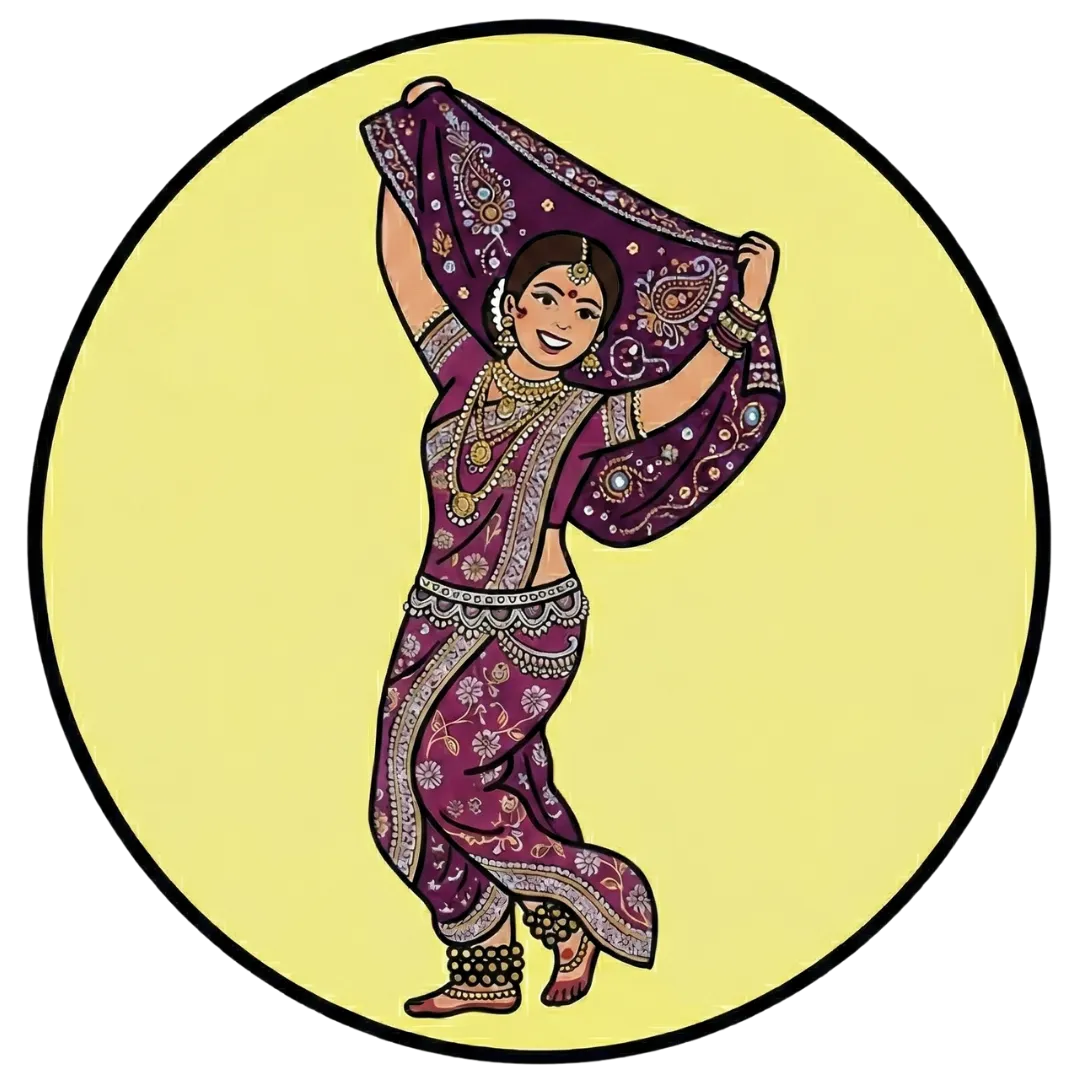
Lavani is a genre of folk music and dance originating in Maharashtra, India, combining song and rhythmic movement performed to the beats of the dholki. It is widely regarded as one of Maharashtra's most significant folk performance traditions and has contributed substantially to the development of Marathi folk theatre (Tamasha). The term encompasses a broad range of lyrical, musical, and performative material dealing with themes of love, society, religion, politics, and martial life. Lavani is known for its fast tempo, energetic footwork, and the use of the nine-yard nauvari saree as the performer's identifying costume. Etymology: The word "Lavani" is derived from "Lavanya," a Sanskrit and Marathi word meaning beauty or grace. The name indicates both an aesthetic aspiration and a characterization of the art form's subject matter: the beauty of women, the beauty of emotional experience, and the beauty of performance itself. Origin: The origins of Lavani are traced by scholars to the 1560s, though it came into documented prominence during the Peshwa period of the Maratha Empire (18th and early 19th centuries). Some researchers cite the Prakrit Gathas collected by the poet Hala as a possible antecedent of Lavani's lyrical form. During the Peshwa period, particularly under rulers Sawai Madhavrao (1775-1795) and Bajirao II (1795-1818), a form of Lavani called Baithakichi Lavani received systematic royal patronage. The art form was integrated into the Tamasha tradition, a traveling folk theatre form, around the 1870s. Location: Lavani is practiced primarily in Maharashtra, with a strong presence in the Solapur, Pune, and Kolhapur districts. It is also performed in parts of southern Madhya Pradesh, Karnataka, and Tamil Nadu. The two broad performance traditions, Phadachi Lavani (public stage performance) and Baithakichi Lavani (intimate private performance), have had different geographical and social distributions. Community: Lavani was historically associated with performers from specific communities including the Mahar, Kolhati, and Matang castes. The Sangeet Bari tradition within Baithakichi Lavani involved all-female hereditary artists who were socially barred from marriage as a condition of their professional identity. The texts and compositions of Lavani were historically written by male poets (Shahirs), often from Brahmin castes, while performance labor was provided by women from lower-caste hereditary performer communities. This structural gap has been analyzed in recent academic scholarship, including work by researcher Anagha Tambe published in South Asian History and Culture (2023). Relevance: Lavani is recognized as Maharashtra's official folk dance. Notable Shahirs who composed significant bodies of Lavani include Parasharam (1754-1844), Ram Joshi (1762-1812), Anant Fandi (1744-1819), Honaji Bala (1754-1844), and Lok Shahir Annabhau Sathe (1920-1969). Well-known performers include Vithabai Bhau Mang Narayangaonkar, Kantabai Satarkar, Surekha Punekar, and Mangala Bansode. The art form was popularized to mass audiences through Marathi cinema, particularly through films such as Pinjara and Natarang.
History
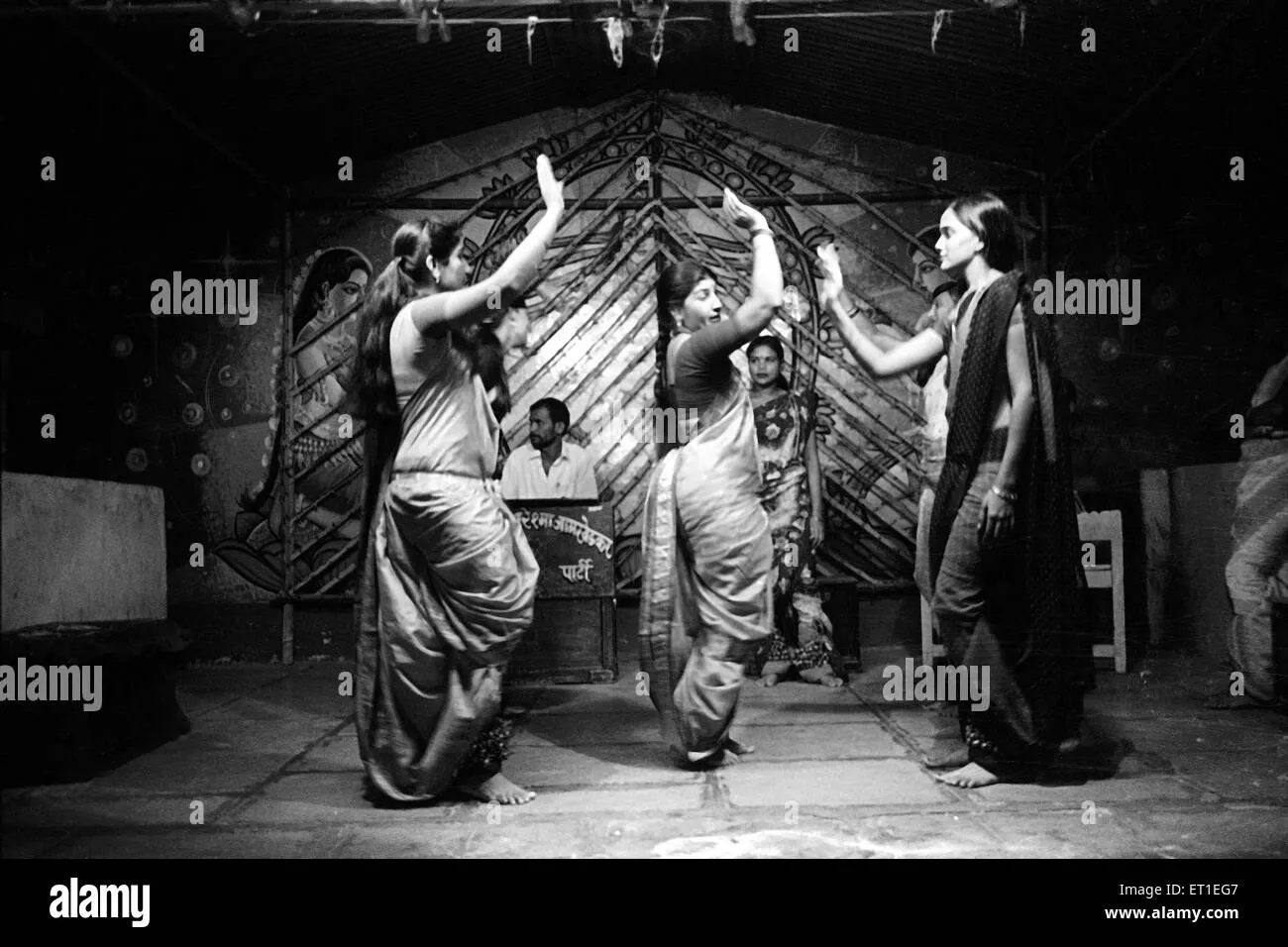
Background Lavani's development is inseparable from the history of the Maratha Empire. During the long military campaigns of the 17th and 18th centuries, Lavani served as entertainment for soldiers and as a cultural production in the courts of Maratha rulers, including the Holkars of Indore and the Bhosles of Tanjore. The Shahiri kavan tradition of Marathi poetry, which emerged in the Maratha period, included Lavani among its principal genres. The songs reflected the warrior-peasant world of the Marathas: the life of soldiers, the separation of husbands and wives, the landscape of the Deccan. Culture and Societies Lavani developed into two distinct performance traditions. Phadachi Lavani is performed publicly in theatrical settings before large audiences and remains associated with Tamasha, the folk theatre form in which Lavani is a central section. Baithakichi Lavani was historically performed in more intimate, enclosed settings for male patrons of social rank. The lyrical content of Lavani addresses an extensive range of social experience, from romantic longing and erotic encounter to social commentary, religious devotion, and political observation. Academic researcher Anagha Tambe (2022-2023) has analyzed the class and caste dynamics of Lavani, noting that its commodification as "folk art" by the Maharashtra state has tended to valorize an urban, middle-class version of the form while marginalizing the organically practiced Lavani of hereditary lower-caste performers. Religious Significance The Nirguni Lavani, one of the two major subgenres, draws on devotional and philosophical content from the Bhakti tradition. The Shringari Lavani, the more widely practiced form, deals with sensual and romantic themes and does not carry primary religious content. Some historical Lavani compositions drew on Krishna-Radha narratives and Varkari devotional traditions.
Understanding the Art
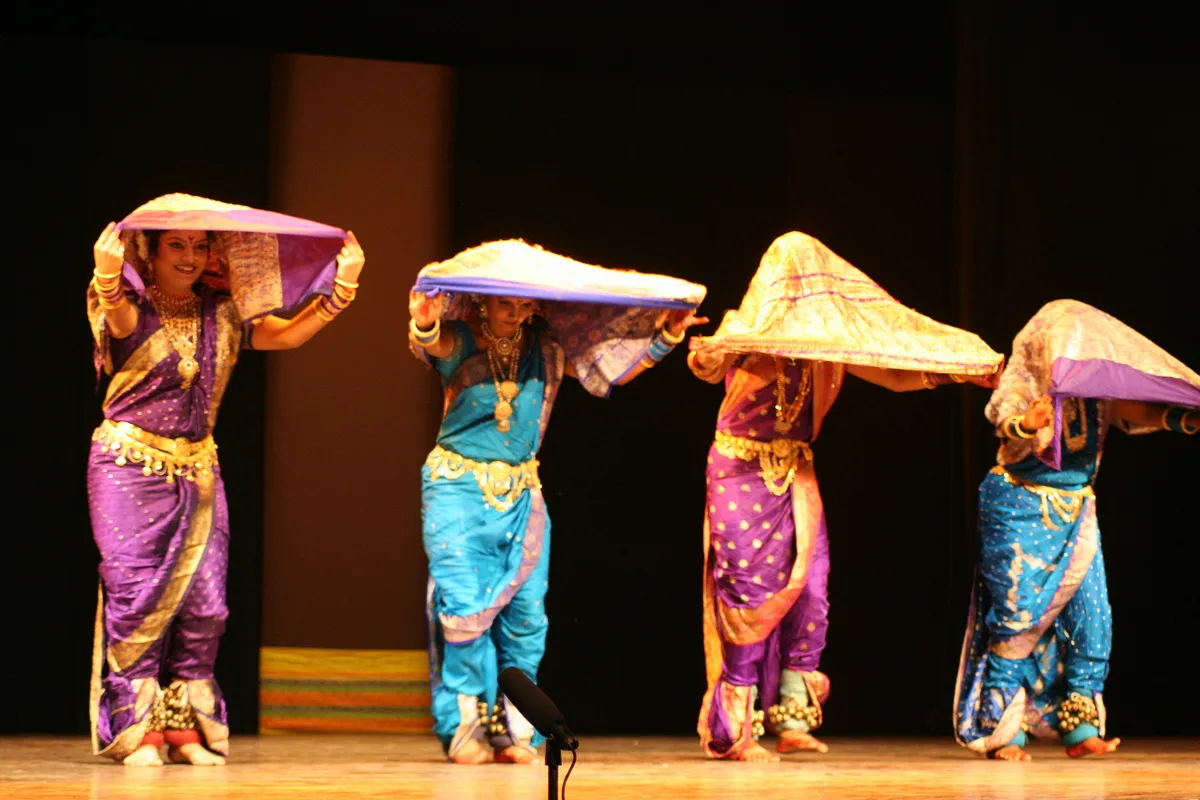
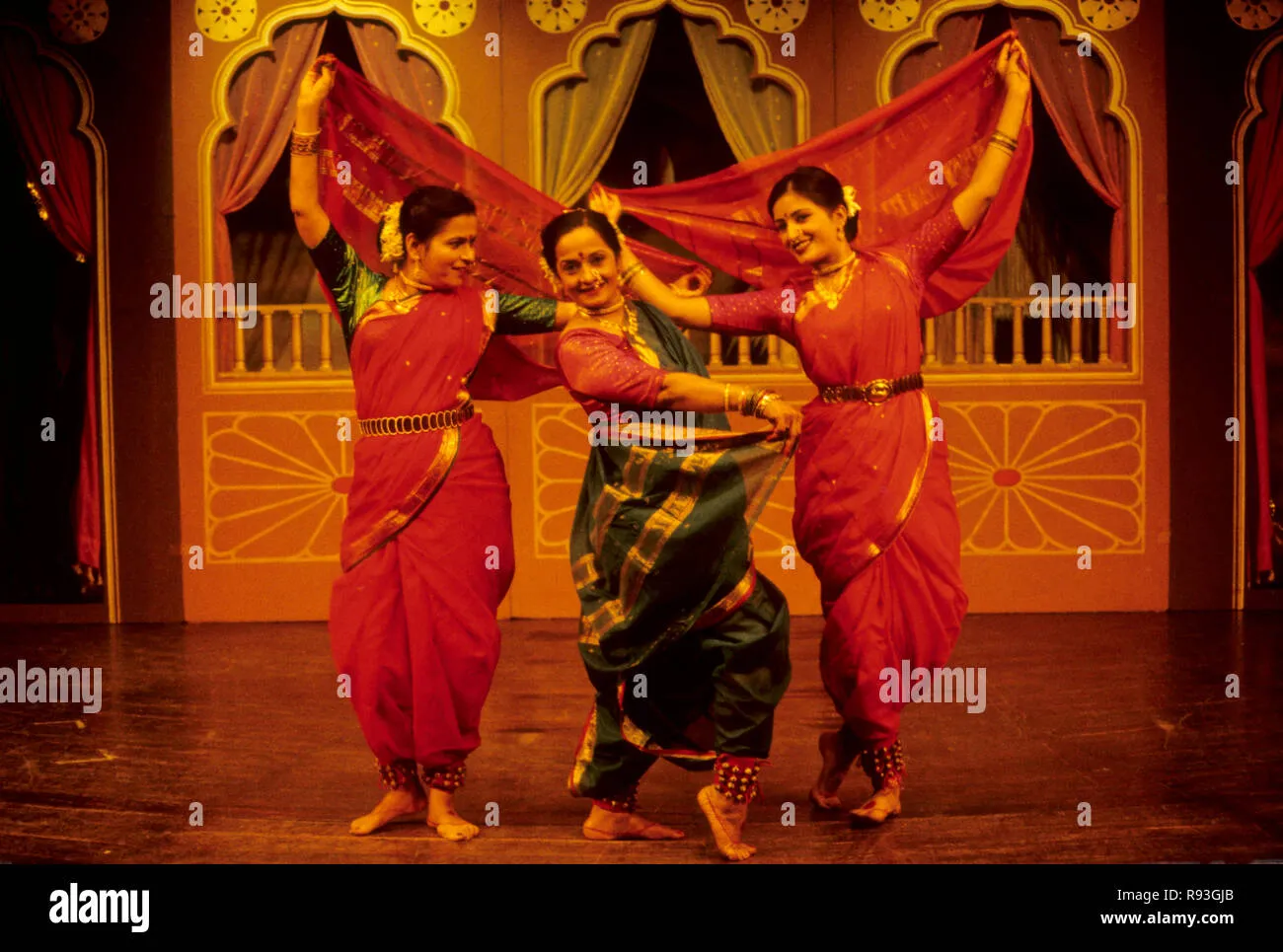
Style The quintessential Lavani performance begins with the sound of the dholki establishing a fast rhythm. Performers enter the stage with the pallu of their nauvari saree covering their heads and begin with subtle, teasing movements that build into energetic dance sequences characterized by latkas and jhatkas (stylized and expressive body movements). Footwork is rapid and precisely timed to percussion. The performance involves strong eye contact with the audience and deliberate use of facial expression as a communicative instrument. Central Motifs and Their Significance The central motifs of Lavani are love (shringara), separation (viraha), erotic desire, valor, and social commentary. Themes documented in scholarship include the soldier's awaited return, the wife's longing, nuptial life, and satire of social institutions. Nirguni Lavani introduces motifs of spiritual seeking and philosophical reflection within the same performative framework. Process A full Lavani performance in the Tamasha format involves a sequence that begins with the Gan (invocation), proceeds through the Gaulan (devotional dance), and culminates in the Lavani section as the central entertainment piece. The dholki sets the tempo, accompanied by harmonium, tabla, and manjeera. The performer sings while dancing, maintaining the fast rhythm throughout. Mediums Used The primary instruments are the dholki, harmonium, tabla, tuntuni (a string drone instrument), daf, and manjeera. The nauvari saree (nine-yard saree) is an essential performative medium, draped in the kashta style for freedom of movement. Ghungroo (ankle bells) worn by performers contribute rhythmically to the performance.
New Outlook
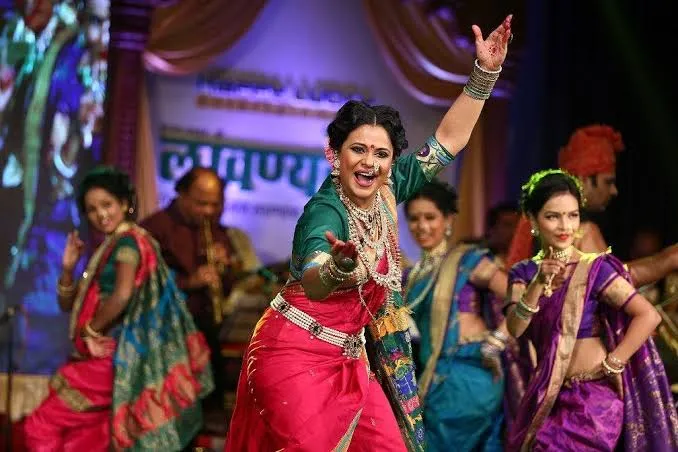
Lavani has attracted significant academic attention in recent years. Published research includes Anagha Tambe's 2022 article in South Asian History and Culture on hereditary performance labor, academic work from Savitribai Phule Pune University, and the book Sangeet Baari on Lavani authored by Korgoankar. Maharashtra state government cultural agencies have supported Lavani through artist pensions, stage funding, and documentation programs. The question of how state cultural patronage shapes the representation and economics of the art form is an active area of scholarly discussion.
Learn Lavani
Bibliography
Sources
Deshpande, Prachi. Creative Pasts: Historical Memory and Identity in Western India, 1700–1960. Columbia University Press, 2007.
Korgoankar, N. Sangeet Baari.
Tambe, Anagha. “Folk Dance/Vulgar Dance: Erotic Lavani and the Hereditary Performance Labour.” South Asian History and Culture, vol. 14, no. 2, 2023.
Image Sources
Lavani Dancers.” Wikimedia Commons, https://commons.wikimedia.org/wiki/File:Lavani_Dancers.jpg. Accessed 4 July 2026.
“Lavani Folk Dance (Lavni) Dancers, Maharashtra, India.” Alamy, https://www.alamy.com/lavani-folk-dance-lavni-dancers-indian-folk-dancing-women-dancing-maharashtra-india-image229345603.html. Accessed 4 July 2026.
“Lavani Dance.” Alamy, https://www.alamy.com/stock-photo/lavani-dance.html. Accessed 4 July 2026.
“When Kathak and Lavani Find a Common Platform.” India Art Review, https://indiaartreview.com/stories/when-kathak-and-lavani-find-a-common-platform/. Accessed 4 July 2026.
