
Jhijhian - The Folk Dance Tradition of Bihar
Uncover the rich cultural heritage of Jhijhian, a traditional dance performed with devotion and community spirit...
Introduction
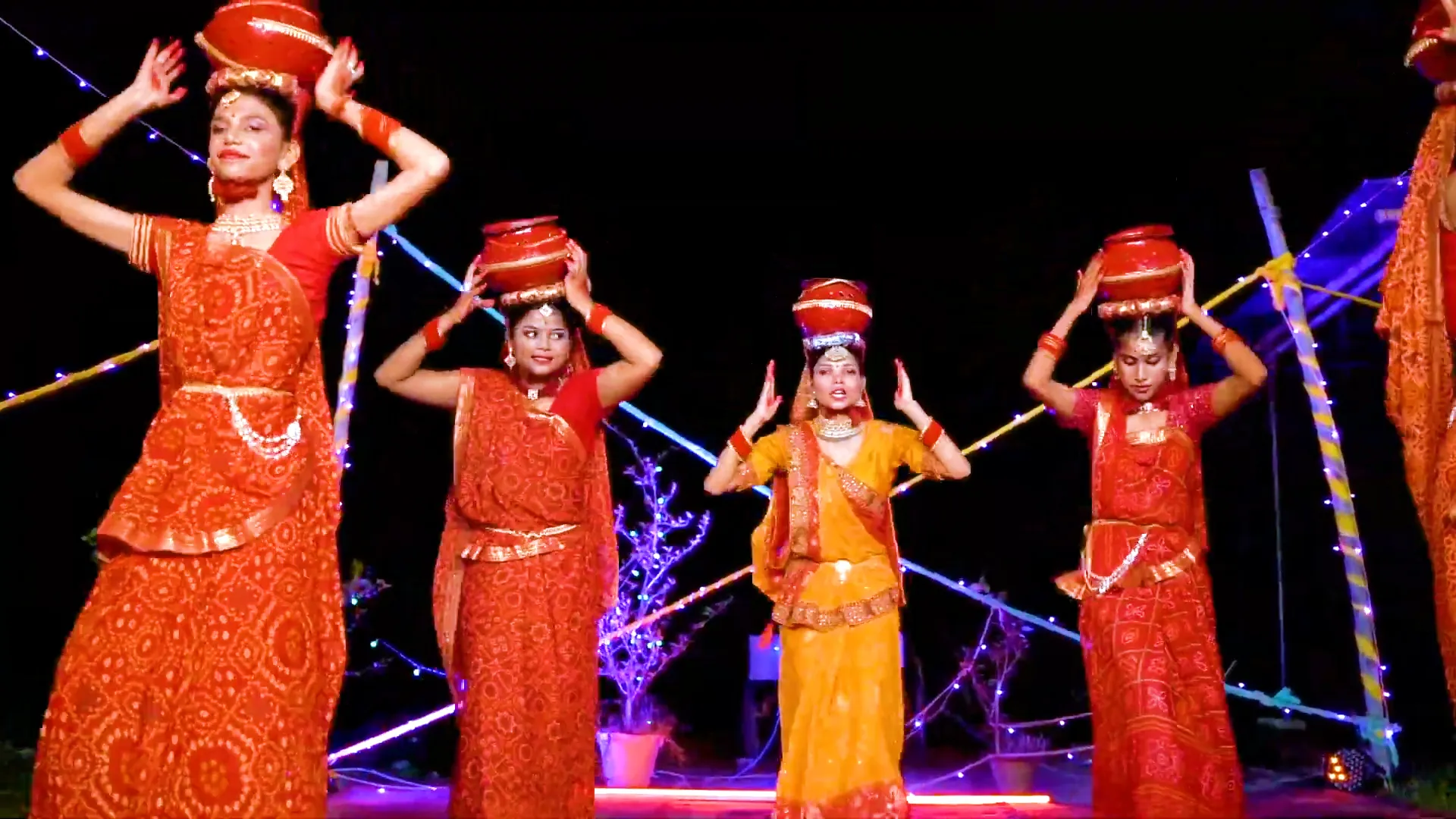
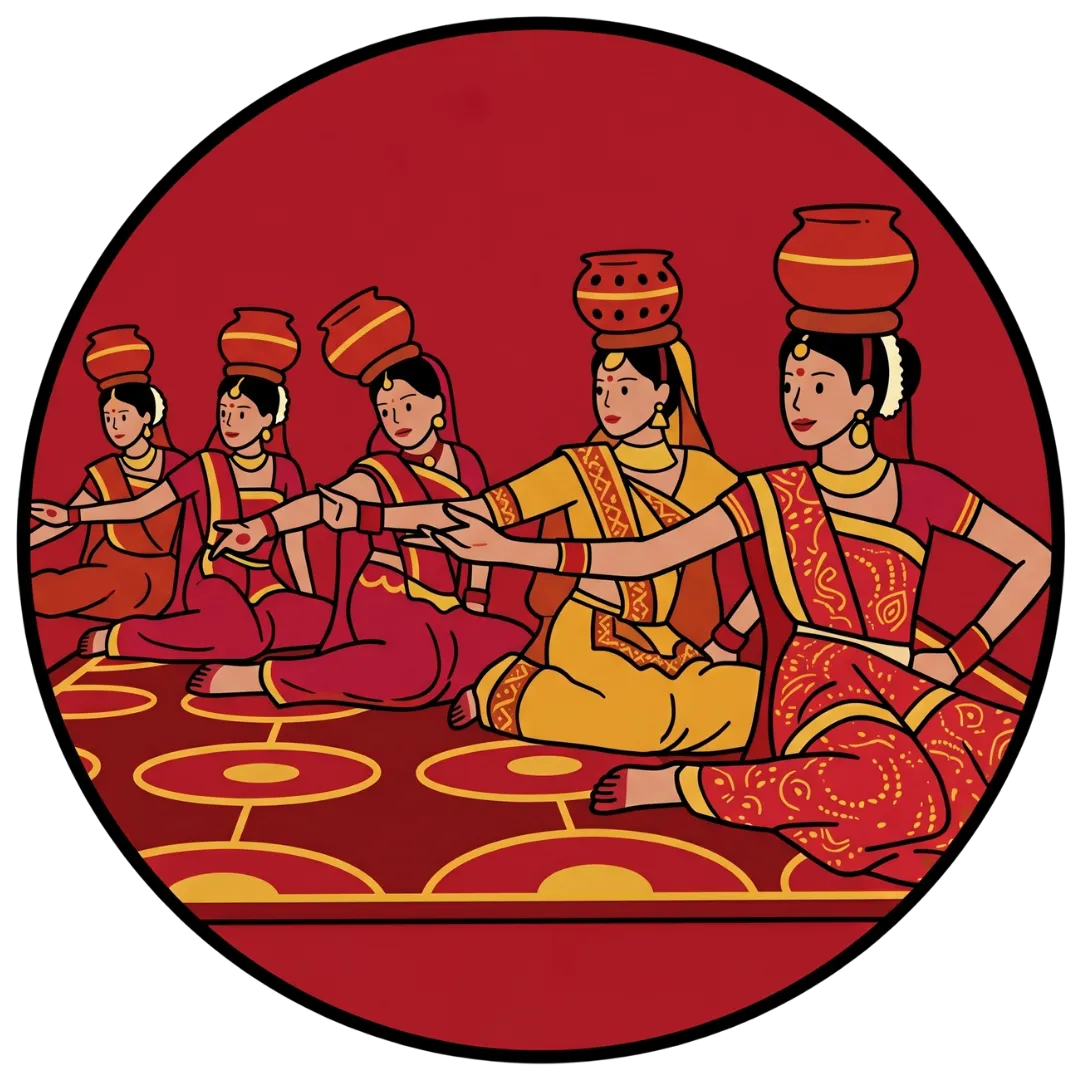
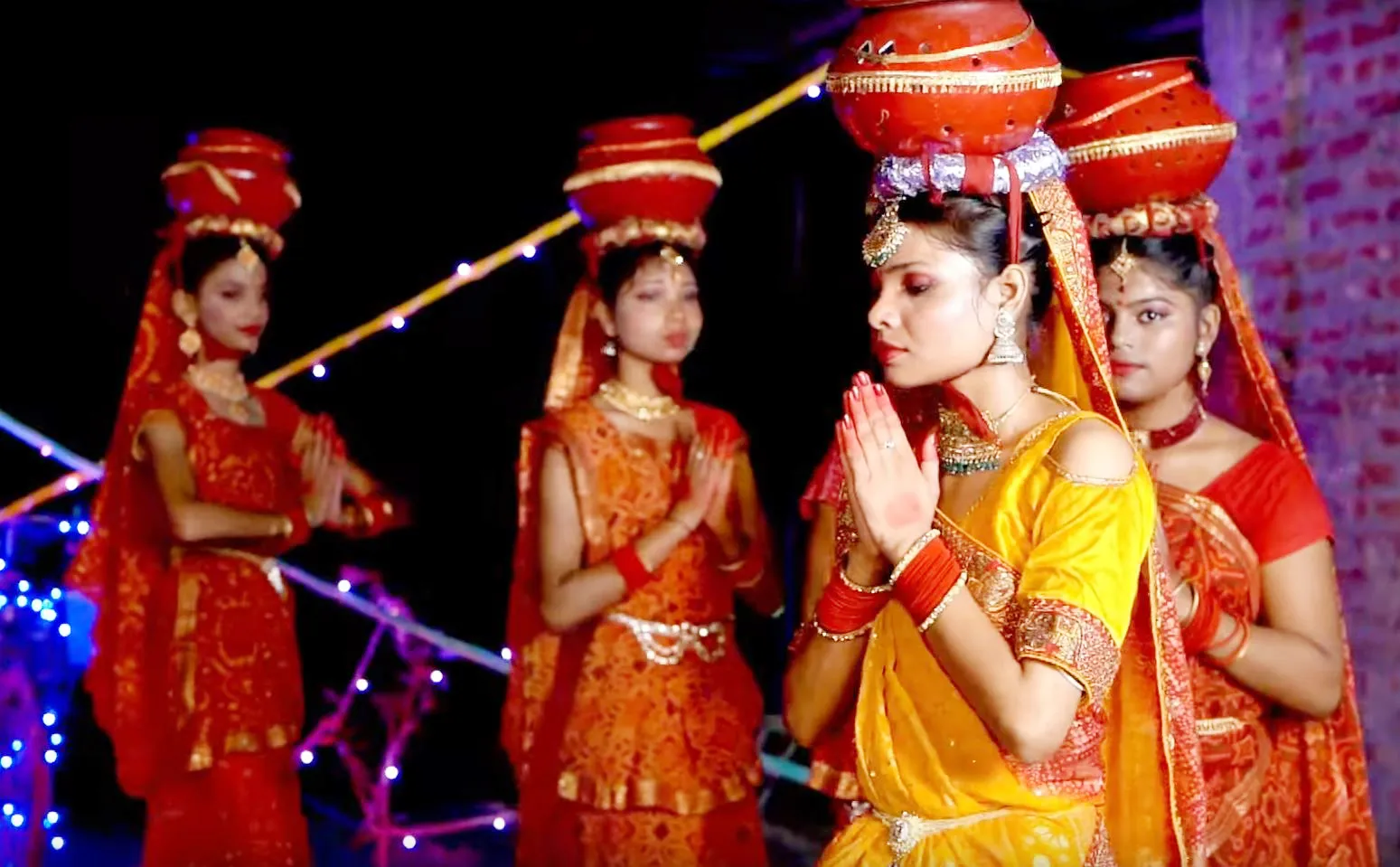
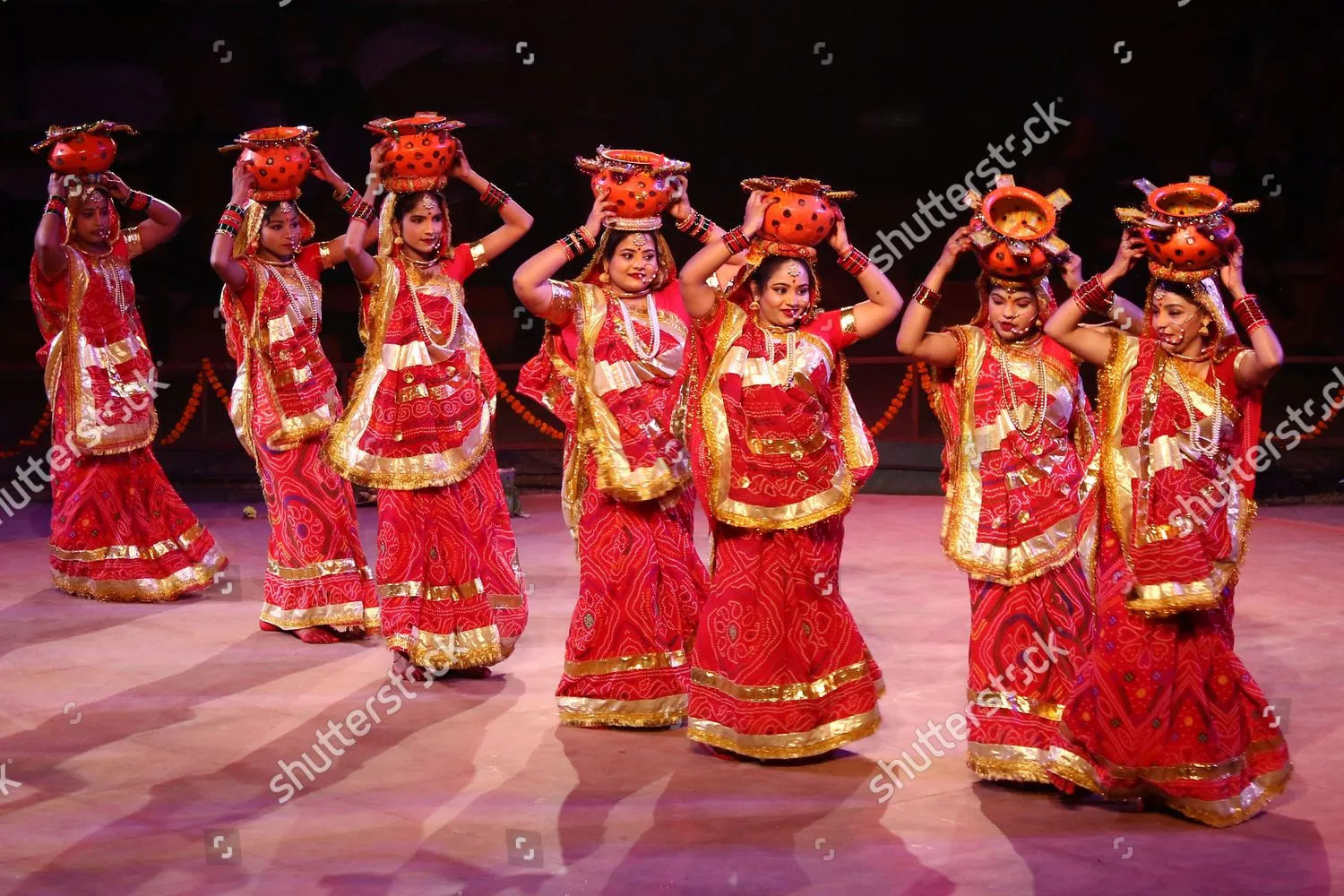
Jhijhian is a devotional folk dance of North Bihar, particularly associated with the Mithila region and neighboring plains. It is performed by women during periods of drought as a ritual supplication to Lord Indra, the Vedic deity of rain, and is also performed during Durga Puja and Dussehra. The defining visual characteristic of Jhijhian is the carrying of perforated earthen pots with lighted lamps inside, balanced on the performers' heads, which creates a luminous spectacle intended as both devotional offering and communal prayer. The form belongs to a broader category of rain-petition dances found across the northern Indian plains and is performed primarily by women of agricultural communities.
Etymology
The name 'Jhijhian' is believed to derive from the sound or the ritual action associated with the dance, though no authoritative Etymology has been established in the academic literature. In some regional contexts it is also spelled 'Jhijia' or 'Jhijhi.' The perforated earthen pot used in the performance is itself called 'jhijhia' in the local dialect, and the dance takes its name from this central prop. The pot with its patterns of small holes through which lamplight passes is both the material object and the defining symbol of the tradition.
Origin
Jhijhian is a folk tradition indigenous to the Maithili and Bhojpuri-speaking regions of North Bihar. The specific region of origin is the Mithila cultural zone, which includes the present-day districts of Darbhanga, Madhubani, Sitamarhi, Muzaffarpur, and Samastipur. The dance belongs to a cluster of rain-petitioning traditions that are documented across the Gangetic plains of Bihar, Uttar Pradesh, and Jharkhand. The exact historical depth of the tradition has not been established through written documentation; it is transmitted orally and through practice. Given the agrarian dependency of the region on monsoon rainfall, traditions such as Jhijhian likely developed in response to the climatic vulnerabilities of subsistence farming communities, though precise dating is not possible from available evidence.
Location
Jhijhian is concentrated in the districts of North Bihar, particularly Darbhanga, Madhubani, Sitamarhi, Muzaffarpur, Vaishali, Samastipur, and parts of Champaran. It is most actively performed in village settings and small towns within the Mithila region. The dance has limited presence outside this geographic zone, though Maithili diaspora communities may perform it during festivals.
Community
Jhijhian is performed exclusively by women, typically from Hindu agricultural communities in North Bihar. It is not restricted to a single caste group and is practiced across a range of communities within the Maithili cultural zone. The performance is a collective act: groups of women organize together during drought conditions or at prescribed festival times to conduct the ritual dance. It functions as a community-organized event rather than a performance by specialist practitioners.
Relevance
Jhijhian occupies a significant place in the devotional and agricultural life of Maithili communities. As a rain-petition dance performed during drought, it encodes the deep dependency of Bihar's farming communities on the monsoon and the ritual strategies developed to mediate that dependency. The form is also performed during Durga Puja, integrating it into the broader autumnal festival calendar. Its significance lies not in theatrical spectacle but in collective devotional action, and its cultural value is tied to the specific ecological and social conditions of North Bihar's agrarian communities.
History
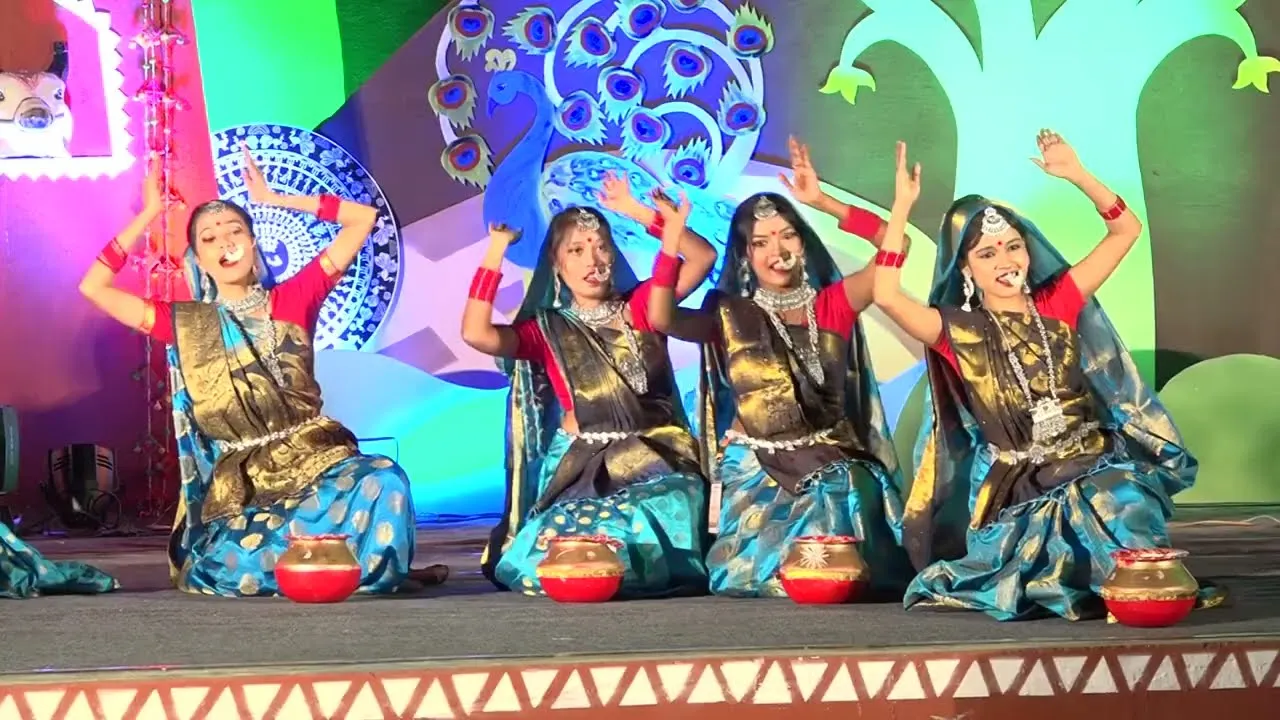
Jhijhian belongs to a family of rain-petition dances and rituals documented across the Indian subcontinent. In Bihar and the broader Gangetic plain, several dance forms involving women petitioning deities for rainfall are known, including Karma Naach and various forms associated with Chhath Puja. Jhijhian's specific character, centered on the perforated lamp-pot, distinguishes it from these related traditions. No historical text specifically documenting the early history of Jhijhian has been identified in the published literature. The form is an oral and practical tradition whose history must be reconstructed from ethnographic observation rather than documentary sources.
Culture and Societies
In Maithili village culture, Jhijhian is organized as a communal response to drought. Women gather in the evening, prepare perforated earthen pots, fill them with oil lamps, place them on their heads, and perform the dance through the village or around a central sacred space. The call-and-response songs invoke Goddess Durga and Lord Indra. The communal nature of the performance reinforces social bonds among women in the village and constitutes a collective assertion of need addressed to divine powers. The earthen pot (jhijhia) is typically made by local potters and is decorated in traditional Mithila patterns.
Religious Significance
Jhijhian has explicit religious significance. It is performed as a prayer ritual addressed to Lord Indra for rain and to Goddess Durga during the Navratri-Dussehra season. The burning lamp inside the perforated pot is a form of deepa (lamp offering) that is standard in Hindu devotional practice, and the vessel itself functions as a portable shrine. The songs sung during the dance invoke divine names and request specific blessings. The performance is understood by its practitioners not as entertainment but as an act of collective devotion with practical intent.
Understanding the Art
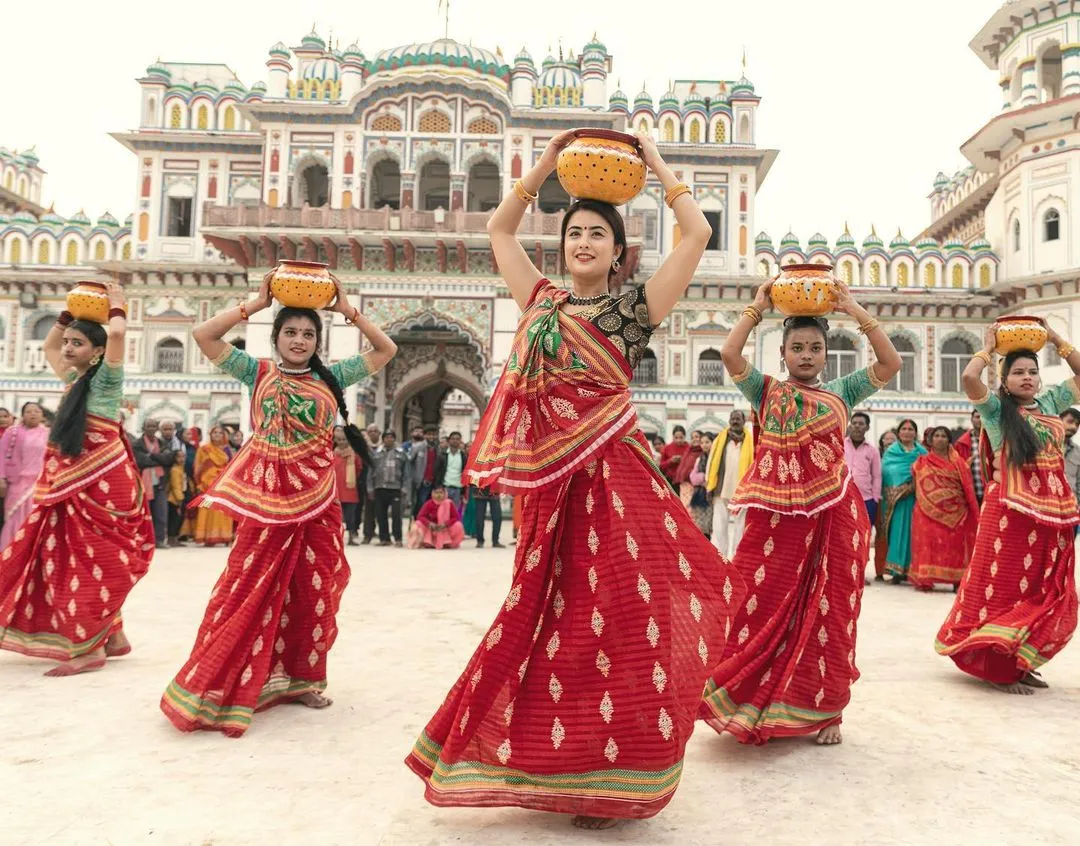
The performance style of Jhijhian centers on the controlled and graceful balancing of the lamp-filled earthen pot on the head while executing the dance steps. The movement vocabulary emphasizes upper-body stillness to maintain the pot's stability while the feet and lower body perform the rhythmic steps. The songs are in the call-and-response format, with a lead singer and a responding chorus. The musical accompaniment is provided by dholak, harmonium, and manjira. The dance is typically performed in a procession through the village or in a circular formation around a central point.
Central Motifs and Their Significance
The central motif of Jhijhian is the jhijhia pot: a perforated earthen vessel with a lamp burning inside, through whose holes the lamplight projects outward. This object condenses multiple layers of symbolic meaning: it is an offering of light, a representation of the womb of life, and a petition for water to sustain agricultural life. The songs invoke the monsoon as a divine gift and address Indra as the controller of rain. The communal formation of the dance underscores the collective nature of the petition.
Process
The performance begins in the evening. Women prepare the jhijhia pots, light the lamps inside them, and balance the pots on their heads. They then move in a procession or circle, singing the call-and-response songs, while the musical accompaniment sets the rhythm. The dance continues for an extended period, typically through much of the night when performed during a drought petition. During festival contexts such as Durga Puja, the performance is integrated into the wider festival activities and may be shorter in duration.
Mediums Used
The primary material objects of Jhijhian are the perforated earthen pots (jhijhia) made by local potters, the oil lamps placed inside them, and the traditional dress of the performers. Costumes include the angarkha (a long tunic), dhoti or kurti, lehenga or ghagra, and odhni or dupatta in traditional Mithila style. Musical instruments are dholak, harmonium, and manjira. No specialized equipment is required beyond these locally available materials.
New Outlook
Jhijhian is classified as a vulnerable tradition. Its practice is declining due to urbanization, reduced communal organization in agricultural villages, and the diminishing relevance of drought-petition rituals in areas with improved irrigation infrastructure. The form has received limited formal documentation compared to more widely recognized Bihar folk traditions such as Chhath Puja. It is practiced in traditional village settings but has not entered the domain of government-sponsored cultural festivals or institutional documentation at a significant scale. The Sangeet Natak Akademi and Bihar state cultural bodies have acknowledged the existence of the tradition, but sustained preservation programs were not in evidence as of available records.
Learn Jhijhian
Bibliography
Sources
Hasan, Mushirul, and Nariaki Nakazato, editors. The Unfinished Agenda: Nation-Building in South Asia. Manohar, 2001.
Jha, Phanindra Nath. Maithili Folk Traditions. Mithila Institute, various editions.
Mishra, Jayakanta. A History of Maithili Literature. Sahitya Akademi, 1976.
Singh, A. K., and S. K. Jha, editors. Bihar Folk Art and Culture. Bihar Rajya Sangha, various editions.
Image Sources
"Groups of Women Performing Jhijhiya." Wikimedia Commons, https://commons.wikimedia.org/wiki/File:Groups_of_women_performing_Jhijhiya.png. Accessed 3 July 2026.
"Jhijhiya." Wikipedia, https://en.wikipedia.org/wiki/Jhijhiya. Accessed 3 July 2026.
"Jhijhiya Dance of Mithila Region." Wikipedia, https://en.wikipedia.org/wiki/File:Jhijhiya_Dance_of_Mithila_region.jpg. Accessed 3 July 2026.
"Artists from Bihar Region Perform Traditional 'Jhijhiya' Dance." Shutterstock Editorial, https://www.shutterstock.com/editorial/image-editorial/artists-bihar-region-perform-traditional-%27jhijhiya%27-dance-12648576a. Accessed 3 July 2026.
"Jhijhiya." YouTube, uploaded by Maithili Rang, https://www.youtube.com/watch?v=2AhMY-0F70Q. Accessed 3 July 2026.