
Ghumura - The Folk Dance Tradition of Odisha
An exploration of the origins, cultural significance, music, costumes, and enduring traditions of Ghumura, the celebrated drum dance of Odisha.
Introduction
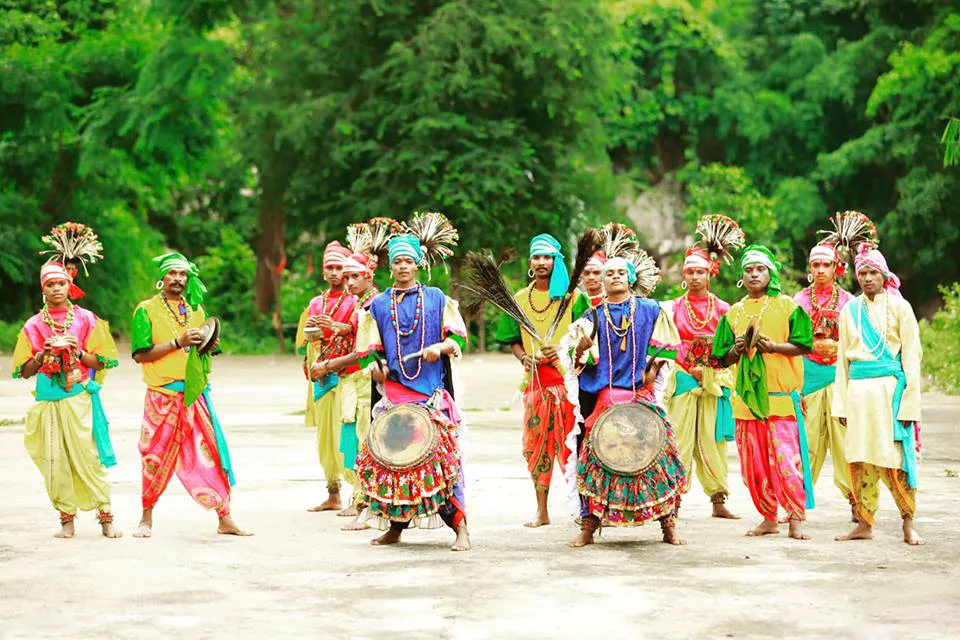
Ghumura is a folk dance of the Kalahandi district in western Odisha, India, performed by male dancers in groups of fifteen to forty. The dance derives its name from the Ghumura, a kettle-shaped drum of significant antiquity that serves as its central instrument and the primary catalyst of its performance. Ghumura evolved from a war dance tradition in which it functioned as military music to motivate soldiers before battle, was subsequently formalized as a courtly darbari dance under the patronage of the Kalahandi royal families, and has in the modern period transitioned into a community folk performance associated with religious festivals and cultural events. The dance is classified as folk in terms of costume and community context, but scholars note that its mudras and movement vocabulary show characteristics shared with classical Indian dance forms.
Etymology
The name Ghumura refers to the central drum used in the performance, a kettle-shaped percussion instrument approximately the size of a pitcher that produces a deep, resonating sound. Folk mythology recorded in Shivam Bhasin Panda's 1954 text Ghumura Janma Bidhan suggests the Ghumura drum was formed by the combination of Lord Shiva's damru and Goddess Saraswati's veena, establishing a mythological origin for the instrument. The name has also been interpreted as an onomatopoeic reference to the resonating sound produced by the drum, which is represented in the fifteenth-century Sarala Mahabharata's Madhya Parba in the passage: 'Dhola Madala Gadi je Ghumura Bajai, Ghumura je Ghumu Ghumu Hoi Garajai.'
Origin
Location: Kalahandi district of Odisha; also practiced in Nuapada, Bolangir, Koraput, and border areas of Chhattisgarh and Andhra Pradesh Community: Gond, Kondh, Bhatras, and Paika communities of tribal Kalahandi; also associated with regional royal families of Bhawanipatna and Jayapatna Relevance: Considered the cultural identity marker of Kalahandi district; represented India at the Republic Day Parade in New Delhi in 1999
History
Background
The historical depth of Ghumura is contested but supported by multiple forms of evidence. The Ghumura dance is depicted in the Sun Temple of Konark, confirming its presence during the medieval period. Rock art discovered at Gudahandi in Kalahandi and Yogi Matha in Nuapada district shows images of drum-shaped instruments resembling the Ghumura from prehistoric periods, with some sites estimated at more than eight thousand years BCE, though this dating remains subject to ongoing scholarly discussion. Historical records document that the Chindak Naga dynasty of Chakrakot recognized the Ghumura tradition in the Indravati river valley region, with some analysts placing this association around the tenth century CE. The relocation of the Naga dynasty's capital from Jugasaipatna to Junagarh in 1008 CE was reportedly accompanied by a procession of Ghumura music. Ethnographic fieldwork in Kalahandi has documented oral histories consistent with the archaeological iconographic record, though researchers note that such accounts blend empirical observation with mythological tradition.
During the Paikas or soldiering era under Kalahandi's princely families, Ghumura served as a form of exercise and entertainment during leisure time, and poets including Upendra Bhanja, Dinakrushna, and Abhimanyu Samanta Singar began composing songs for Ghumura performance, enriching its literary dimension. On January 26, 1999, approximately one hundred dancers from Bhawanipatna's Mahavira Sanskrutika Anusthan performed Ghumura at India's Republic Day Parade in New Delhi.
Culture and Societies
Ghumura is exclusively a male dance. Performers are typically aged between fifteen and forty years. Senior community members serve as singers and drummers rather than dancers. Each performance group consists of eight, twelve, or sixteen members. The dance is associated with the annual Nuakhai and Dussehra festivals in Kalahandi, as well as with the worship of regional deities including Manikeswari of Bhawanipatna, Lankeswari of Junagarh, Raktambari of Khariar, and Dakeshwari of Madanpur Rampur. The Ghumura drum is ritually purified on the auspicious day of Chitalagi Amavasya, and daily evening practice sessions commence from that day until the performance season begins at Nuakhai.
Religious Significance
Ghumura has documented religious dimensions, primarily through its association with the worship of regional Shakti goddesses of Kalahandi. Performances are offered at the altars of goddesses during Dasahara and other festival occasions. A widely circulated mythological account describes Ghumura as originating from Ravana's war music associated with Goddess Lankeswari of Lanka, and connects the form to the Chandi Purana narrative of Goddess Durga's combat with Mahisasura. The Nishan drum is described in oral tradition as created by celestial beings Gaurab Gandharb and Urbasi, while the Tala was created by the sage Kashyapa Rishi. However, alongside this ritual significance, Ghumura serves equally as secular community entertainment and competition.
Understanding the Art
Style
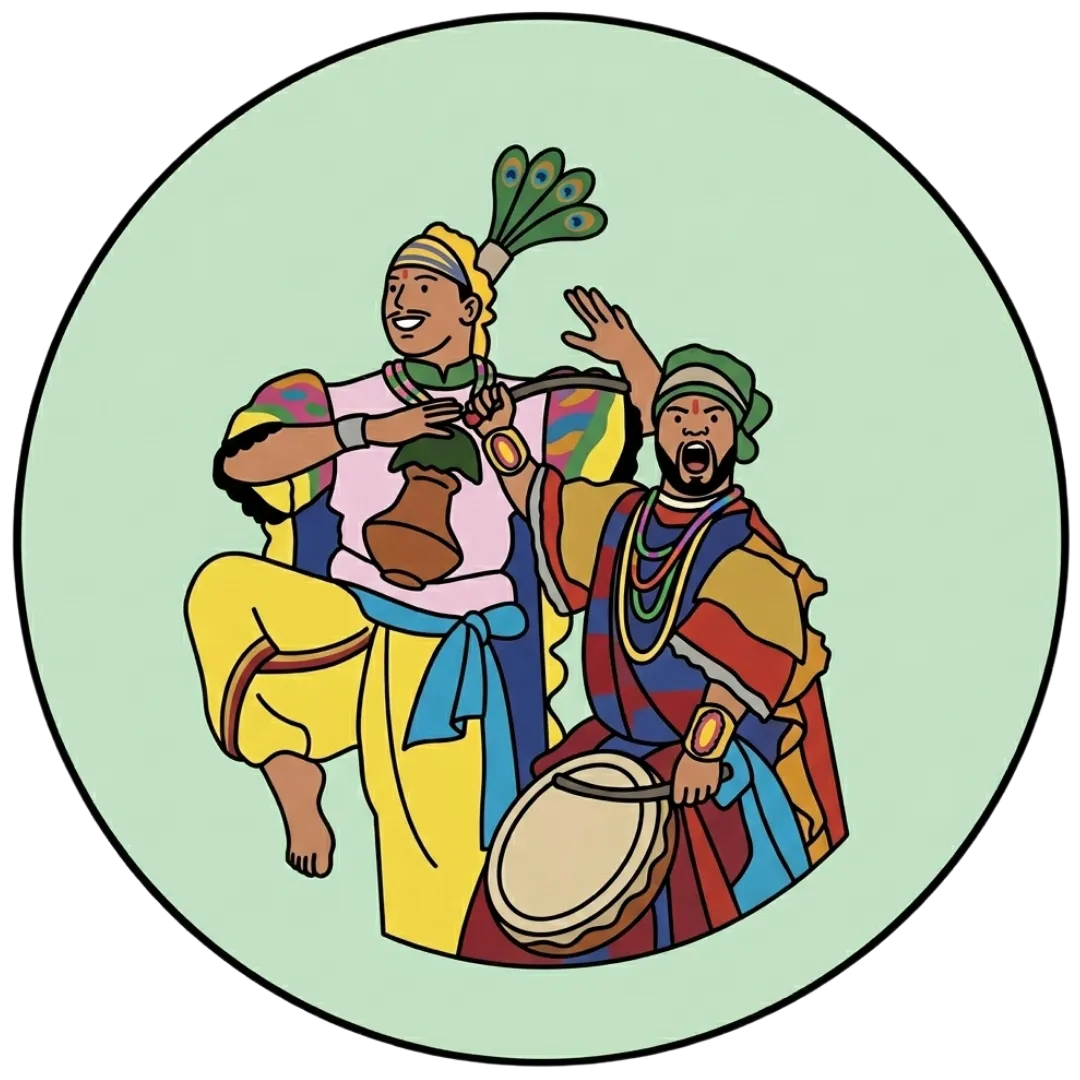
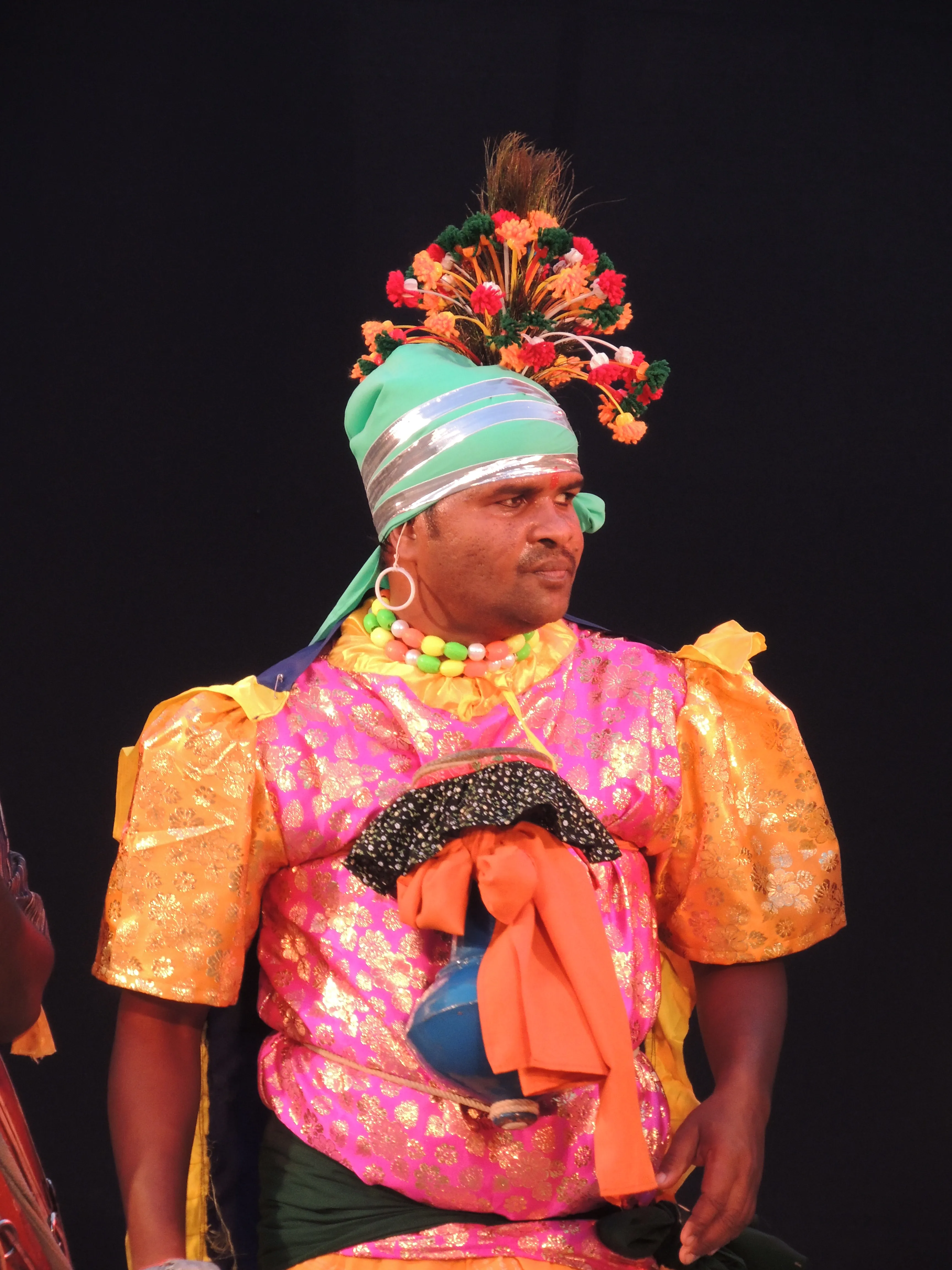
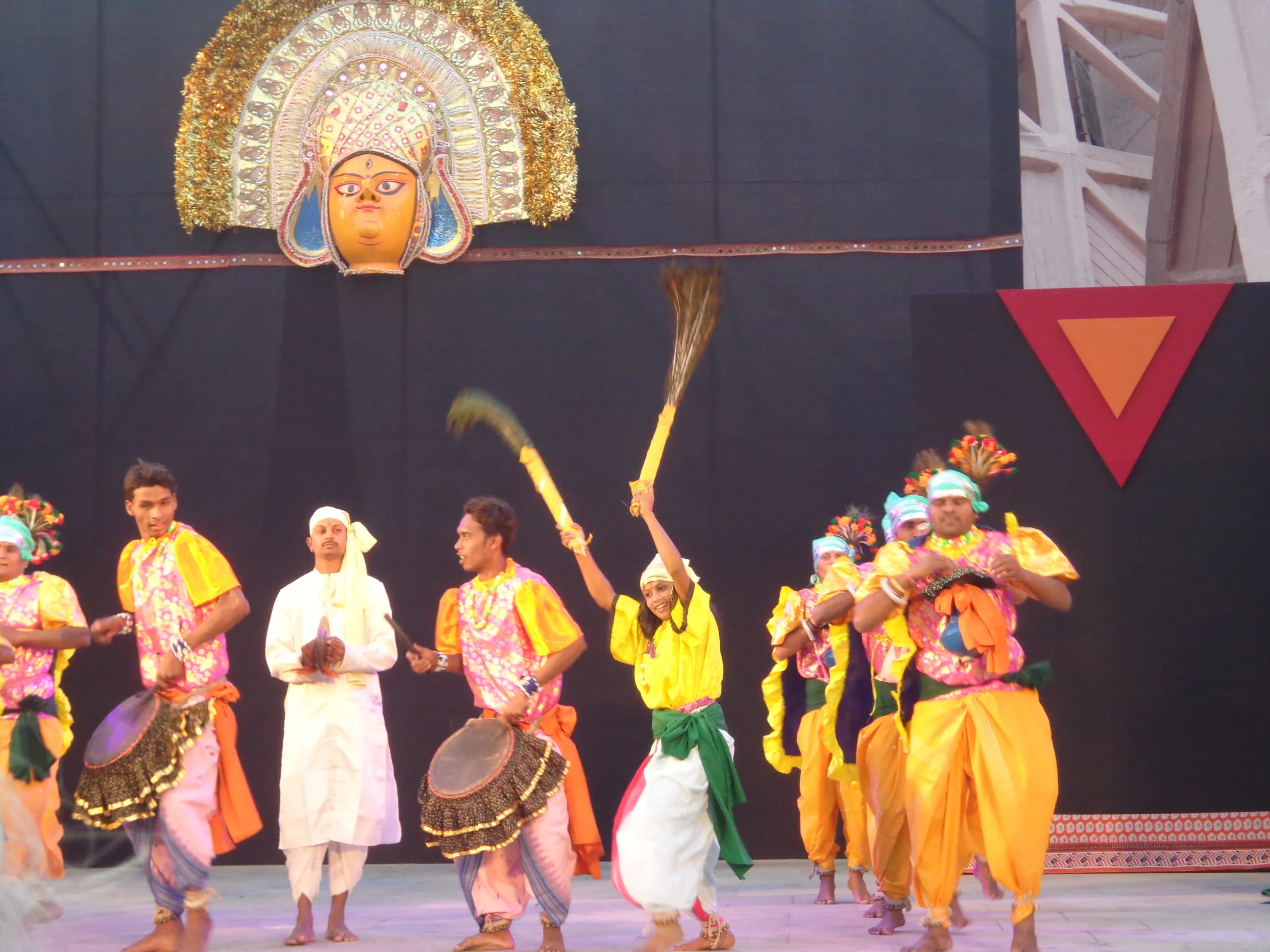
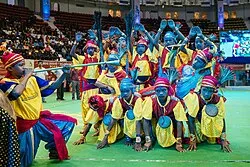
Ghumura is a high-energy male performance characterized by vigorous footwork, spins, jumps, and acrobatic sequences. Performers wear the Ghumura drum hung from the neck with a rope and play it while simultaneously dancing, creating an integration of musician and dancer that is distinctive to this form. Dance formations vary among groups and may include straight lines or geometric patterns such as triangles, circles, or squares. The performance involves slow graceful movements as well as rapid energetic displays, alternating in a call-and-response pattern between song and movement. Some researchers have noted that the mudras employed in Ghumura share characteristics with classical Indian dance forms, though the overall form is classified as folk.
Central Motifs and Their Significance
The dominant motifs of Ghumura are martial valor, communal solidarity, and devotion. The instrument itself is considered a Veera Vadya or heroic instrument, believed to instill courage in performers and fear in adversaries. Songs in Ghumura performances cover themes of Devi bandana (hymns to deities), glorification of regional dynasties, mythological narratives, and in contemporary performance, socially oriented messages including forestation, the welfare of the girl child, and literacy. Competitive performances between groups historically involved exchanges of songs containing complex questions about social, economic, and political subjects, which the opposing group was expected to answer through song.
Process
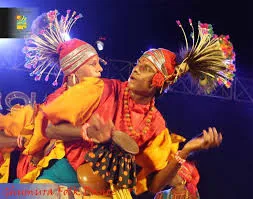
Ghumura performances take place on open grounds in tribal villages. The ensemble typically includes singers, Ghumura drummers, and additional musicians. Performers wear bright dhotis in red, yellow, or white, ornamental belts, anklets, peacock feather headgear, and painted facial markings. The Ghumura drum is tied to the waist of the drummer with a rope going around the neck. The dance commences after ritual worship of the instrument and proceeds through a coordinated sequence of formations and movements, often incorporating competition between groups.
Mediums Used
The Ghumura kettle drum is the central instrument and is played with sticks by the dancer while performing. The Nishan is a large percussion instrument that adds bass depth. The Dhol is a double-sided drum. The Taal (cymbals) maintain rhythmic beat. The Mahuri (a double-reed wind instrument) and flute provide melodic lines. The Jhanja and Mardal are additional percussion instruments used in some contexts.
New Outlook
Ghumura has received increasing national and international recognition. It has been showcased at cultural events in Moscow, New Delhi, Kolkata, and Sydney. The Government of Odisha has organized dedicated cultural programs to promote the form and incorporated it into state folk art curricula. Regional royal families in Bhawanipatna and Jayapatna have established dedicated Ghumura groups to promote the form. Despite this visibility, Ghumura remains more practiced in rural areas than in urban settings, and the community of active performers is concentrated in Kalahandi and adjoining districts.
Learn Ghumura
Bibliography
Sources
Charan, Durga Kuanr. Orissa District Gazetteers: Kalahandi. Bhubaneswar, 1980.
Nayak, K. B. “Ghumura: Folk Dance—A Glory of Kalahandi.” Tribal Dances of India, edited by R. D. Tribhuban and
Preeti R. Tribhuban, Discovery Publishing House.
Padhy, M., and A. Mohapatra. Fairs, Festivals and Folk Culture of Odisha. Abhijeet Publications, 2014.
Panda, Shivam Bhasin. Ghumura Janma Bidhan. 1954.
Singh Deo, J. P. Cultural Profile of South Kosala. Gian Publishing, 1987.
Image Sources
“Ghumura Dance.” Wikipedia, https://en.wikipedia.org/wiki/Ghumura_dance. Accessed 4 July 2026.
“Ghumura Dance Is a Folk Dance of Kalahandi District of Odisha.” A. K. Nandy Blog, https://aknandy.wordpress.com/2016/12/27/ghumura-dance-is-a-folk-dance-of-kalahandi-district-of-odisha/. Accessed 4 July 2026.
“Ghumura Folk Dance, Orissa.” Wikimedia Commons, https://commons.wikimedia.org/wiki/File:Ghumura_folk_dance_orissa.JPG. Accessed 4 July 2026.
“Musical Ghumura Badya Goes into Oblivion.” OrissaPOST, https://www.orissapost.com/musical-ghumura-badya-goes-into-oblivion/. Accessed 4 July 2026.