

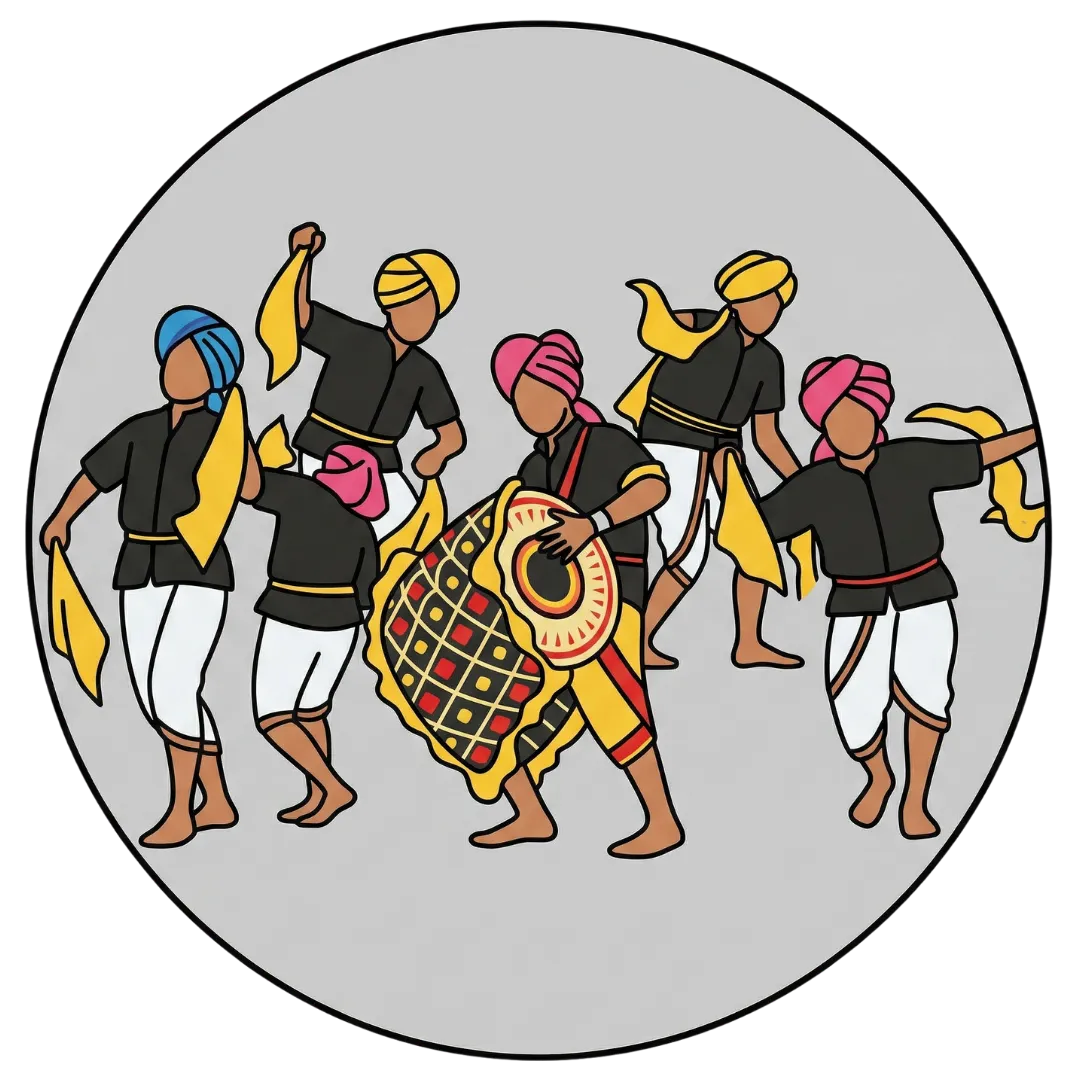
Dhangari Gaja - The Folk Dance Tradition of Maharashtra
Explore Dhangari Gaja, the performance tradition of Andhra Pradesh, and learn about its origins, techniques, cultural significance, and artistic heritage.
Introduction
Dhangari Gaja is a traditional folk dance performed by the Dhangar community of Maharashtra, India. The Dhangars are a nomadic pastoral community historically engaged in sheep herding, cattle rearing, buffalo keeping, and wool weaving. Dhangari Gaja is performed upon the shepherds' return home after extended periods away for grazing, serving as a celebration of homecoming, a tribute to their deity Biruba, and an expression of the community's pastoral cultural identity. The dance is particularly concentrated in the Solapur district of Maharashtra.
Etymology: "Dhangar" is derived from "Dhenu," a Sanskrit and regional word for cow, reflecting the community's traditional pastoral occupation. "Gaja" means elephant in Sanskrit and regional languages, and in the context of the dance refers to the strength, power, and stately movement the dance embodies. The compound name translates approximately as "the elephant dance of the Dhangars," indicating a style of movement associated with the power and grandeur of the elephant.
Origin The Dhangar community's origins have been traced by ethnographic and archaeological sources to migrations from the North-West of the Indian subcontinent, with evidence suggesting population movements between 4000 and 10000 BCE. The community subsequently dispersed across Maharashtra, Karnataka, Gujarat, and Goa. The Dhangari Gaja dance is a product of the pastoral community's long-term settlement in the Deccan plateau and the distinctive cultural forms that developed around their occupational cycle of seasonal migration. No single founding date or event for the dance is recorded in available academic sources.
Location Dhangari Gaja is most strongly associated with the Solapur district of Maharashtra. It is also performed in Kolhapur, Satara, and other parts of Maharashtra where Dhangar communities are settled. The dance is performed during Ganesh Chaturthi, Navratri, and other community festivals, as well as upon the return of shepherds from seasonal migration.
Community The Dhangar community of Maharashtra is classified as a Nomadic Tribe in the state's official administrative categories, placing them within the Other Backward Class category. Their population in Maharashtra is approximately 1.5 crore (15 million), representing approximately 13 percent of the state's total population. The Dhangari Gaja is performed by men within the community, dressed in traditional Marathi attire. Archaeological evidence and ethnographic data cited by researchers suggest that the contemporary Dhangar castes include multiple subgroups, including Hatkar (shepherd), Gavli or Dange (cowherd), and Khutekar (wool weaver).
Relevance Dhangari Gaja appears in Maharashtra state education and cultural documentation as one of the representative folk art forms of the state. The dance's connection to the distinctive oral poetry tradition of the Dhangars, the ovi (composed couplet poems), gives it literary as well as performative significance. The ovi poetry tradition of Dhangars has been noted by scholars as an important form of oral literary production in Maharashtra.
History
Background The Dhangar community's nomadic pastoral history shaped its cultural productions. For extended periods, shepherds and herders worked in the open landscape far from their home villages, a life that generated a particular form of nature-inspired poetry (ovi) and musical practice. The Dhangari Gaja dance marks the transition from this period of separation back to domestic and community life. Historical accounts also note that Dhangar communities played military roles in the Maratha Empire, with Hatkar Dhangars serving as infantry soldiers (Mawalas) under Chhatrapati Shivaji Maharaj.
Culture and Societies The dance functions as a communal celebration after the shepherds' return from seasonal work. Community members, including family and neighbors, gather for the performance. The oral poetry recited during the dance, the ovi, contains couplet-length verses narrating the birth of Biruba, descriptions of natural beauty observed during the shepherding season, and stories of community life. The couplets are recited and sung as part of the performance, making Dhangari Gaja simultaneously a dance, an oral literary performance, and a devotional act.
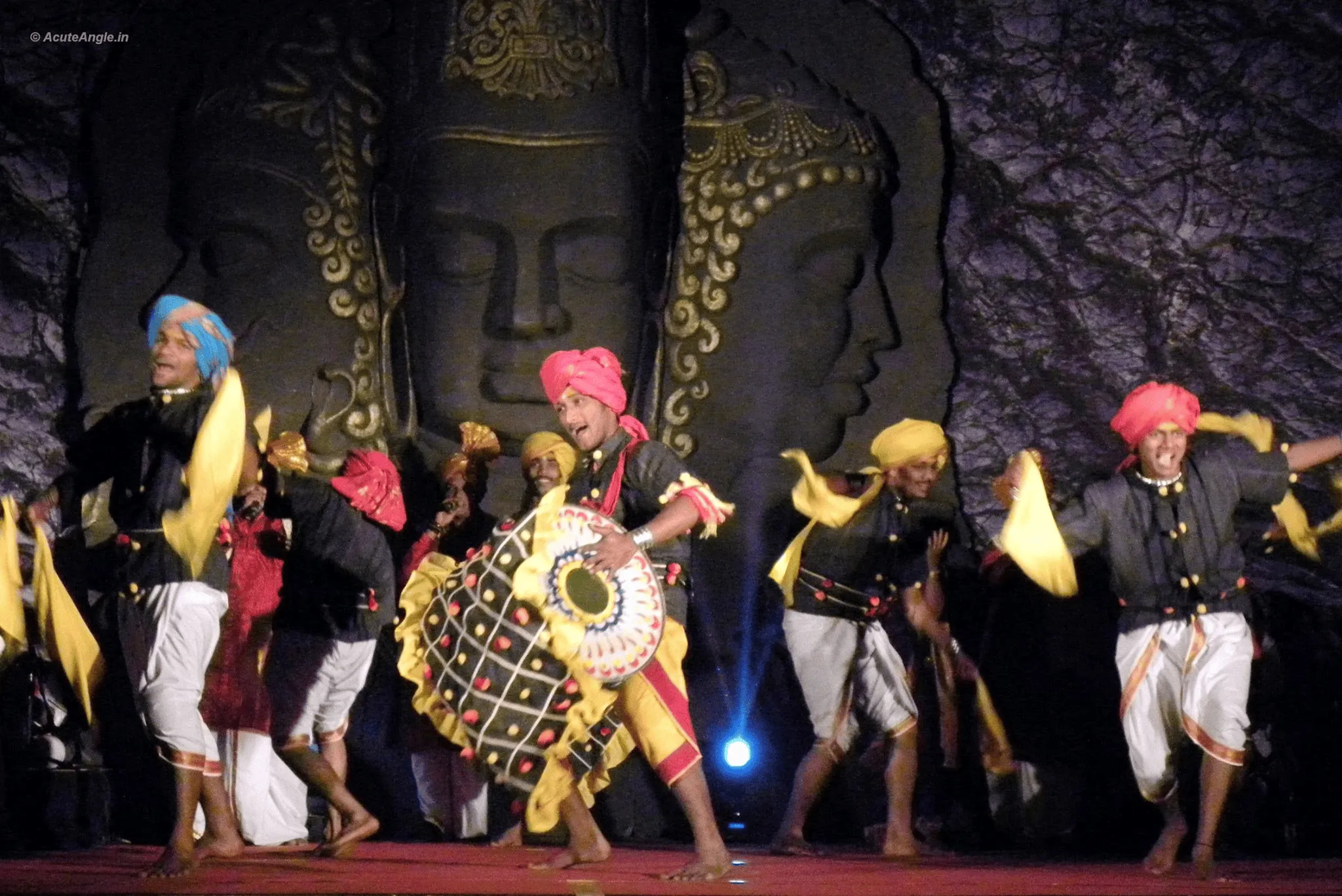
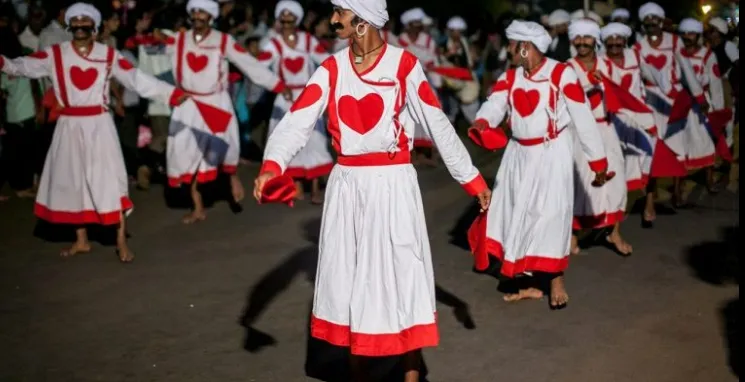
Religious Significance Dhangari Gaja is performed in devotion to Biruba (also referred to in some sources as Biroba or Vithoba), the primary deity of the Dhangar community. The performance at temple festivals is considered auspicious. Dancers carry colorful scarves whose swaying motion is said to suggest the fanning of an elephant's ears, a movement associated with the auspicious symbolism of the elephant form. The Ganesh festival (Ganeshotsav), at which Dhangari Gaja is also performed, represents a point of convergence between community-specific devotion and the wider Hindu festival calendar of Maharashtra.
Understanding the Art
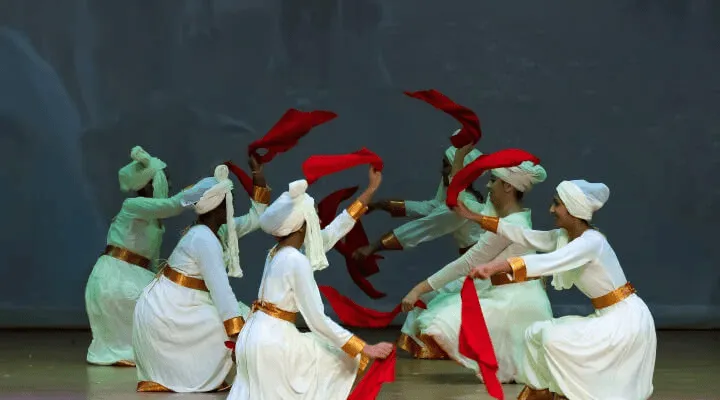
Style Dhangari Gaja is performed by groups of men in traditional Marathi attire: Dhoti, Pheta (head wrap), Angarakha (long shirt), and colored handkerchiefs. The dance involves energetic, vigorous movements including stepping, turning, and postures that suggest the power and gait of an elephant. Colorful scarves are carried and waved in patterns that simulate the fanning of elephant ears. The performance is accompanied by drums (dhol and tasha) and the singing or recitation of ovi.
Central Motifs and Their Significance The central motifs of Dhangari Gaja are the elephant (gaja) as a symbol of strength and auspiciousness, the pastoral life of the Dhangar community, and devotion to Biruba. The ovi recited during the performance encodes the community's relationship to the natural landscape and to its deity. The physical energy of the dance embodies the Dhangar martial heritage as well as the endurance developed through a nomadic lifestyle.
Process A performance begins with the assembly of the community, the donning of traditional costume, and the establishment of drumming rhythms. The lead performer or singer begins the ovi recitation, and the group responds. The dance movements are coordinated to the drum beats and ovi rhythm. The performance serves as both a celebratory and devotional event and can continue for extended periods at festival contexts.
Mediums Used The primary instruments are the dhol (a large cylindrical drum) and tasha (a kettle drum), along with the voice for ovi recitation. The colorful handkerchiefs and scarves are functional props that contribute to the visual form of the dance.
New Outlook
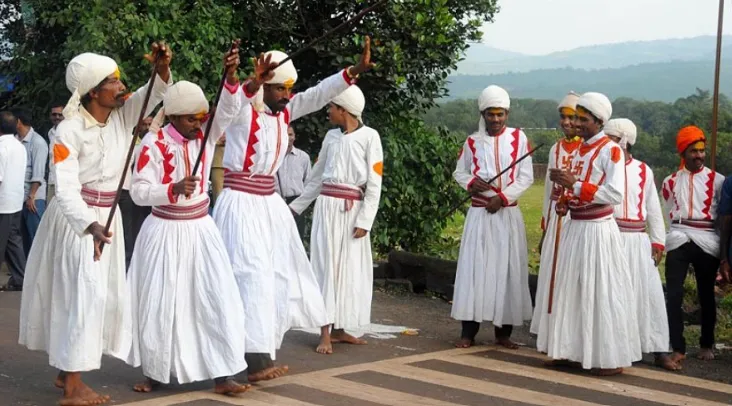
Academic attention to the Dhangar community's culture has increased in recent years as part of broader ethnographic research on nomadic pastoral communities in India. The community's ongoing efforts to be reclassified from Nomadic Tribe to Scheduled Tribe status has kept Dhangar identity as a subject of public discourse in Maharashtra. Documentation of Dhangari Gaja appears in Maharashtra state cultural records and educational materials.
Learn Dhangari Gaja
Bibliography
Sources
Maharashtra Rajya Sahitya Sanskriti Mandal. Maharashtra: A Cultural Survey. (Various documentation projects).
Sontheimer, Gunther D. Pastoral Deities in Western India. Oxford University Press, 1989.
Image Sources
“A Shepherd Community Known as the Dhangars Performs the Well-Known Goan Dance Style.” Indigenous Arts Foundation Facebook Post. Accessed on May 21, 2026.
“Dhangar Folk Dance.” Nruthya Shakti. Accessed on May 21, 2026.
“Dhangari Gaja Folk Dance of Dhangari Tribe.” Acute Angle Facebook Post. Accessed on May 21, 2026.
“Dhangari Gaja.” Instagram Post. Accessed on May 21, 2026.